


Cholinergic inhibition of neocortical pyramidal neurons
- PMID: 16267239
- PMCID: PMC6725788
- DOI: 10.1523/JNEUROSCI.2697-05.2005
Cholinergic inhibition of neocortical pyramidal neurons
Abstract
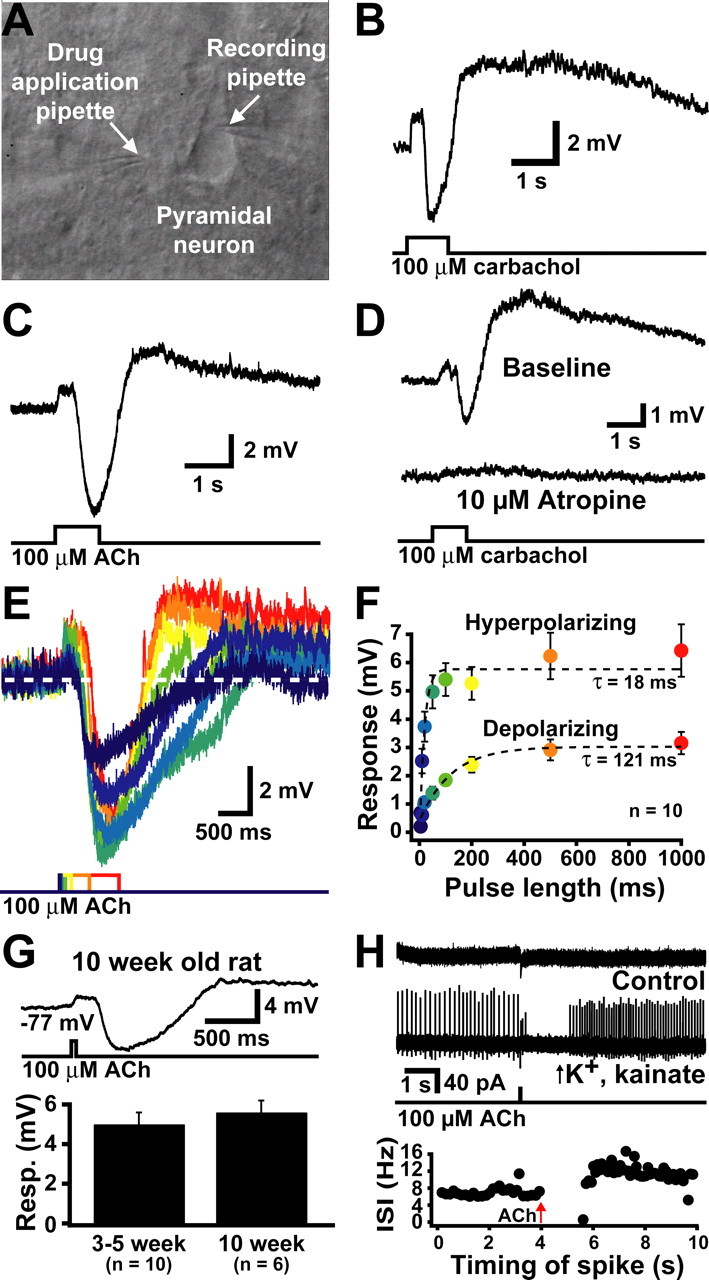
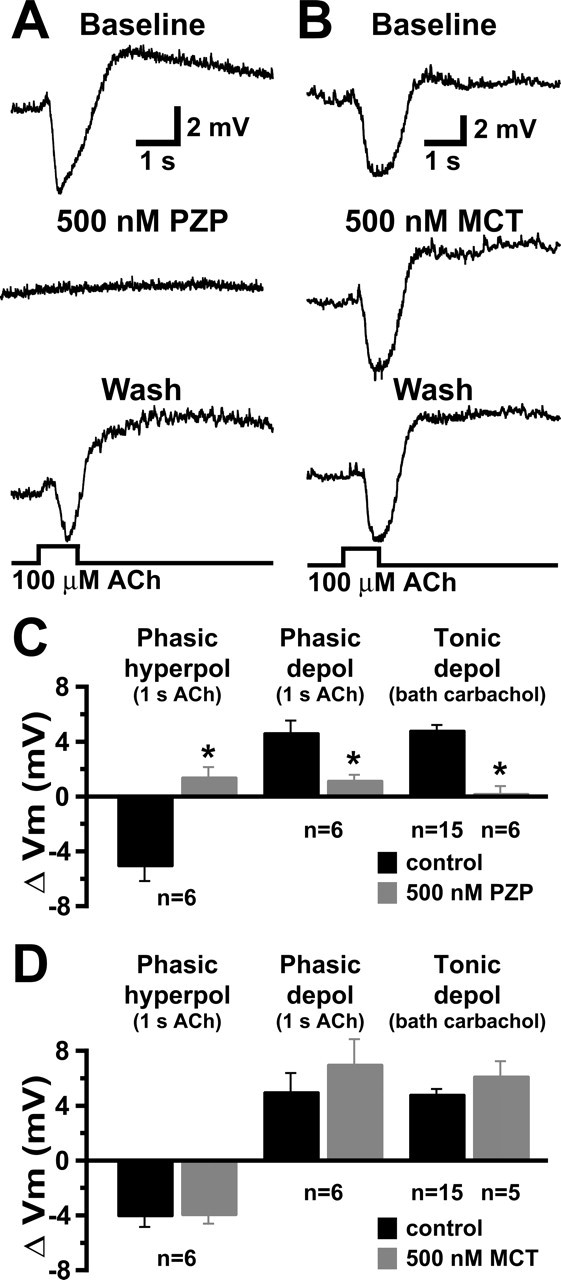
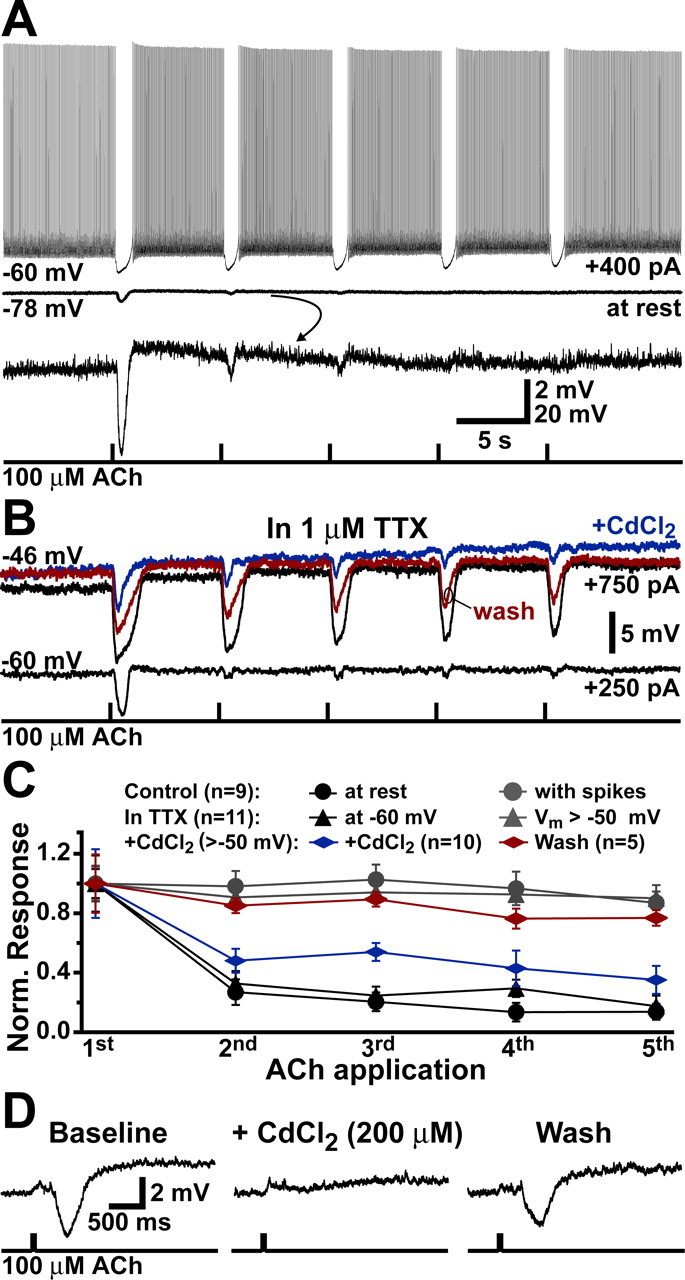
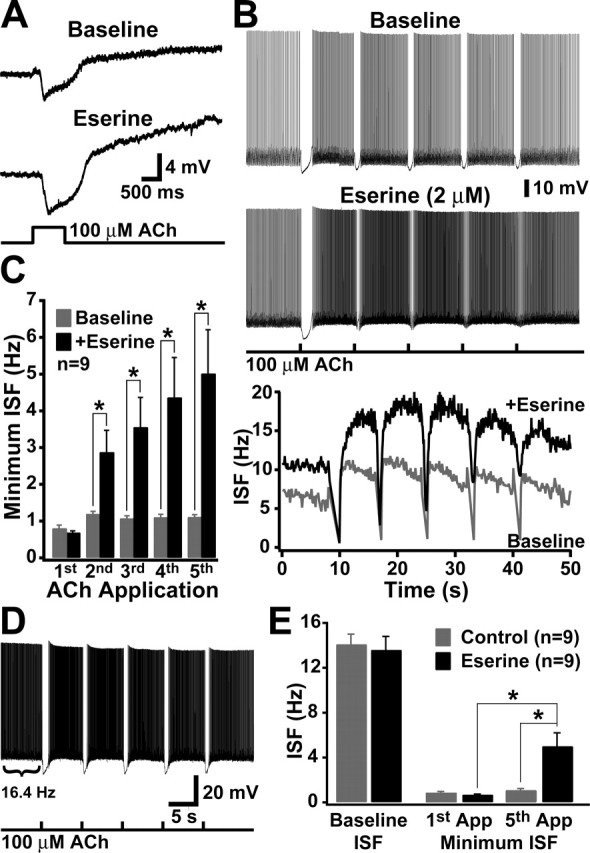
Acetylcholine (ACh) is a central neurotransmitter critical for normal cognitive function. Here we show that transient muscarinic acetylcholine receptor activation directly inhibits neocortical layer 5 pyramidal neurons. Using whole-cell and cell-attached recordings from neurons in slices of rat somatosensory cortex, we demonstrate that transient activation of M1-type muscarinic receptors induces calcium release from IP3-sensitive intracellular calcium stores and subsequent activation of an apamin-sensitive, SK-type calcium-activated potassium conductance. ACh-induced hyperpolarizing responses were blocked by atropine and pirenzepine but not by methoctramine or GABA receptor antagonists (picrotoxin, SR 95531 [2-(3-carboxypropyl)-3-amino-6-(4-methoxyphenyl)pyridazinium bromide], and CGP 55845 [(2S)-3-[[(15)-1-(3,4-dichlorophenyl)ethyl]amino-2-hydroxypropyl](phenylmethyl)phosphinic acid]). Responses were associated with a 31 +/- 5% increase in membrane conductance, had a reversal potential of -93 +/- 1 mV, and were eliminated after internal calcium chelation with BAPTA, blockade of IP3 receptors, or extracellular application of cadmium but not by sodium channel blockade with tetrodotoxin. Calcium-imaging experiments demonstrated that ACh-induced hyperpolarizing, but not depolarizing, responses were correlated with large increases in intracellular calcium. Surprisingly, transient increases in muscarinic receptor activation were capable of generating hyperpolarizing responses even during periods of tonic muscarinic activation sufficient to depolarize neurons to action potential threshold. Furthermore, eserine, an acetylcholinesterase inhibitor similar to those used therapeutically in the treatment of Alzheimer's disease, disproportionately enhanced the excitatory actions of acetylcholine while reducing the ability of acetylcholine to generate inhibitory responses during repeated applications of ACh. These data demonstrate that acetylcholine can directly inhibit the output of neocortical pyramidal neurons.
Figures



References
-
- Andrade R (1991) Cell excitation enhances muscarinic cholinergic responses in rat association cortex. Brain Res 548: 81-93. - PubMed
-
- Bandrowski AE, Moore SL, Ashe JH (2001) Cholinergic synaptic potentials in the supragranular layers of auditory cortex. Synapse 41: 118-130. - PubMed
-
- Bartus RT, Dean III RL, Beer B, Lippa AS (1982) The cholinergic hypothesis of geriatric memory dysfunction. Science 217: 408-414. - PubMed
-
- Blitzer RD, Gil O, Landau EM (1990) Cholinergic stimulation enhances long-term potentiation in the CA1 region of rat hippocampus. Neurosci Lett 119: 207-210. - PubMed
-
- Buresova O, Bolhuis JJ, Bures J (1986) Differential effects of cholinergic blockade on performance of rats in the water tank navigation task and in a radial water maze. Behav Neurosci 100: 476-482. - PubMed
Publication types
MeSH terms
Substances
LinkOut - more resources
Full Text Sources
Other Literature Sources
Research Materials
