


Innate immune responses and chronic obstructive pulmonary disease: "Terminator" or "Terminator 2"?
- PMID: 16267360
- PMCID: PMC2713325
- DOI: 10.1513/pats.200504-030SR
Innate immune responses and chronic obstructive pulmonary disease: "Terminator" or "Terminator 2"?
Abstract
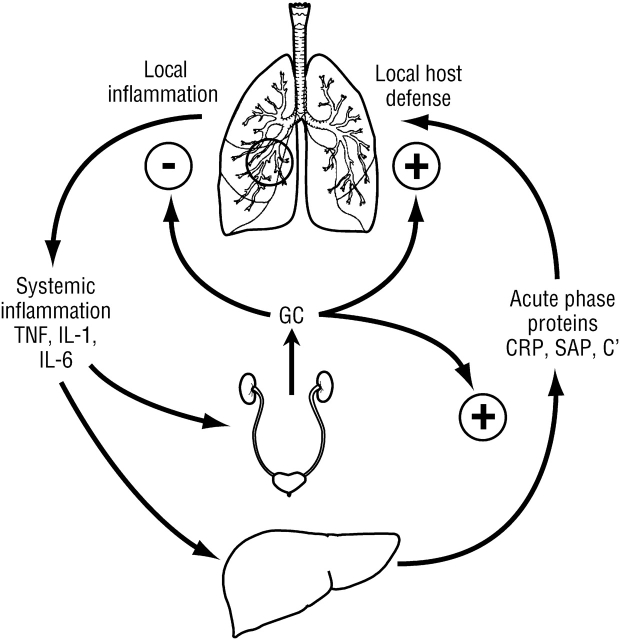
Innate immune responses appear to be partially responsible for maintaining inflammation and tissue destruction in chronic obstructive pulmonary disease. In the early stages of the disease in smokers, the airways are bombarded with large quantities of particulate material, and activation of phagocytic cells results in the release of many of the mediators believed to remodel the airways. Ironically, failure of the innate immune defense system, either by inherited deficiency or as a result of chronic smoke inhalation, is likely to result in increased susceptibility to infectious disease and exacerbations of chronic obstructive pulmonary disease. It is well known that deficiencies in the production of collectins, pentraxins, and complement can lead to increased infections, and several studies indicate that deficiency in one or another innate defense component is associated with increased exacerbations. Corticosteroids reduce exacerbations in part because of their ability to boost the production of innate host-defense molecules. Therapeutic approaches that stimulate the generation of antimicrobial molecules in the lungs might be able to reduce disease exacerbations.
Figures
References
-
- Sethi S. Bacteria in exacerbations of chronic obstructive pulmonary disease: phenomenon or epiphenomenon? Proc Am Thorac Soc 2004;1:109–114. - PubMed
-
- Wedzicha JA. Role of viruses in exacerbations of chronic obstructive pulmonary disease. Proc Am Thorac Soc 2004;1:115–120. - PubMed
-
- Barnes PJ. New treatments for COPD. Nat Rev Drug Discov 2002;1:437–446. - PubMed
-
- Barnes PJ. New treatments for chronic obstructive pulmonary disease. Ann Ist Super Sanita 2003;39:573–582. - PubMed
-
- Barnes PJ. Small airways in COPD. N Engl J Med 2004;350:2635–2637. - PubMed
Publication types
MeSH terms
Substances
Grants and funding
LinkOut - more resources
Full Text Sources
Other Literature Sources
Medical