Ancient and recent positive selection transformed opioid cis-regulation in humans
- PMID: 16274263
- PMCID: PMC1283535
- DOI: 10.1371/journal.pbio.0030387
Ancient and recent positive selection transformed opioid cis-regulation in humans
Abstract
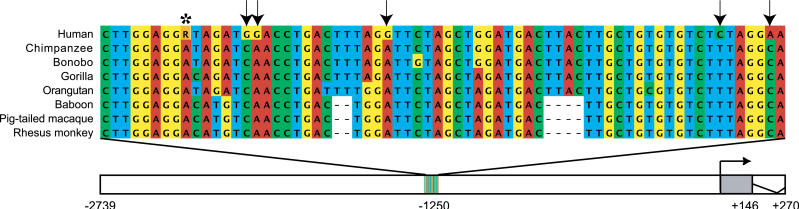
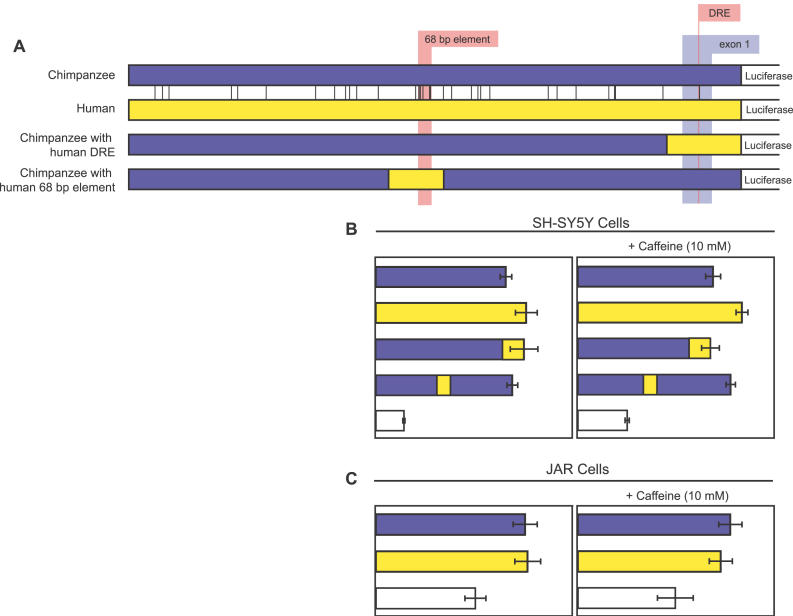
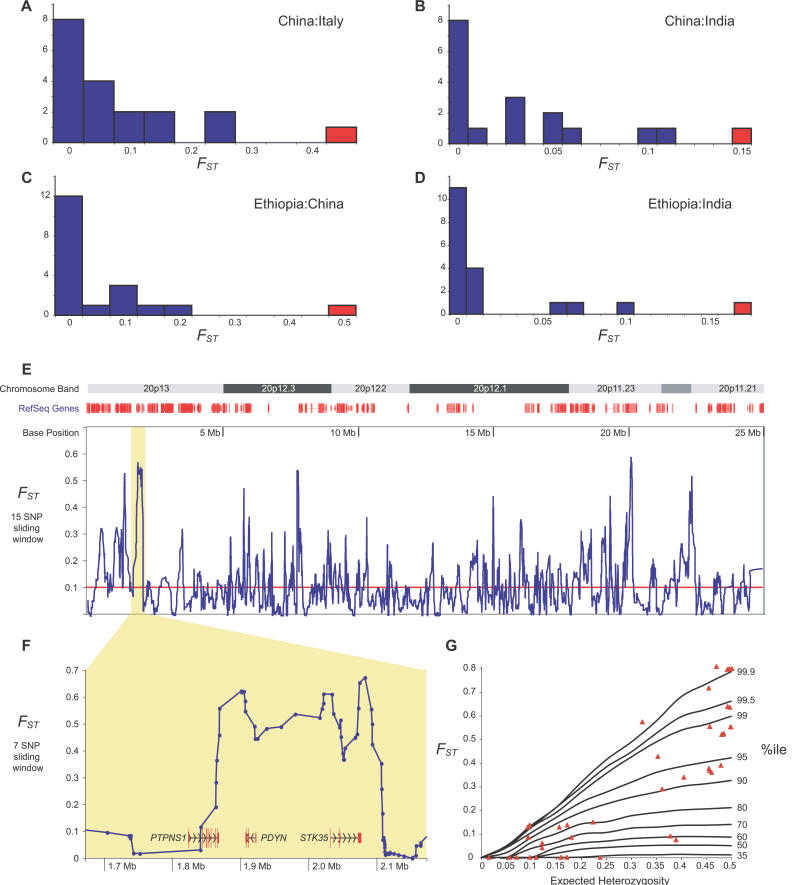
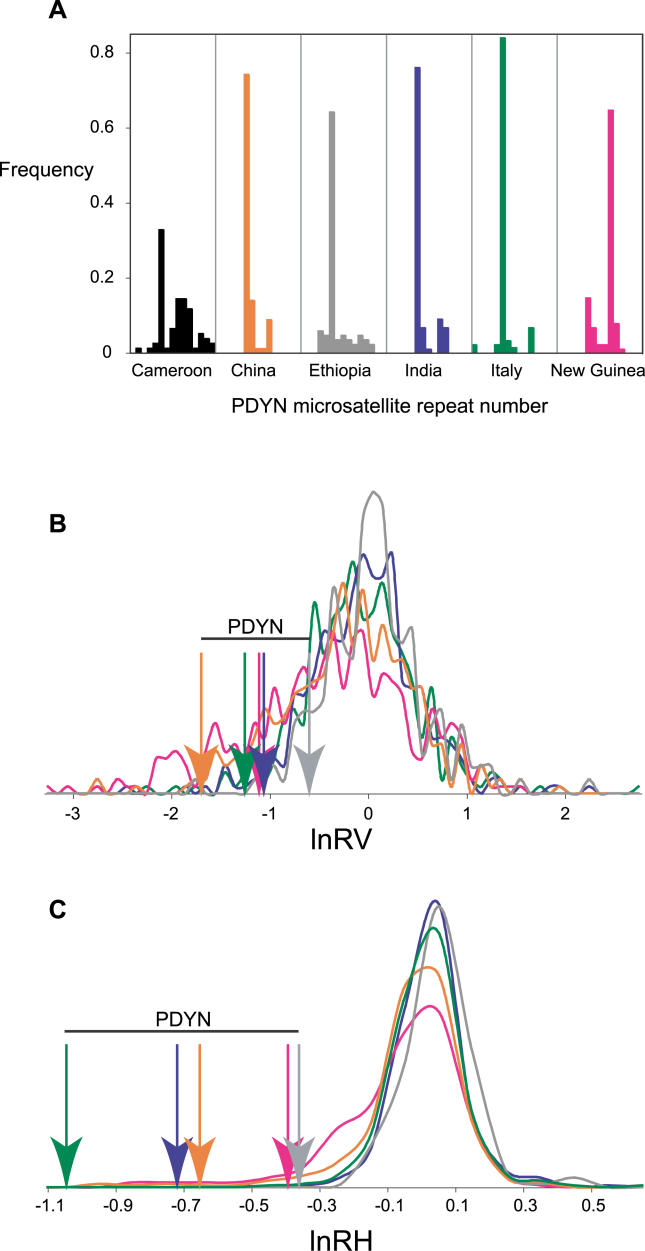
Changes in the cis-regulation of neural genes likely contributed to the evolution of our species' unique attributes, but evidence of a role for natural selection has been lacking. We found that positive natural selection altered the cis-regulation of human prodynorphin, the precursor molecule for a suite of endogenous opioids and neuropeptides with critical roles in regulating perception, behavior, and memory. Independent lines of phylogenetic and population genetic evidence support a history of selective sweeps driving the evolution of the human prodynorphin promoter. In experimental assays of chimpanzee-human hybrid promoters, the selected sequence increases transcriptional inducibility. The evidence for a change in the response of the brain's natural opioids to inductive stimuli points to potential human-specific characteristics favored during evolution. In addition, the pattern of linked nucleotide and microsatellite variation among and within modern human populations suggests that recent selection, subsequent to the fixation of the human-specific mutations and the peopling of the globe, has favored different prodynorphin cis-regulatory alleles in different parts of the world.
Figures
References
-
- Stedman HH, Kozyak BW, Nelson A, Thesier DM, Su LT, et al. Myosin gene mutation correlates with anatomical changes in the human lineage. Nature. 2004;428:415–418. - PubMed
-
- Winter H, Langbein L, Krawczak M, Cooper DN, Jave-Suarez LF, et al. Human type I hair keratin pseudogene phihHaA has functional orthologs in the chimpanzee and gorilla: Evidence for recent inactivation of the human gene after the Pan-Homo divergence. Hum Genet. 2001;108:37–42. - PubMed
-
- Enard W, Przeworski M, Fisher SE, Lai CS, Wiebe V, et al. Molecular evolution of FOXP2, a gene involved in speech and language. Nature. 2002;418:869–872. - PubMed
Publication types
MeSH terms
Substances
Associated data
- Actions
- Actions
- Actions
- Actions
- Actions
- Actions
- Actions
- Actions
- Actions
- Actions
- Actions
- Actions
- Actions
- Actions
- Actions
- Actions
- Actions
- Actions
- Actions
- Actions
- Actions
- Actions
- Actions
- Actions
- Actions
- Actions
- Actions
- Actions
- Actions
- Actions
- Actions
- Actions
- Actions
- Actions
- Actions
- Actions
- Actions
- Actions
- Actions
- Actions
- Actions
- Actions
- Actions
- Actions
- Actions
- Actions
- Actions
- Actions
- Actions
- Actions
- Actions
- Actions
- Actions
- Actions
- Actions
- Actions
- Actions
- Actions
- Actions
- Actions
- Actions
- Actions
- Actions
- Actions
- Actions
- Actions
- Actions
- Actions
- Actions
- Actions
- Actions
- Actions
- Actions
- Actions
- Actions
- Actions
- Actions
- Actions
- Actions
- Actions
- Actions
- Actions
- Actions
- Actions
- Actions
- Actions
- Actions
- Actions
- Actions
- Actions
- Actions
- Actions
- Actions
- Actions
- Actions
- Actions
- Actions
- Actions
- Actions
- Actions
- Actions
- Actions
- Actions
- Actions
- Actions
- Actions
- Actions
- Actions
- Actions
- Actions
- Actions
- Actions
- Actions
- Actions
- Actions
- Actions
- Actions
- Actions
- Actions
- Actions
- Actions
- Actions
- Actions
- Actions
- Actions
- Actions
- Actions
- Actions
- Actions
- Actions
- Actions
- Actions
- Actions
- Actions
- Actions
- Actions
- Actions
- Actions
LinkOut - more resources
Full Text Sources