Agenesis of bilateral internal carotid arteries and posterior fossa abnormality in a patient with facial capillary hemangioma: presumed incomplete phenotypic expression of PHACE syndrome
- PMID: 16286414
- PMCID: PMC7976213
Agenesis of bilateral internal carotid arteries and posterior fossa abnormality in a patient with facial capillary hemangioma: presumed incomplete phenotypic expression of PHACE syndrome
Abstract
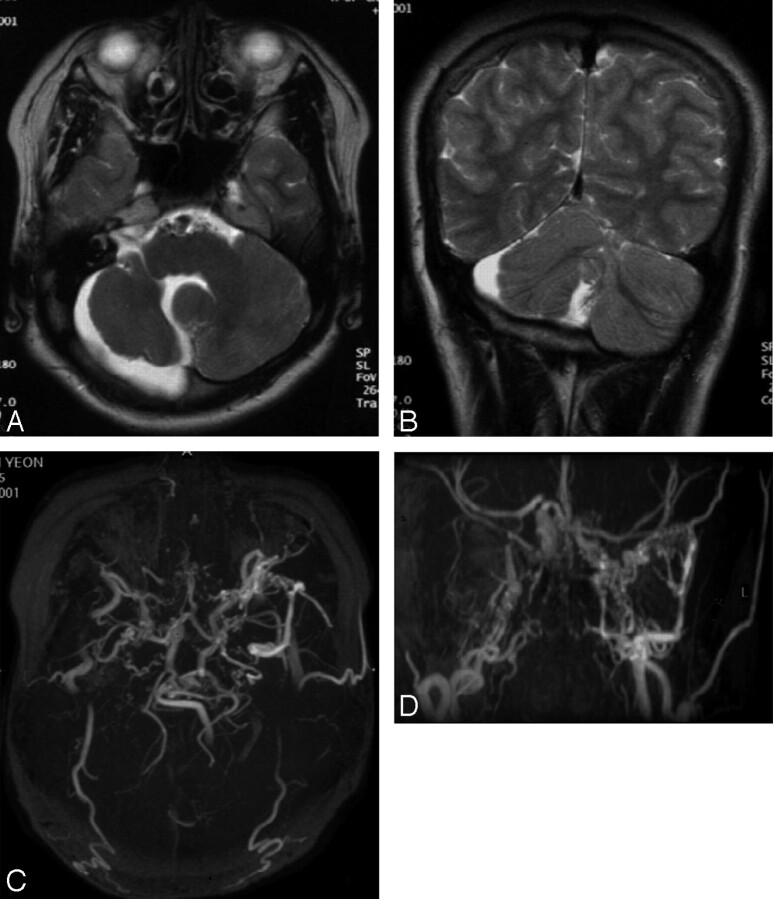
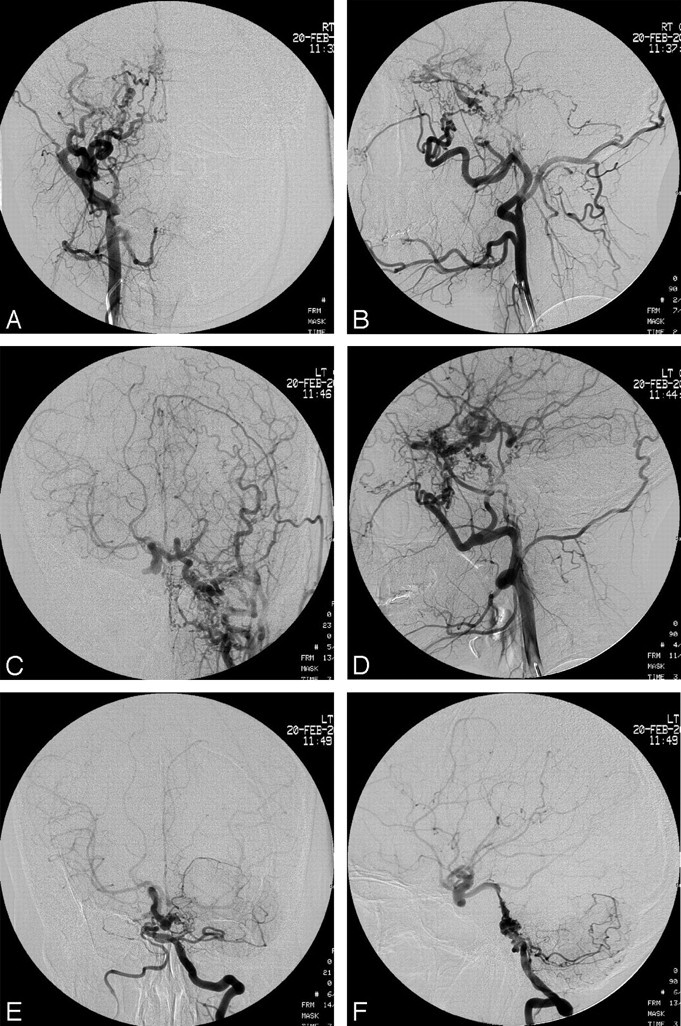
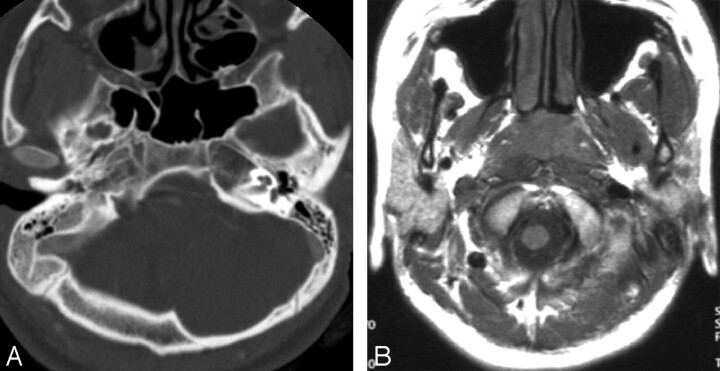
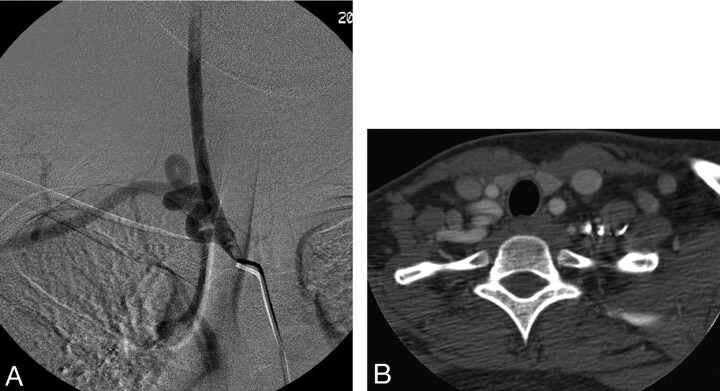
PHACE syndrome is a neurocutaneous syndrome with the following features: posterior fossa malformations of the brain, large facial hemangiomas, arterial anomalies, cardiac anomalies and aortic coarctation, and eye abnormalities. We report a rare case of bilateral internal carotid artery agenesis with transcranial collaterals from the external carotid arteries and agenesis of the vertebrobasilar system in a possible PHACE syndrome. We suggest that the patient had an incomplete phenotypic expression of the PHACE syndrome. Although the phenotypic spectrum is broad and is still largely unexplored, the extent of the cephalic neural crest cells insulted genetically or by other causes at a certain time during the development of the embryo might explain the variable phenotypic expression of PHACE syndrome.
Figures
Comment in
-
Agenesis of bilateral internal carotid arteries in the PHACE syndrome.AJNR Am J Neuroradiol. 2006 Sep;27(8):1602. AJNR Am J Neuroradiol. 2006. PMID: 16971595 Free PMC article. No abstract available.
References
-
- Afifi AK, Godersky JC, Menezes A, Smoker WR, Bell WE, Jacoby CG. Cerebral hemiatrophy, hypoplasia of internal carotid artery, and intracranial aneurysm: a rare association occurring in an infant. Arch Neurol 1987;44:232–235 - PubMed
-
- Chen CJ, Chen ST, Hsieh FY, Wang LJ, Wong YC. Hypoplasia of the internal carotid artery with intercavernous anastomosis. Neuroradiology 1998;40:252–254 - PubMed
-
- Frieden IJ, Reese V, Cohen D. PHACE syndrome: the association of posterior fossa brain malformations, hemangiomas, arterial anomalies, coarctation of the aorta and cardiac defects, and eye abnormalities. Arch Dermatol 1996;132:307–311 - PubMed
-
- Metry DW, Dowd CF, Barkovich AJ, Frieden IJ. The many faces of PHACE syndrome. J Pediatr 2001;139:117–123 - PubMed
-
- Bhattacharya JJ, Luo CB, Alvarez H, Rodesch G, Pongpech S, Lasjaunias PL. PHACES syndrome: a review of eight previously unreported cases with late arterial occlusions. Neuroradiology 2004;46:227–233 - PubMed
Publication types
MeSH terms
LinkOut - more resources
Full Text Sources