


11beta-Hydroxysteroid dehydrogenase type 2 protects the neonatal cerebellum from deleterious effects of glucocorticoids
- PMID: 16289840
- PMCID: PMC6443040
- DOI: 10.1016/j.neuroscience.2005.09.037
11beta-Hydroxysteroid dehydrogenase type 2 protects the neonatal cerebellum from deleterious effects of glucocorticoids
Abstract
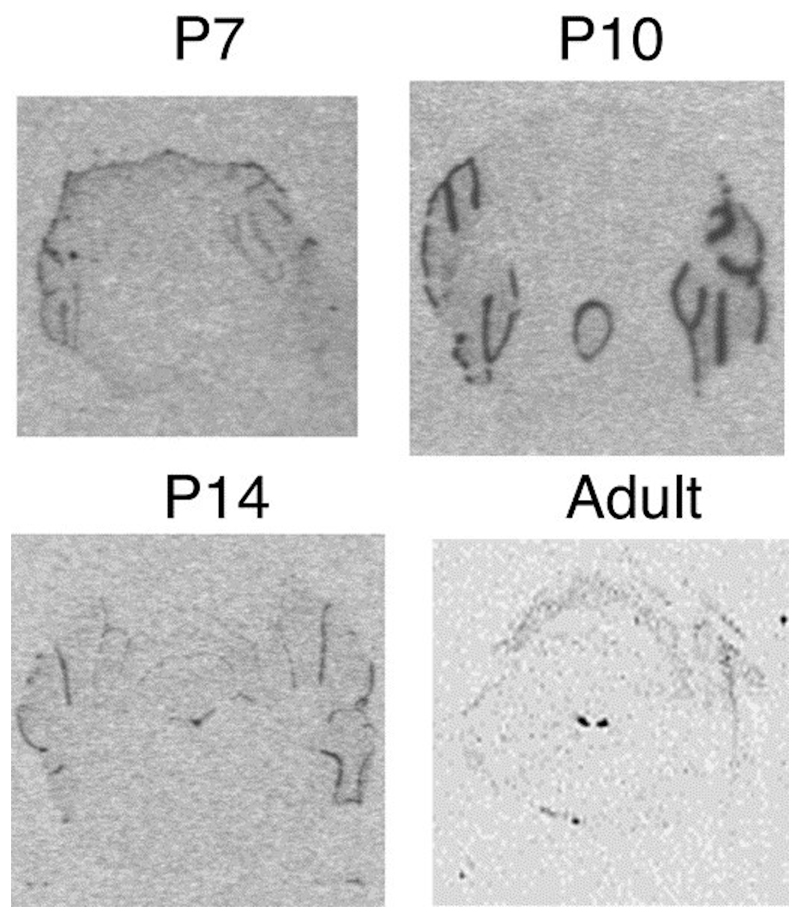
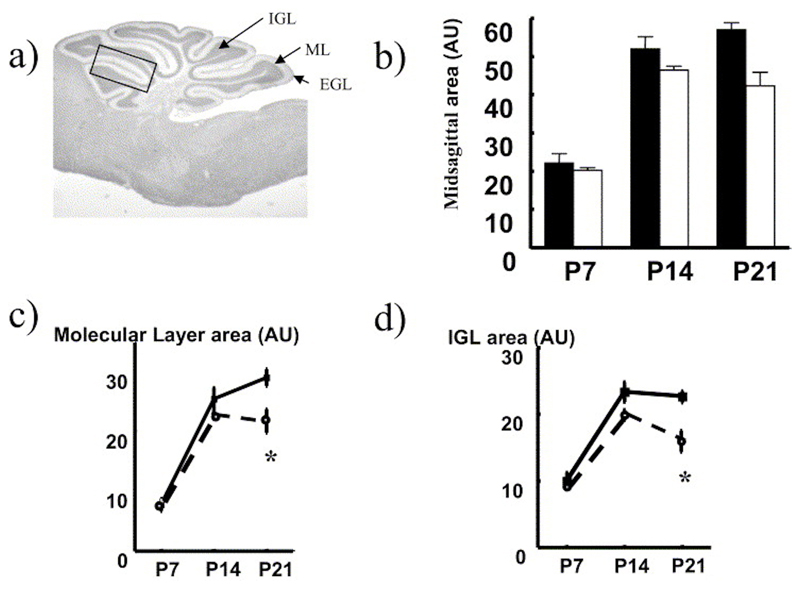
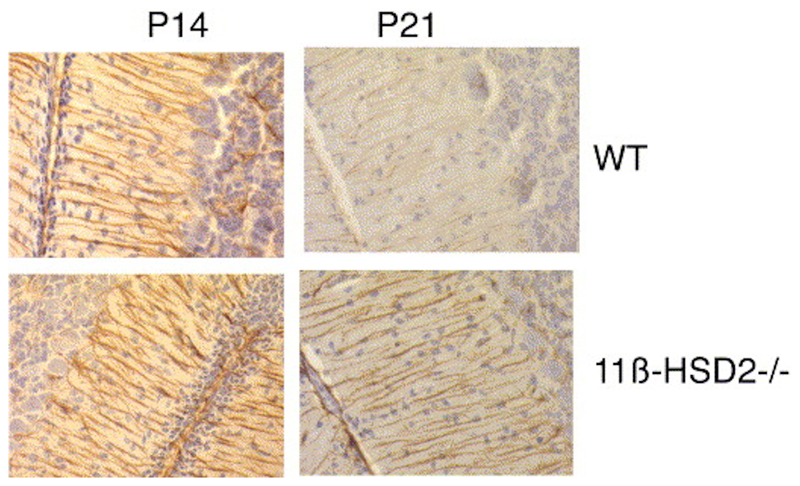
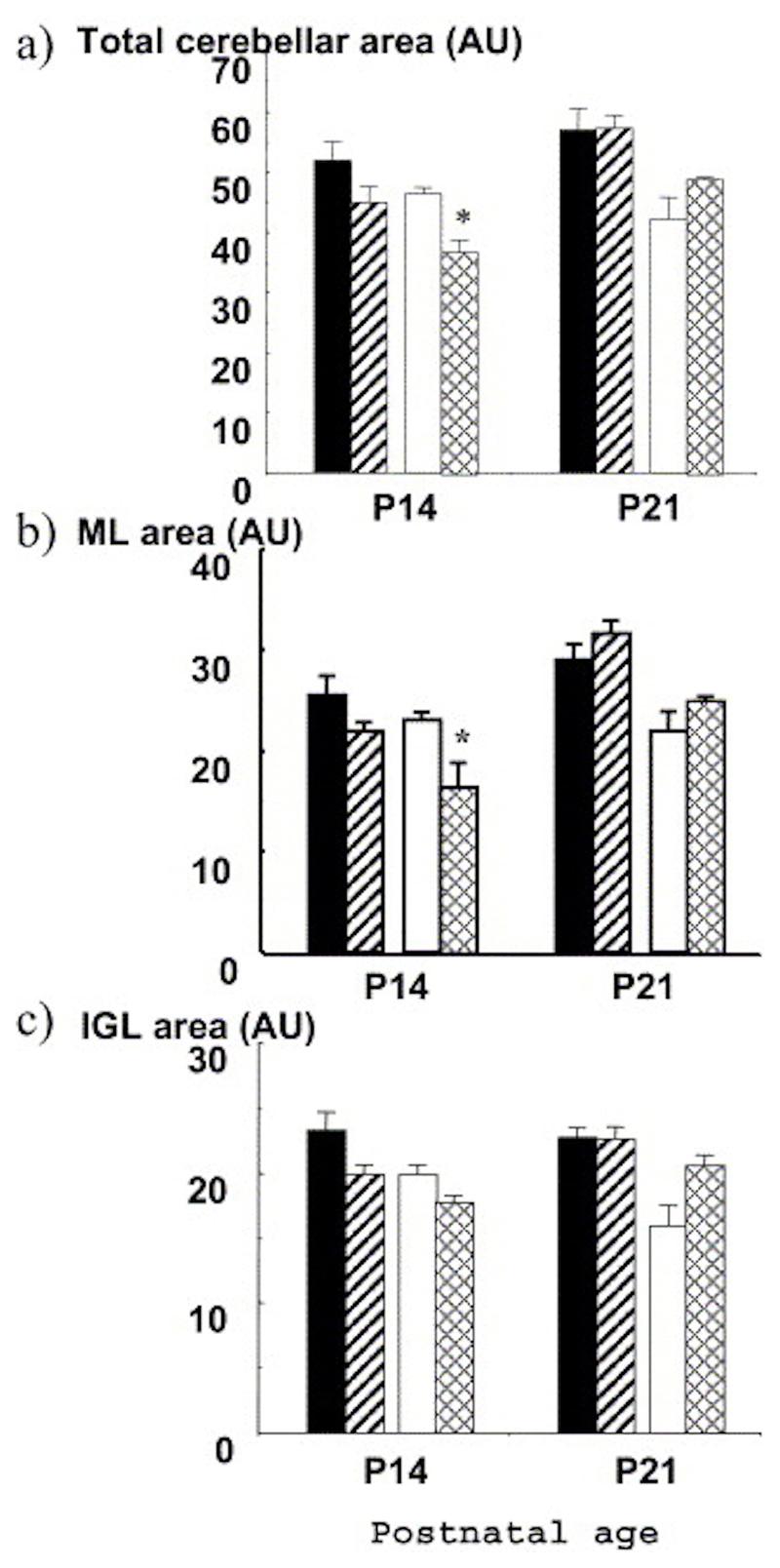
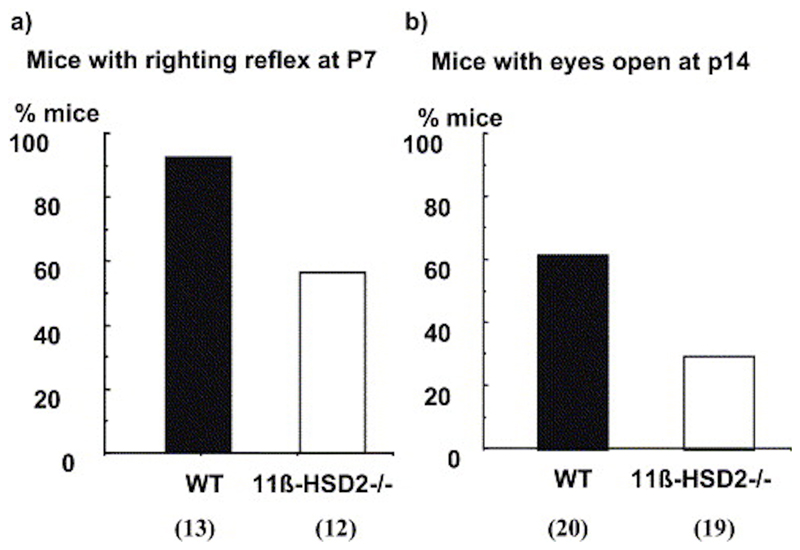
11beta-Hydroxysteroid dehydrogenase type 2 is a glucocorticoid metabolizing enzyme that catalyzes rapid inactivation of corticosterone and cortisol to inert 11-keto derivatives. As 11beta-hydroxysteroid dehydrogenase type 2 is highly expressed in the developing brain, but not in the adult CNS, we hypothesized that it may represent a protective barrier to the deleterious actions of corticosteroids on proliferating cells. To test this hypothesis we have investigated the development and growth of the cerebellum in neonatal C57BL/6 mice and mice lacking 11beta-hydroxysteroid dehydrogenase type 2 (-/-). 11beta-Hydroxysteroid dehydrogenase type 2-/- mice had consistently lower body weight throughout the neonatal period, coupled with a smaller brain size although this was normalized when corrected for body weight. The cerebellar size was smaller in 11beta-hydroxysteroid dehydrogenase type 2-/- mice, due to decreases in size of both the molecular and internal granule layers. When exogenous corticosterone was administered to the pups between postnatal days 4 and 13, 11beta-hydroxysteroid dehydrogenase type 2(-/-) mice were more sensitive, showing further inhibition of cerebellar growth while the wildtype mice were not affected. Upon withdrawal of exogenous steroid, there was a rebound growth spurt so that at day 21 postnatally, the cerebellar size in 11beta-hydroxysteroid dehydrogenase type 2-/- mice was similar to untreated mice of the same genotype. Furthermore, 11beta-hydroxysteroid dehydrogenase type 2-/- mice had a delay in the attainment of neurodevelopmental landmarks such as negative geotaxis and eye opening. We therefore suggest that 11beta-hydroxysteroid dehydrogenase type 2 acts as to protect the developing nervous system from the deleterious consequences of glucocorticoid overexposure.
Figures

References
-
- Anderson TR, Schanberg SM. Effect of thyroxine and cortisol on brain ornithine decarboxylase activity and swimming behavior in developing rat. Biochem Pharmacol. 1975;24:495–501. - PubMed
-
- Benediktsson R, Calder AA, Edwards CRW, Seckl JR. Placental 11[-hydroxysteroid dehydrogenase type 2 is the placental barrier to maternal glucocorticoids: ex vivo studies. Clin Endocrinol. 1997;46:161–166. - PubMed
-
- Bohn MC. Granule cell genesis in the hippocampus of rats treated neonatally with hydrocortisone. Neuroscience. 1980;5:2003–2012. - PubMed
-
- Bohn MC, Lauder JM. The effects of neonatal hydrocortisone on rat cerebellar development: an autoradiographic and light microscopic study. Dev Neurosci. 1978;1:250–266.
Publication types
MeSH terms
Substances
Grants and funding
LinkOut - more resources
Full Text Sources
Medical
Molecular Biology Databases
Research Materials
