


Muscarinic receptor transcript and protein density in hypertrophied and atrophied rat urinary bladder
- PMID: 16304675
- PMCID: PMC3277085
- DOI: 10.1002/nau.20180
Muscarinic receptor transcript and protein density in hypertrophied and atrophied rat urinary bladder
Abstract
Aims: Our previous studies showed that bladder hypertrophy shifts the muscarinic receptor subtype mediating contraction from M(3) towards M(2) along with increased M(2) and decreased M(3) protein concentration. We quantified mRNA for M(1) through M(5) receptors to determine whether the changes in M(2) and M(3) protein levels was due to changes in transcription.
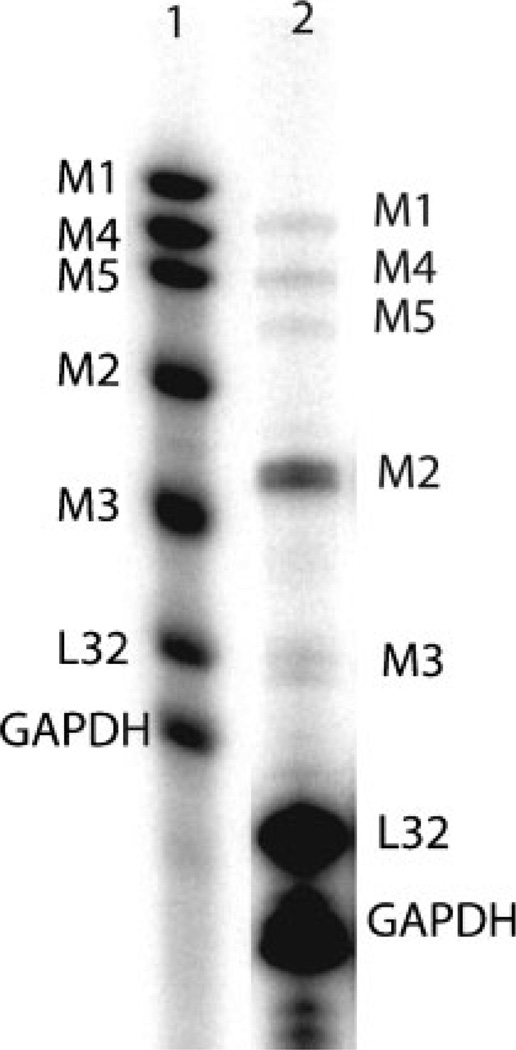
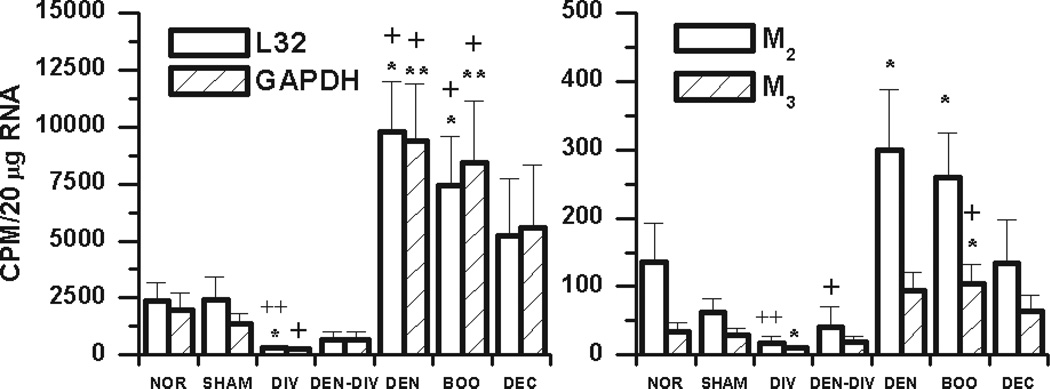
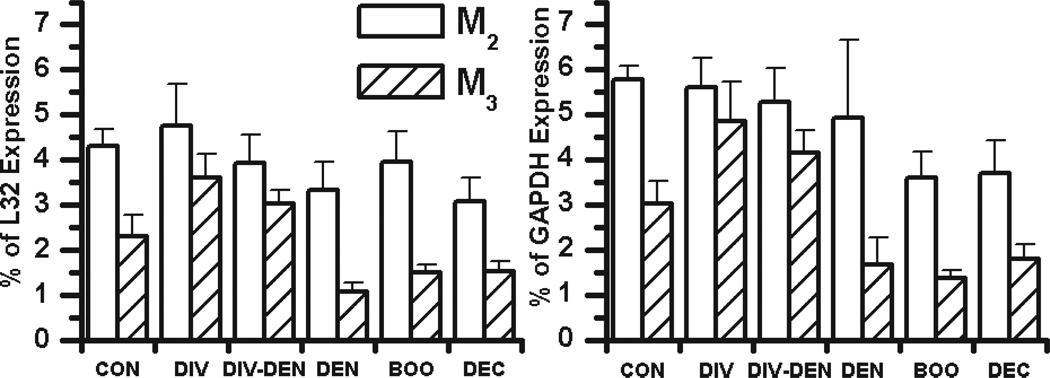
Methods: Bladder hypertrophy was induced by bladder outlet obstruction (BOO), major pelvic ganglion electrocautery (DEN), and major pelvic ganglion decentralization (DEC). Bladder atrophy was induced by ureteral diversion (DIV). Additional groups included denervated and diverted (DEN-DIV), sham operated (SHAM), and normal (NOR) controls. Transcripts were quantified using a multiplex ribonuclease protection assay (RPA) and receptor protein density was determined by immunoprecipitation. Receptor transcripts were expressed per unit total RNA.
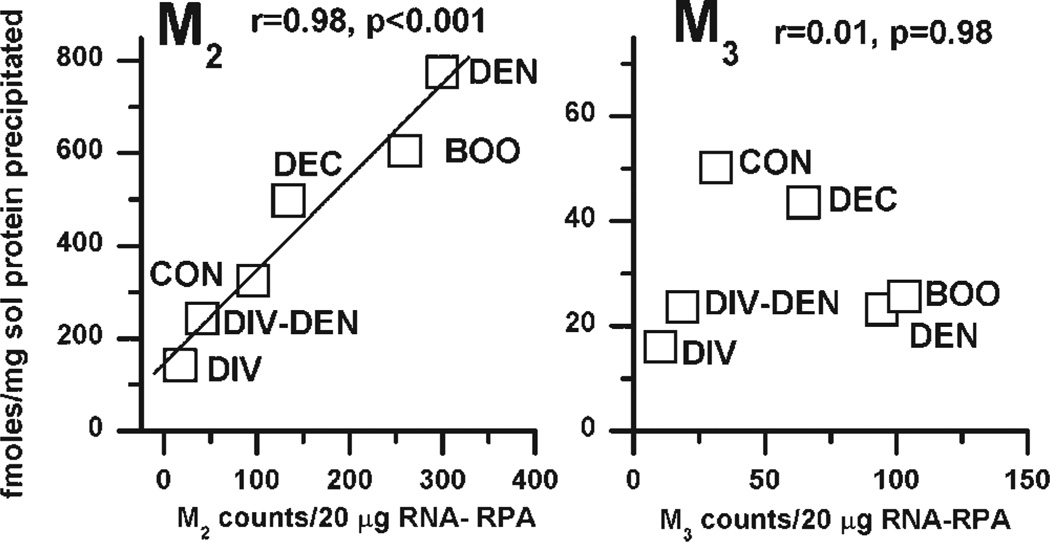
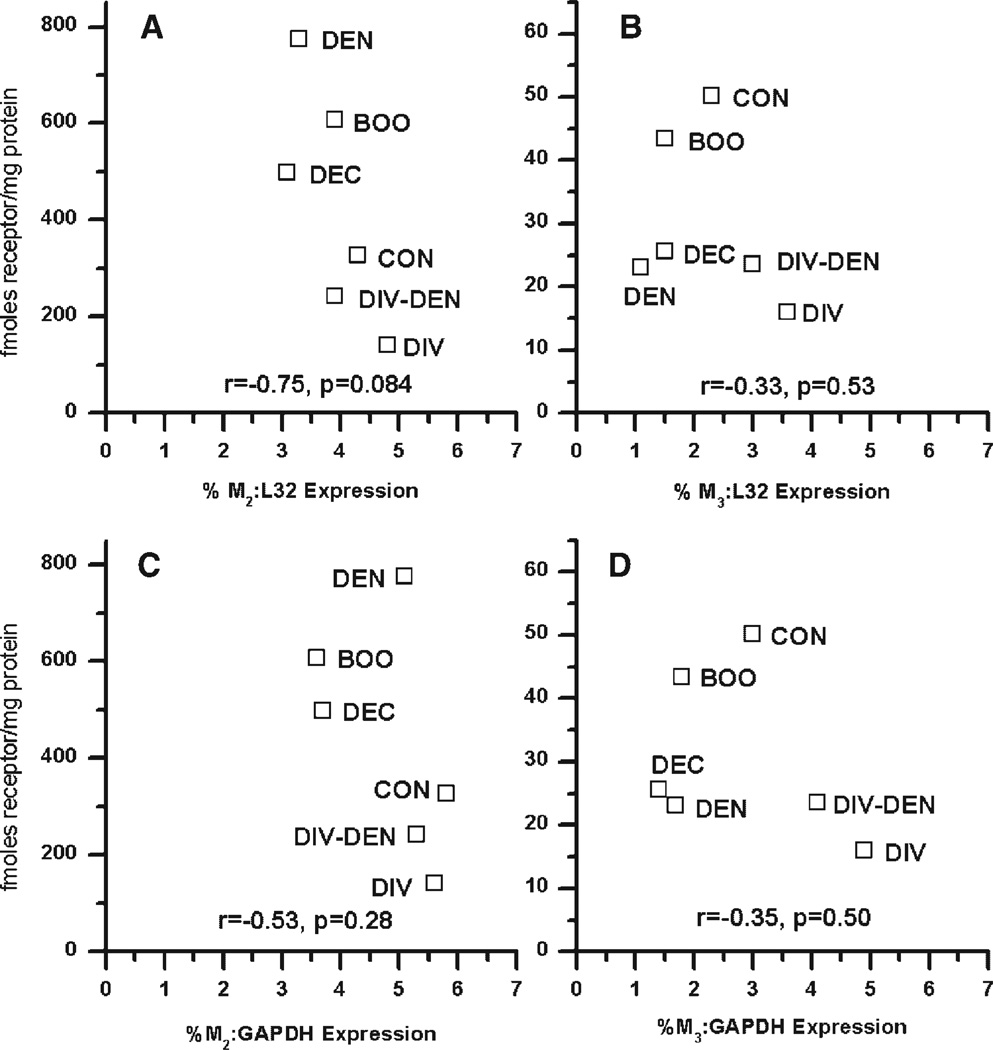
Results: Although all five receptor subtype transcripts were detected in all experimental groups, the densities of M(1), M(4), and M(5) were much lower than for the M(2) and M(3) subtype. There were more M(2) receptor transcripts than all the others, consistent with M(2) protein determinations. M(2) transcripts were significantly increased in DEN and BOO bladders. Surprisingly, M(3) transcripts were also significantly increased in BOO. There was a significant correlation (r=0.98, P<0.001) between protein density and transcript density for the M(2) but not the M(3) receptor among the different experimental groups.
Conclusions: Changes in mRNA concentration are reflected by changes in protein density for the M(2) receptor but not for the M(3) receptor. Extrapolation of functional effects from transcript density data is invalid for M(3) mediated bladder contractions.
(c) 2005 Wiley-Liss, Inc.
Figures
References
-
- Bas A, Forsberg G, Hammarstrom S, et al. Utility of the housekeeping genes 18S rRNA, beta-actin and glyceraldehyde-3-phosphate-dehydrogenase for normalization in real-time quantitative reverse transcriptase-polymerase chain reaction analysis of gene expression in human T lymphocytes. Scand J Immunol. 2004;59:566–573. - PubMed
MeSH terms
Substances
Grants and funding
LinkOut - more resources
Full Text Sources
Research Materials
