


Associations in the longitudinal course of body dysmorphic disorder with major depression, obsessive-compulsive disorder, and social phobia
- PMID: 16309706
- PMCID: PMC2786172
- DOI: 10.1016/j.jpsychires.2005.10.001
Associations in the longitudinal course of body dysmorphic disorder with major depression, obsessive-compulsive disorder, and social phobia
Abstract
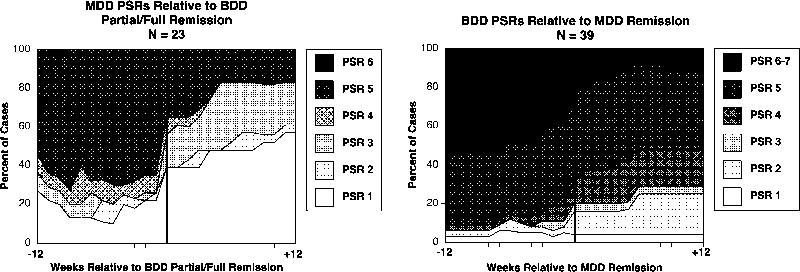
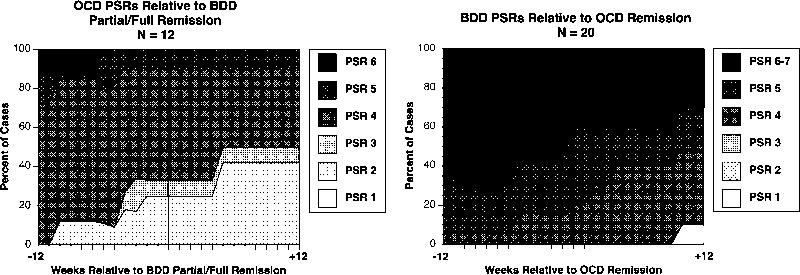
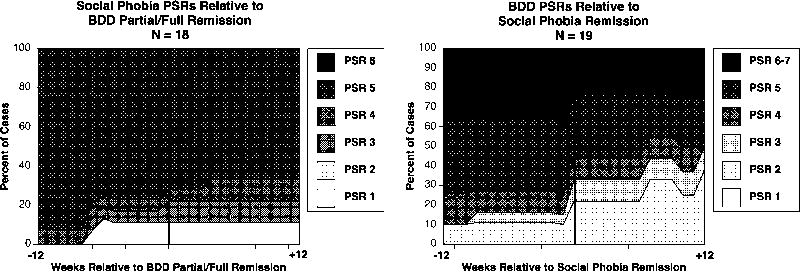
Body dysmorphic disorder (BDD) is an impairing and relatively common disorder that has high comorbidity with certain Axis I disorders. However, the longitudinal associations between BDD and comorbid disorders have not previously been examined. Such information may shed light on the nature of BDD's relationship to putative "near-neighbor" disorders, such as major depression, obsessive-compulsive disorder (OCD), and social phobia. This study examined time-varying associations between BDD and these comorbid disorders in 161 participants over 1-3 years of follow-up in the first prospective longitudinal study of the course of BDD. We found that BDD had significant longitudinal associations with major depression--that is, change in the status of BDD and major depression was closely linked in time, with improvement in major depression predicting BDD remission, and, conversely, improvement in BDD predicting depression remission. We also found that improvement in OCD predicted BDD remission, but that BDD improvement did not predict OCD remission. No significant longitudinal associations were found for BDD and social phobia (although the results for analyses of OCD and social phobia were less numerically stable). These findings suggest (but do not prove) that BDD may be etiologically linked to major depression and OCD, i.e., that BDD may be a member of both the putative OCD spectrum and the affective spectrum. However, BDD does not appear to simply be a symptom of these comorbid disorders, as BDD symptoms persisted in a sizable proportion of subjects who remitted from these comorbid disorders. Additional studies are needed to elucidate the nature of BDD's relationship to commonly co-occurring disorders, as this issue has important theoretical and clinical implications.
Figures
References
-
- Allison P. Event history analysis: regression for longitudinal event data. Beverly Hills, CA: Sage Publications; 1984.
-
- Bienvenu OJ, Samuels JF, Riddle MA, Hoehn-Saric R, Liang KY, Cullen BA, Grados MA, Nestadt G. The relationship of obsessive-compulsive disorder to possible spectrum disorders: results from a family study. Biological Psychiatry. 2000;48:287–293. - PubMed
-
- Buhlmann U, Wilhelm S, McNally RJ, Tuschen-Caffier B, Baer L, Jenike MA. Interpretive biases for ambiguous information in body dysmorphic disorder. CNS Spectrums. 2002;7:435–443. - PubMed
-
- Cohen L, Hollander E. Obsessive-compulsive spectrum disorders. In: Stein DJ, editor. Obsessive-Compulsive Disorders. New York: Marcel Dekker Inc; 1997.
-
- Coryell W, Leon A, Winokur G, Endicott J, Keller M, Akiskal H, Solomon D. Importance of psychotic features to long-term course in major depressive disorder. American Journal of Psychiatry. 1996;153:483–489. - PubMed
Publication types
MeSH terms
Grants and funding
LinkOut - more resources
Full Text Sources
Medical
