


Cytokines sing the blues: inflammation and the pathogenesis of depression
- PMID: 16316783
- PMCID: PMC3392963
- DOI: 10.1016/j.it.2005.11.006
Cytokines sing the blues: inflammation and the pathogenesis of depression
Abstract
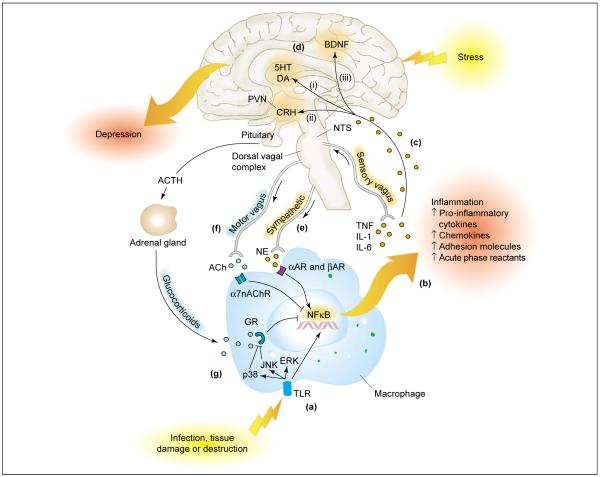
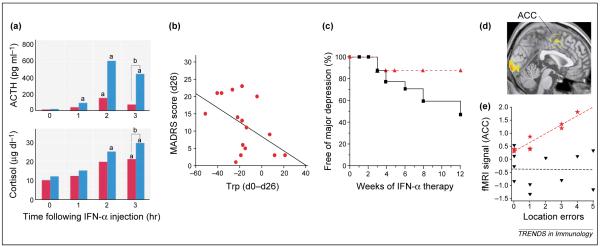
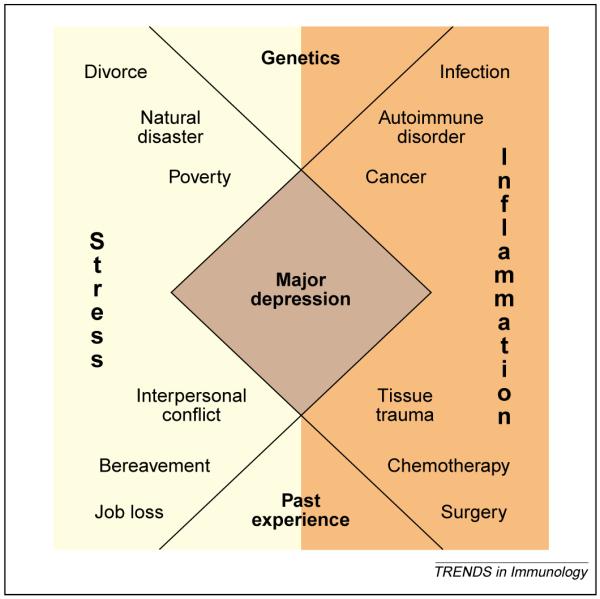
Increasing amounts of data suggest that inflammatory responses have an important role in the pathophysiology of depression. Depressed patients have been found to have higher levels of proinflammatory cytokines, acute phase proteins, chemokines and cellular adhesion molecules. In addition, therapeutic administration of the cytokine interferon-alpha leads to depression in up to 50% of patients. Moreover, proinflammatory cytokines have been found to interact with many of the pathophysiological domains that characterize depression, including neurotransmitter metabolism, neuroendocrine function, synaptic plasticity and behavior. Stress, which can precipitate depression, can also promote inflammatory responses through effects on sympathetic and parasympathetic nervous system pathways. Finally, depression might be a behavioral byproduct of early adaptive advantages conferred by genes that promote inflammation. These findings suggest that targeting proinflammatory cytokines and their signaling pathways might represent a novel strategy to treat depression.
Figures
References
-
- Herbert TB, Cohen S. Depression and immunity: a meta-analytic review. Psychol. Bull. 1993;113:472–486. - PubMed
-
- Willerson JT, Ridker PM. Inflammation as a cardiovascular risk factor. Circulation. 2004;109(21, Suppl 1):II2–10. - PubMed
-
- Li Q, et al. Inflammation-associated cancer: NF-kappaB is the lynchpin. Trends Immunol. 2005;26:318–325. - PubMed
-
- Evans DL, et al. Mood disorders in the medically ill: scientific review and recommendations. Biol. Psychiatry. 2005;58:175–189. - PubMed
Publication types
MeSH terms
Substances
Grants and funding
LinkOut - more resources
Full Text Sources
Other Literature Sources
Medical
