


The biogenesis of platelets from megakaryocyte proplatelets
- PMID: 16322779
- PMCID: PMC1297261
- DOI: 10.1172/JCI26891
The biogenesis of platelets from megakaryocyte proplatelets
Abstract
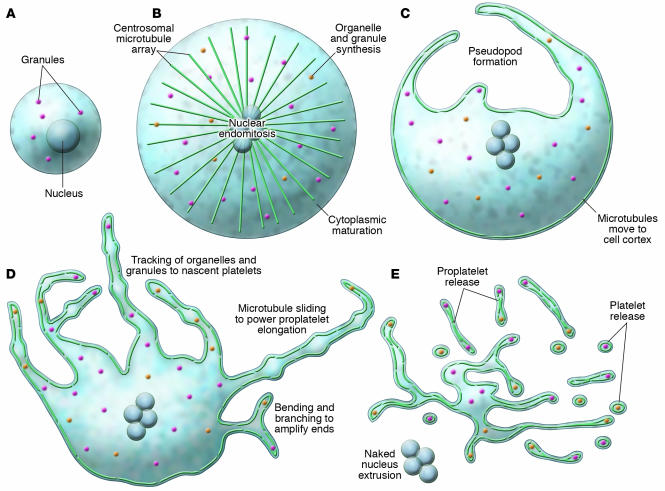
Platelets are formed and released into the bloodstream by precursor cells called megakaryocytes that reside within the bone marrow. The production of platelets by megakaryocytes requires an intricate series of remodeling events that result in the release of thousands of platelets from a single megakaryocyte. Abnormalities in this process can result in clinically significant disorders. Thrombocytopenia (platelet counts less than 150,000/microl) can lead to inadequate clot formation and increased risk of bleeding, while thrombocythemia (platelet counts greater than 600,000/microl) can heighten the risk for thrombotic events, including stroke, peripheral ischemia, and myocardial infarction. This Review will describe the process of platelet assembly in detail and discuss several disorders that affect platelet production.
Figures
References
-
- Ogawa D. Differentiation and proliferation of hematopoietic stem cells. Blood. 1993;81:2844–2853. - PubMed
-
- Briddell R, Brandt J, Stravena J, Srour E, Hoffman R. Characterization of the human burst-forming unit-megakaryocyte. Blood. 1989;59:145–151. - PubMed
-
- Kaushansky K, Drachman JG. The molecular and cellular biology of thrombopoietin: the primary regulator of platelet production. Oncogene. 2002;21:3359–3367. - PubMed
-
- Long M, Williams N, Ebbe S. Immature megakaryocytes in the mouse: physical characteristics, cell cycle status, and in vitro responsiveness to thrombopoietic stimulatory factor. Blood. 1982;59:569–575. - PubMed
Publication types
MeSH terms
Grants and funding
LinkOut - more resources
Full Text Sources
Other Literature Sources
