


Reexamining obesigenic families: parents' obesity-related behaviors predict girls' change in BMI
- PMID: 16339130
- PMCID: PMC2530936
- DOI: 10.1038/oby.2005.243
Reexamining obesigenic families: parents' obesity-related behaviors predict girls' change in BMI
Abstract
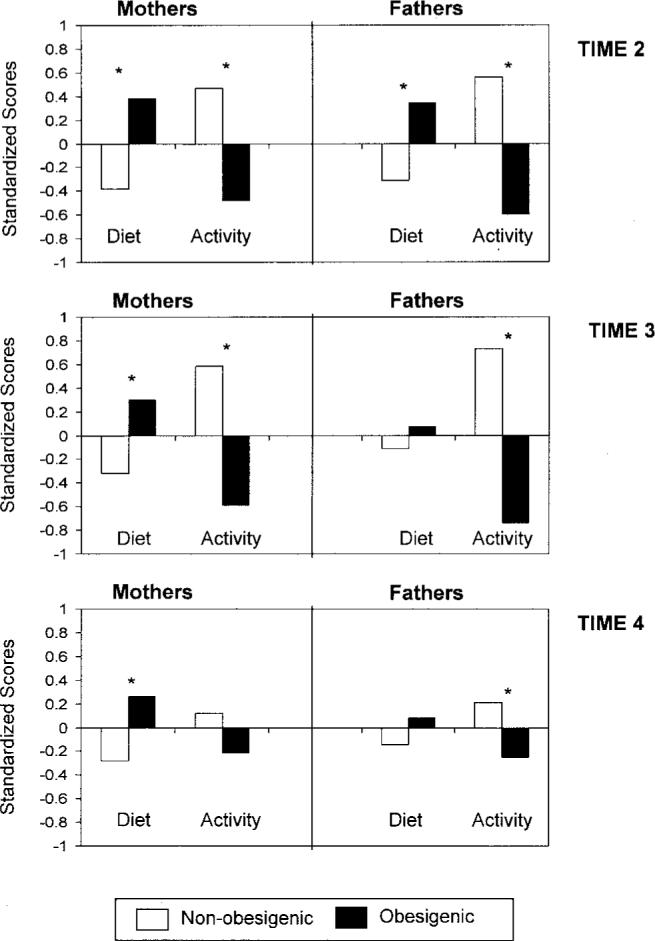
Objective: It has been shown that girls from families in which mothers and fathers had high dietary intake and low physical activity (i.e., obesigenic families) were at increased risk of obesity from ages 5 to 7 years. This follow-up study uses additional data collected when girls were 9 and 11 years old to examine whether girls from obesigenic families continued to show greater increases in BMI over time and reported unhealthy dietary and activity patterns.
Research methods and procedures: Families from the original cohort were reexamined when girls were 9 and 11 years of age. Parents' and girls' BMI, dietary intake, and physical activity and girls' percentage body fat and television viewing were assessed.
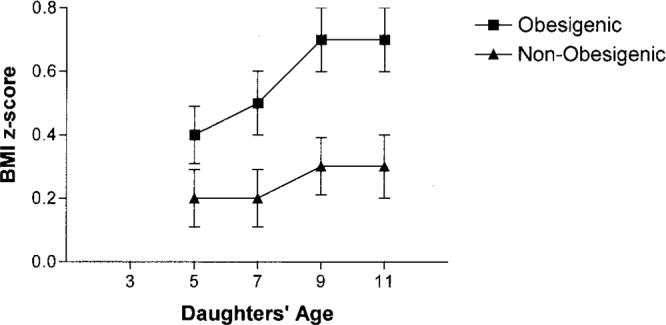
Results: In comparison with girls from non-obesigenic families, girls from obesigenic families showed greater increases in BMI and BMI z score from ages 5 to 7 years that were maintained across ages 7 to 11 years. Furthermore, girls from obesigenic families had higher percentage body fat at ages 9 and 11 years. These results were independent of parents' BMI. Additional findings showed that girls from obesigenic families had diets higher in percentage fat and had higher levels of television viewing than girls from non-obesigenic families.
Discussion: The environment that parents create, by way of their own dietary and physical activity behaviors, may have a lasting negative effect on children's weight trajectories and their emerging obesity risk behaviors, such as their dietary patterns. These findings further highlight the importance of the family in establishing children's obesity risk and the necessity of targeting parents of young children in obesity prevention efforts.
Figures
References
-
- Maes HH, Neale MC, Eaves LJ. Genetic and environmental factors in relative body weight and human adiposity. Behav Genet. 1997;27:325–51. - PubMed
-
- Whitaker RC, Wright JA, Pepe MS, Seidel KD, Dietz WH. Predicting obesity in young adulthood from childhood and parental obesity. N Engl J Med. 1997;337:869–73. - PubMed
-
- Faith MS, Johnson SL, Allison DB. Putting the behavior into the behavior genetics of obesity. Behav Genet. 1997;27:423–39. - PubMed
-
- Hill JO, Peters JC. Environmental contributions to the obesity epidemic. Science. 1998;280:1371–4. - PubMed
Publication types
MeSH terms
Grants and funding
LinkOut - more resources
Full Text Sources
Medical
