


Origin of the ultimobranchial body cyst: T/ebp/Nkx2.1 expression is required for development and fusion of the ultimobranchial body to the thyroid
- PMID: 16342117
- PMCID: PMC2435076
- DOI: 10.1002/dvdy.20655
Origin of the ultimobranchial body cyst: T/ebp/Nkx2.1 expression is required for development and fusion of the ultimobranchial body to the thyroid
Abstract
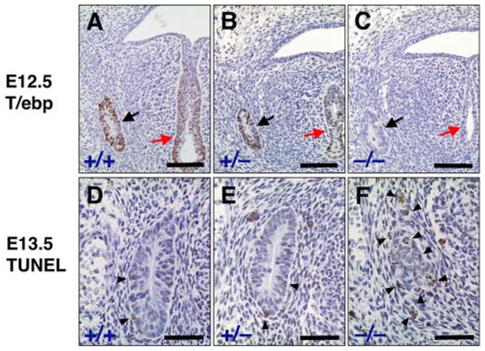
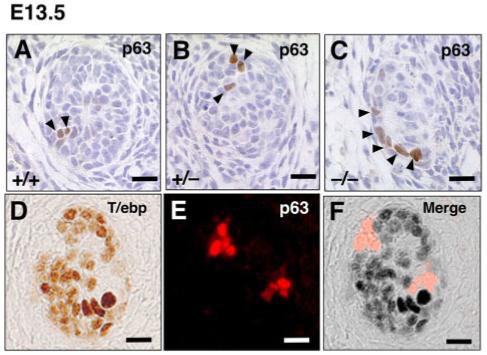
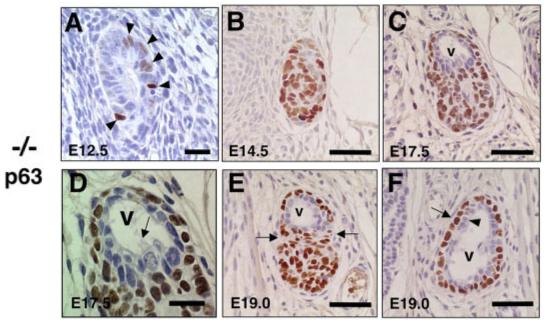
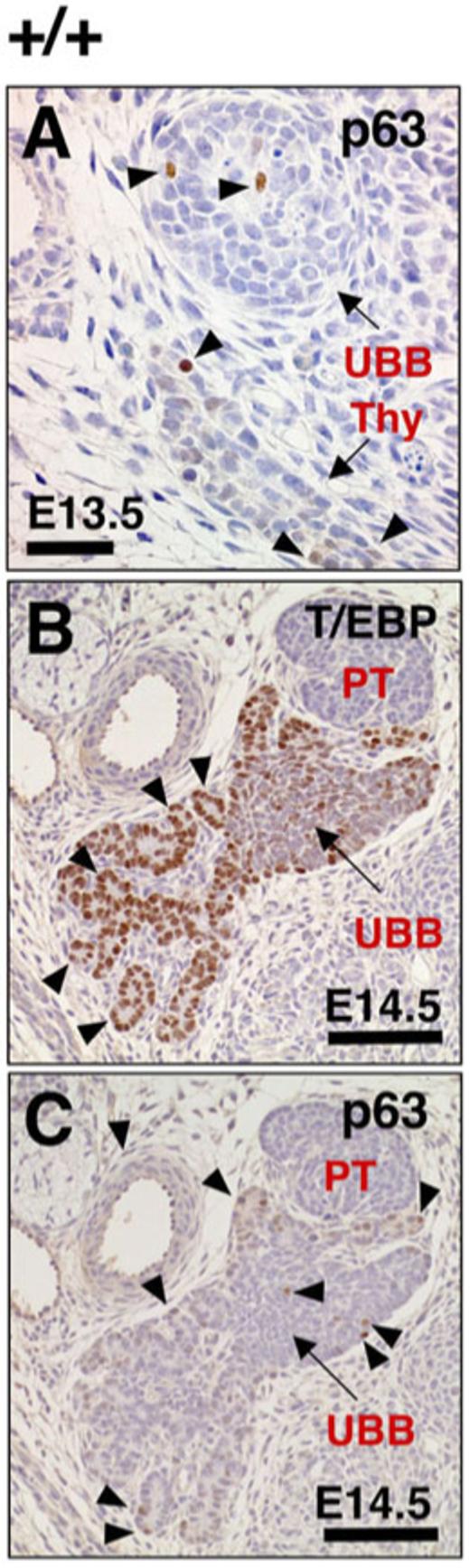
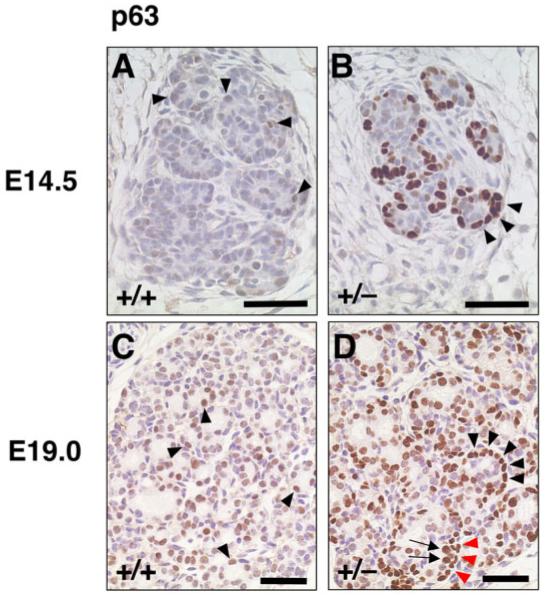
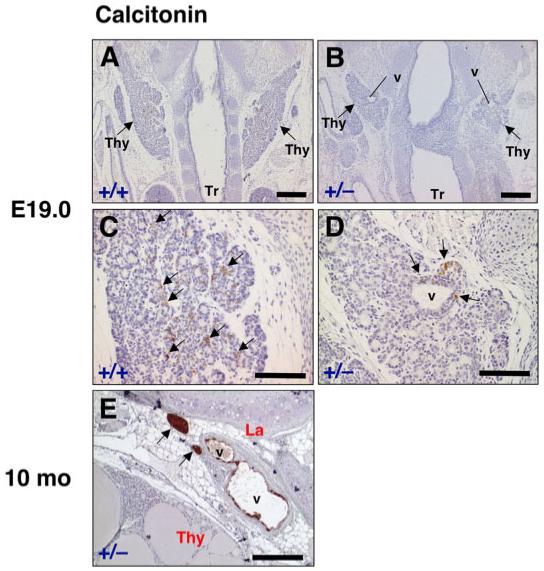
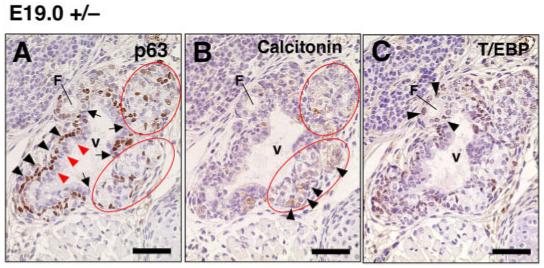
The ultimobranchial body (UBB) is an outpocketing of the fourth pharyngeal pouch that fuses with the thyroid diverticulum, giving rise to calcitonin-producing C-cells. In this study, we demonstrate that the UBB is composed of two types of cells: one expressing T/ebp/Nkx2.1 and the other expressing p63. The former cell type, accounting for a majority of the UBB, requires T/ebp/Nkx2.1 for their survival. In contrast, the p63-positive cells, even in the absence of T/ebp/Nkx2.1 expression, can proliferate and give rise to a vesicular structure that is lined by a monolayer of p63-negative cells, surrounded by a cluster and/or single layer of p63-positive cells, displaying the basal/stem cell phenotype. T/ebp/Nkx2.1 haploinsufficiency causes abnormal fusion of the UBB with the thyroid diverticulum, which stays as a cluster of C-cells around the vesicular structure, similar to the one observed in mice null for T/ebp/Nkx2.1 expression. These results demonstrate that T/ebp/Nkx2.1 plays a role in the survival of UBB cells, their dissemination into the thyroid diverticulum, and the formation of UBB-derived vesicular structure.
(c) 2005 Wiley-Liss, Inc.
Figures
References
-
- Barbareschi M, Pecciarini L, Cangi MG, Macri E, Rizzo A, Viale G, Doglioni C. p63, a p53 homologue, is a selective nuclear marker of myoepithelial cells of the human breast. Am J Surg Pathol. 2001;25:1054–1060. - PubMed
-
- Biddinger PW, Ray M. Distribution of C cells in the normal and diseased thyroid gland. Pathol Annu. 1993;28(Pt 1):205–229. - PubMed
-
- Burstein DE, Nagi C, Wang BY, Unger P. Immunohistochemical detection of p53 homolog p63 in solid cell nests, papillary thyroid carcinoma, and hashimoto’s thyroiditis: a stem cell hypothesis of papillary carcinoma oncogenesis. Hum Pathol. 2004;35:465–473. - PubMed
-
- Cameselle-Teijeiro J, Varela-Duran J, Sambade C, Villanueva JP, Varela-Nunez R, Sobrinho-Simoes M. Solid cell nests of the thyroid: light microscopy and immunohistochemical profile. Hum Pathol. 1994;25:684–693. - PubMed
-
- Damante G, Tell G, Di Lauro R. A unique combination of transcription factors controls differentiation of thyroid cells. Prog Nucleic Acid Res Mol Biol. 2001;66:307–356. - PubMed
Publication types
MeSH terms
Substances
Grants and funding
LinkOut - more resources
Full Text Sources
Molecular Biology Databases
