


Improving ambulatory prescribing safety with a handheld decision support system: a randomized controlled trial
- PMID: 16357350
- PMCID: PMC1447547
- DOI: 10.1197/jamia.M1961
Improving ambulatory prescribing safety with a handheld decision support system: a randomized controlled trial
Abstract
Objective: To evaluate the effectiveness of a personal digital assistant (PDA)-based clinical decision support system (CDSS) on nonsteroidal anti-inflammatory drug (NSAID) prescribing safety in the outpatient setting.
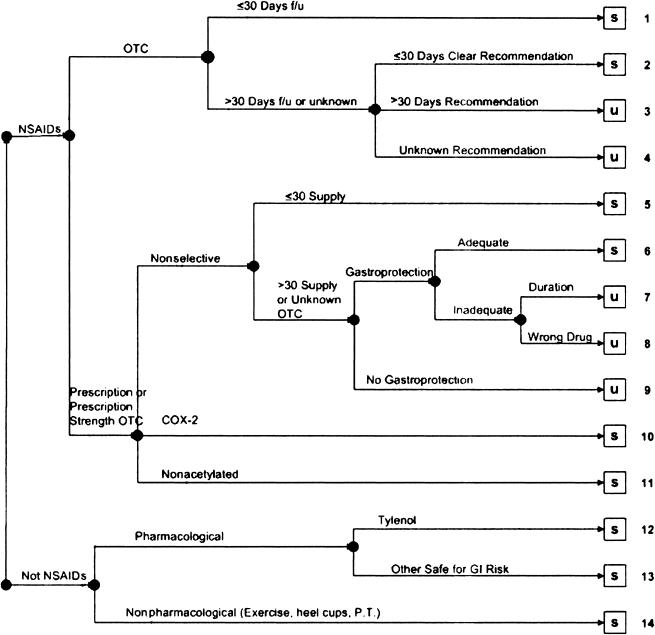
Design: The design was a randomized, controlled trial conducted in a university-based resident clinic. Internal medicine residents received a PDA-based CDSS suite. For intervention residents, the CDSS included a prediction rule for NSAID-related gastrointestinal risk assessment and treatment recommendations. Unannounced standardized patients (SPs) trained to portray musculoskeletal symptoms presented to study physicians. Safety outcomes were assessed from the prescriptions given to the SPs. Each prescription was reviewed by a committee of clinicians blinded to participant, intervention group assignment, and baseline or follow-up status.
Measurements: Prescriptions were judged as safe or unsafe. The main outcome measure was the differential change in unsafe prescribing of NSAIDs for the intervention versus the control group.
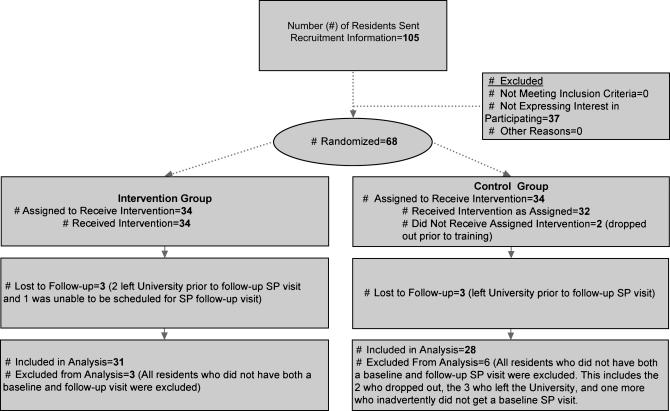
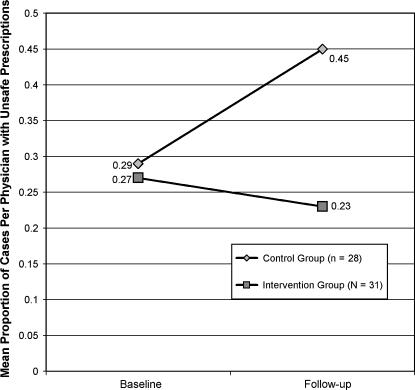
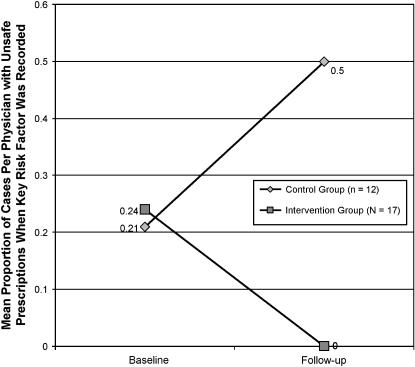
Results: At baseline, the mean proportion of cases per physician with unsafe prescriptions for the two groups was similar (0.27 vs. 0.29, p > 0.05). Controlling for baseline performance, intervention participants prescribed more safely than controls after receiving the CDSS (0.23 vs. 0.45 [F = 4.24, p < 0.05]). With the CDSS, intervention participants documented more complete assessment of patient gastrointestinal risk from NSAIDs.
Conclusion: PARTICIPANTS provided with a PDA-based CDSS for NSAID prescribing made fewer unsafe treatment decisions than participants without the CDSS.
Figures
References
-
- Garg AX, Adhikari NK, McDonald H, et al. Effects of computerized clinical decision support systems on practitioner performance and patient outcomes: a systematic review. JAMA. 2005;293:1223–38. - PubMed
-
- Bates DW, Leape LL, Cullen DJ, et al. Effect of computerized physician order entry and a team intervention on prevention of serious medication errors. JAMA. 1998;280:1311–6. - PubMed
-
- Kucher N, Koo S, Quiroz R, et al. Electronic alerts to prevent venous thromboembolism among hospitalized patients. N Engl J Med. 2005;352:969–77. - PubMed
Publication types
MeSH terms
Substances
Grants and funding
LinkOut - more resources
Full Text Sources
