


LEGER: knowledge database and visualization tool for comparative genomics of pathogenic and non-pathogenic Listeria species
- PMID: 16381897
- PMCID: PMC1347434
- DOI: 10.1093/nar/gkj071
LEGER: knowledge database and visualization tool for comparative genomics of pathogenic and non-pathogenic Listeria species
Abstract
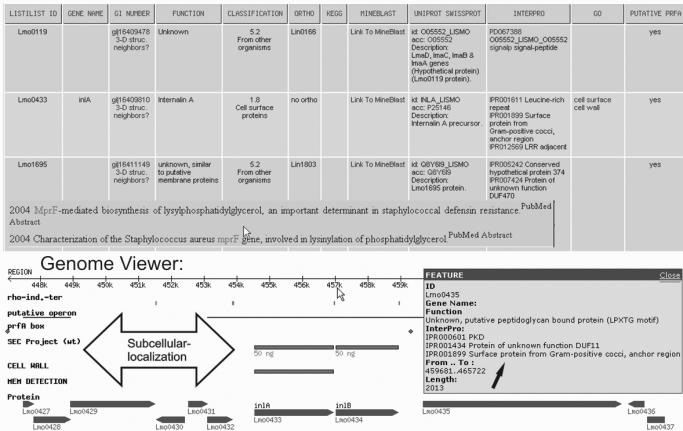
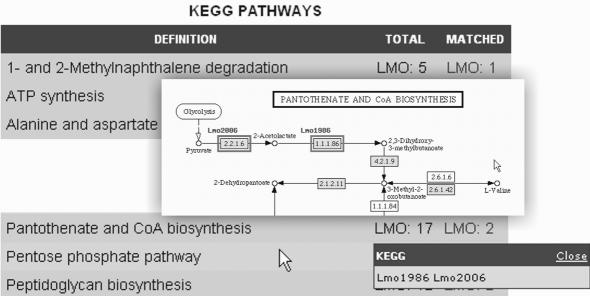
Listeria species are ubiquitous in the environment and often contaminate foods because they grow under conditions used for food preservation. Listeria monocytogenes, the human and animal pathogen, causes Listeriosis, an infection with a high mortality rate in risk groups such as immune-compromised individuals. Furthermore, L.monocytogenes is a model organism for the study of intracellular bacterial pathogens. The publication of its genome sequence and that of the non-pathogenic species Listeria innocua initiated numerous comparative studies and efforts to sequence all species comprising the genus. The Proteome database LEGER (http://leger2.gbf.de/cgi-bin/expLeger.pl) was developed to support functional genome analyses by combining information obtained by applying bioinformatics methods and from public databases to improve the original annotations. LEGER offers three unique key features: (i) it is the first comprehensive information system focusing on the functional assignment of genes and proteins; (ii) integrated visualization tools, KEGG pathway and Genome Viewer, alleviate the functional exploration of complex data; and (iii) LEGER presents results of systematic post-genome studies, thus facilitating analyses combining computational and experimental results. Moreover, LEGER provides an unpublished membrane proteome analysis of L.innocua and in total visualizes experimentally validated information about the subcellular localizations of 789 different listerial proteins.
Figures
References
-
- McLauchlin J., Mitchell R.T., Smerdon W.J., Jewell K. Listeria monocytogenes and listeriosis: a review of hazard characterisation for use in microbiological risk assessment of foods. Int. J. Food Microbiol. 2004;92:15–33. - PubMed
-
- Welch M.D., Rosenblatt J., Skoble J., Portnoy D.A., Mitchison T.J. Interaction of human Arp2/3 complex and the Listeria monocytogenes ActA protein in actin filament nucleation. Science. 1998;281:105–108. - PubMed
Publication types
MeSH terms
Substances
LinkOut - more resources
Full Text Sources
Other Literature Sources
