


The role of human metapneumovirus in upper respiratory tract infections in children: a 20-year experience
- PMID: 16388486
- PMCID: PMC1586246
- DOI: 10.1086/499274
The role of human metapneumovirus in upper respiratory tract infections in children: a 20-year experience
Abstract
Background: The role that human metapneumovirus (hMPV) plays in the etiology of upper respiratory tract infections (URIs) in children over a period of many years has not been evaluated previously.
Methods: By use of real-time reverse-transcriptase polymerase chain reaction, we retrospectively tested nasal wash (NW) specimens for hMPV that had been obtained from a cohort of 1532 infants and children with URIs who were prospectively followed for an average of 2.4 years during the period from 1982 to 2001. Virus genes were sequenced, and prospectively collected clinical data were analyzed.
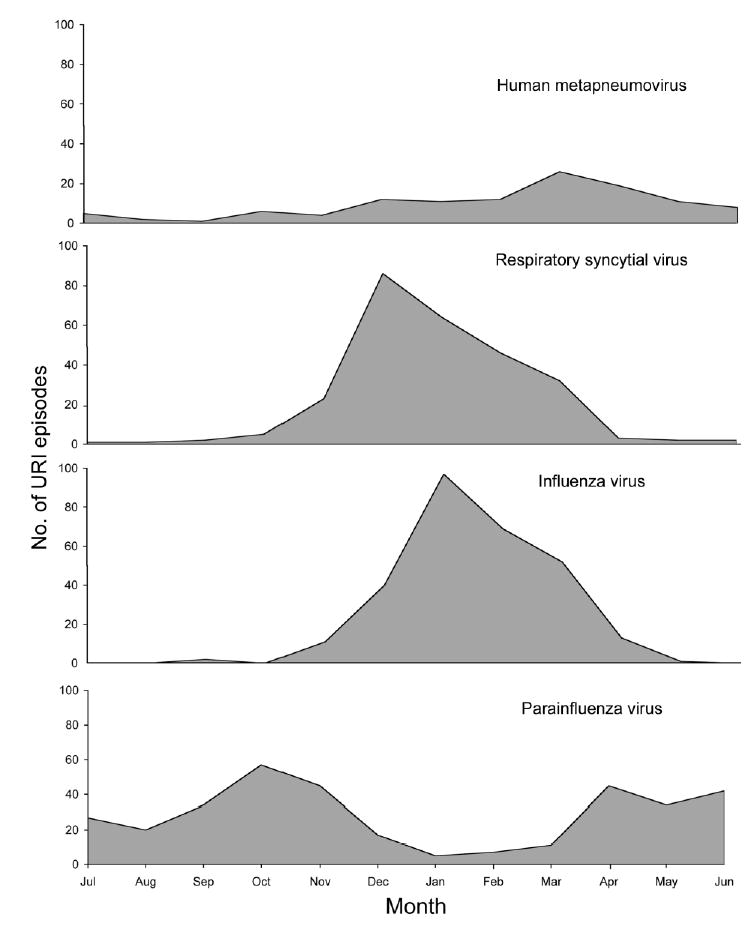
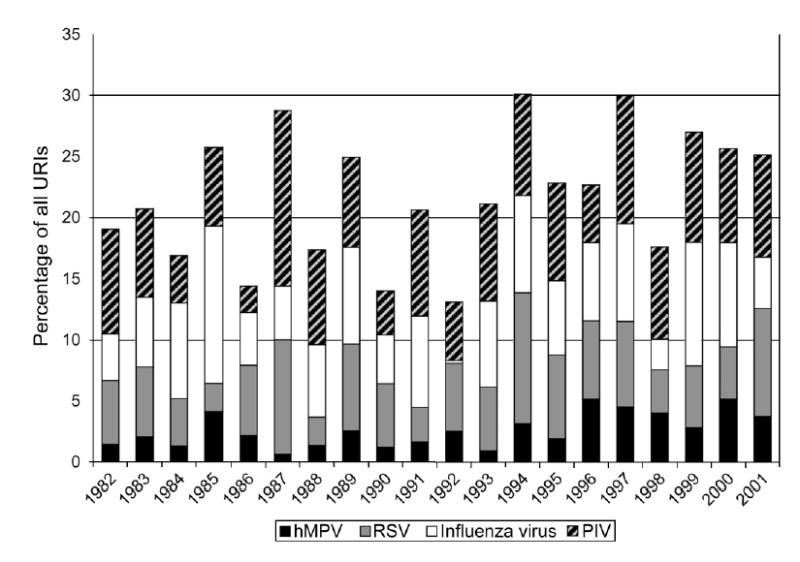
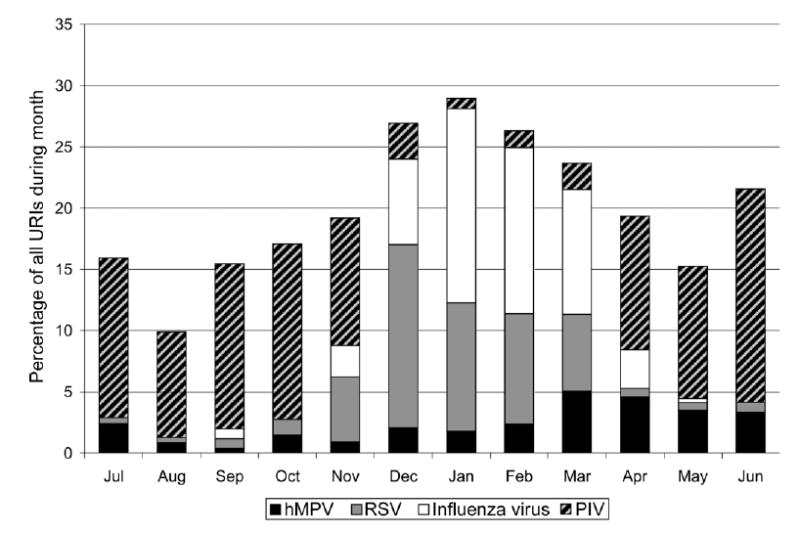
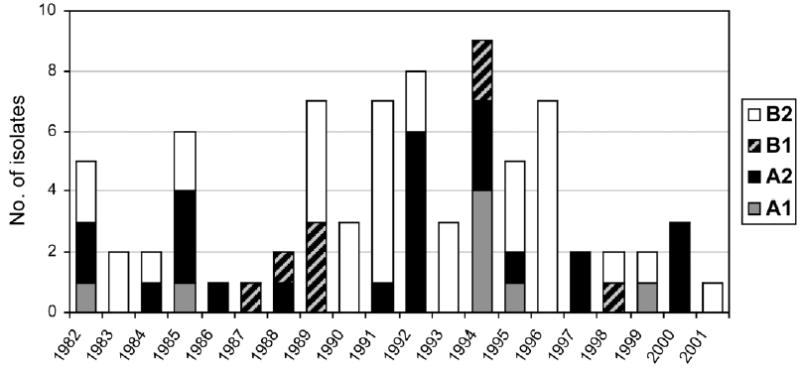
Results: There were 2710 visits for URIs for which routine cultures did not reveal a viral etiology. Archival NW specimens from 2384 of these visits were available. hMPV RNA was detected in 118 (5%) of 2384 specimens. The mean age of the children with hMPV infection was 20 months, and 78% of illnesses occurred from December through May. Acute otitis media (AOM) was detected in 50% of these children. hMPV circulated each year, but the numbers of isolates detected varied by year. Reinfections with both homologous and heterologous strains occurred. Four distinct genetic lineages were present over the 20 years of surveillance, with several different lineages circulating during some seasons.
Conclusions: hMPV was detected in a substantial number of children with URIs and concomitant AOM.
Conflict of interest statement
Potential conflicts of interest: J.V.W. received a onetime consulting fee from MedImmune in 2003 for attending a respiratory syncytial virus symposium and a onetime speaking fee from MedImmune for speaking at the Third Annual North Carolina Congress on Respiratory Viruses; K.M.E. receives grant support from MedImmune for influenza-vaccine studies; C.K.W., C.-F.Y., L.D.L., M.C., J.B.B., D.C., J.D.Q., and R.R.S. are employees of MedImmune; J.E.C. Jr. is a member of the Scientific Advisory Board of MedImmune and received research support for this study.
Figures
References
-
- Van den Hoogen BG, van Doornum GJ, Fockens JC, et al. Prevalence and clinical symptoms of human metapneumovirus infection in hospitalized patients. J Infect Dis. 2003;188:1571–7. - PubMed
-
- Falsey AR, Erdman D, Anderson LJ, Walsh EE. Human metapneumovirus infections in young and elderly adults. J Infect Dis. 2003;187:785–90. - PubMed
Publication types
MeSH terms
Substances
Grants and funding
LinkOut - more resources
Full Text Sources
Other Literature Sources
