


A systematic review of neurotransmitter deficits and treatments in frontotemporal dementia
- PMID: 16401839
- PMCID: PMC4499854
- DOI: 10.1212/01.wnl.0000191304.55196.4d
A systematic review of neurotransmitter deficits and treatments in frontotemporal dementia
Abstract
Objective: To evaluate neurotransmitter deficiencies and neurotransmitter-based treatments for frontotemporal dementia (FTD).
Methods: The authors conducted a systematic review of the literature on the mechanism and treatment of FTD and a meta-analysis of treatment studies of antidepressants for the behavioral symptoms of FTD.
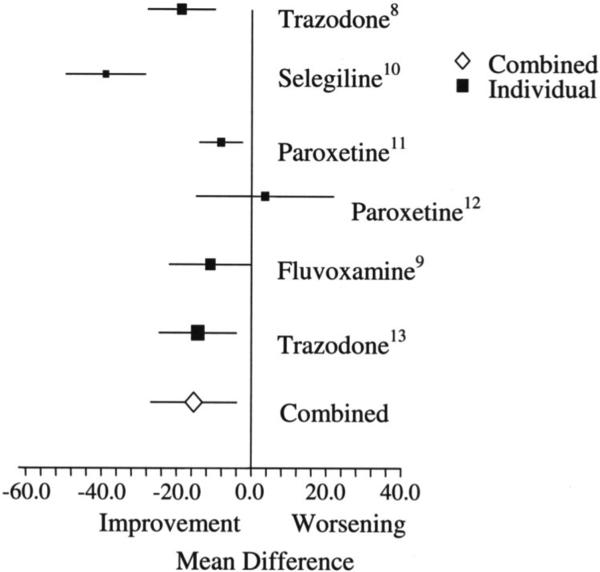
Results: Patients with FTD show deficiencies in the serotonin and dopamine neurotransmitter systems, while the acetylcholine system appears relatively intact. Antidepressant treatment significantly improves behavioral symptoms in FTD, but most studies are small and uncontrolled. Serotonergic treatments appear to improve the behavioral but not cognitive symptoms of FTD.
Conclusions: Studies of neurotransmitter deficiencies in frontotemporal dementia (FTD) can be helpful in developing treatments. Treatment studies on FTD are scarce, given the prevalence and severity of this illness. Larger, well-controlled treatment studies are required to reach more definitive conclusions about treatment efficacy. Multicenter studies are likely the best way to complete treatment studies in a timely manner.
Figures
References
-
- Ratnavalli E, Brayne C, Dawson K, Hodges JR. The prevalence of frontotemporal dementia. Neurology. 2002;58:1615–1621. - PubMed
-
- Neary D, Snowden JS, Gustafson L, et al. Frontotemporal lobar degeneration: a consensus on clinical diagnostic criteria. Neurology. 1998;51:1546–1554. - PubMed
-
- Kertesz A, Munoz DG. Frontotemporal dementia. Med Clin North Am. 2002;86:501–518. - PubMed
-
- Litvan I. Therapy and management of frontal lobe dementia patients. Neurology. 2001;56(11 suppl 4):S41–45. - PubMed
Publication types
MeSH terms
Substances
Grants and funding
LinkOut - more resources
Full Text Sources
Other Literature Sources
Medical
