A new endogenous ATP analog (ApppI) inhibits the mitochondrial adenine nucleotide translocase (ANT) and is responsible for the apoptosis induced by nitrogen-containing bisphosphonates
- PMID: 16402039
- PMCID: PMC1616989
- DOI: 10.1038/sj.bjp.0706628
A new endogenous ATP analog (ApppI) inhibits the mitochondrial adenine nucleotide translocase (ANT) and is responsible for the apoptosis induced by nitrogen-containing bisphosphonates
Abstract
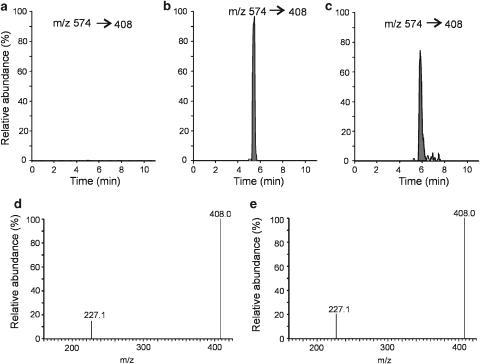
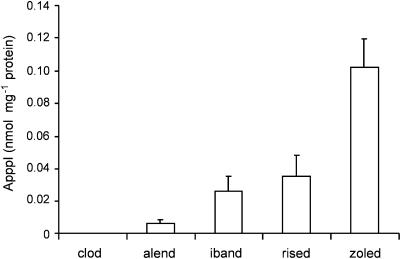
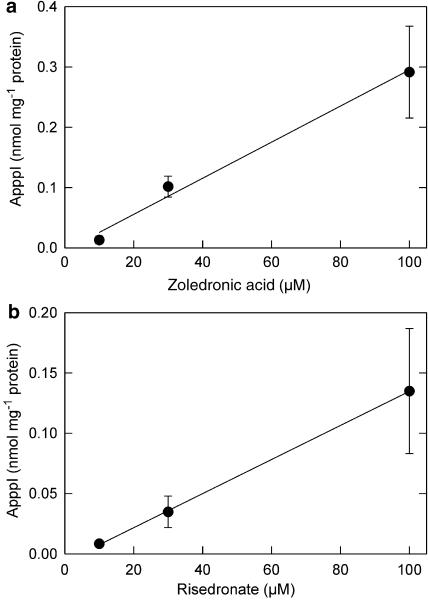
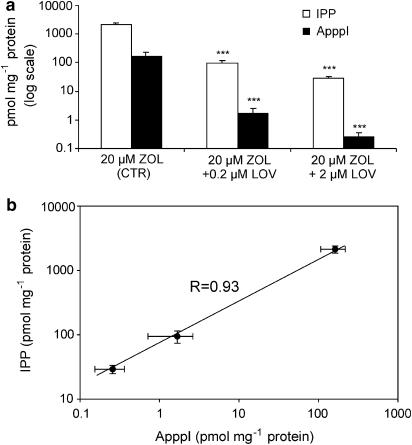
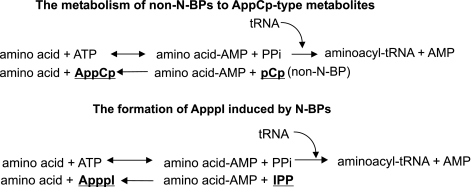
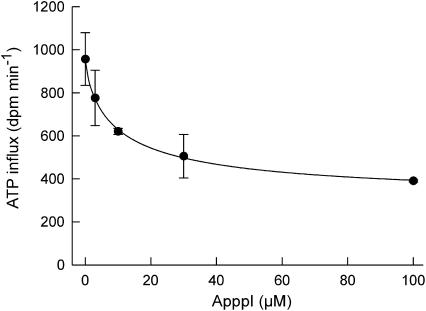
1. Bisphosphonates are currently the most important class of antiresorptive drugs used for the treatment of diseases with excess bone resorption. On the basis of their molecular mechanism of action, bisphosphonates can be divided into two pharmacological classes; nitrogen-containing (N-BPs) and non-nitrogen-containing bisphosphonates (non-N-BP). Both classes induce apoptosis but they evoke it differently; N-BPs by inhibiting the intracellular mevalonate pathway and protein isoprenylation, and non-N-BPs via cytotoxic ATP analog-type metabolites. N-BPs are not metabolized to ATP analogs, but we report here that these bisphosphonates can induce formation of a novel ATP analog (ApppI) as a consequence of the inhibition of the mevalonate pathway in cells. We also investigated whether ApppI is involved in the apoptosis induced by N-BPs. 2. Mass spectrometry and NMR were used to identify ApppI in N-BP treated osteoclasts, macrophages and glioma cells. The potency of different bisphosphonates to promote ApppI production was tested in J774 macrophages. The effects of ApppI on ADP/ATP translocase in isolated mitochondria and its capability to induce apoptosis in osteoclasts were also studied. 3. ApppI production correlated well with the capacity of N-BPs to inhibit mevalonate pathway. ApppI inhibited the mitochondrial ADP/ATP translocase and caused apoptosis in osteoclasts. 4. In conclusion, these findings provide the basis for a new mechanism of action for N-BPs. Some of these very potent bisphosphonates, such as zoledronic acid, represent a third class of bisphosphonates that can act both via the inhibition of the mevalonate pathway and by the blockade of mitochondrial ADP/ATP translocase, which is known to be involved in the induction of apoptosis.
Figures




References
-
- AURIOLA S., FRITH J.C., ROGERS M.J., KOIVUNIEMI A., MÖNKKÖNEN J. Identification of adenine nucleotide-containing metabolites of bisphosphonate drugs using ion-pair liquid chromatography-electrospray mass spectrometry. J. Chromatogr. B. 1997;704:187–195. - PubMed
-
- BENFORD H.L., FRITH J.C., AURIOLA S., MÖNKKÖNEN J., ROGERS M.J. Farnesol and geranylgeraniol prevent activation of caspases by aminobisphosphonates: biochemical evidence for two distinct pharmacological classes of bisphosphonate drugs. Mol. Pharmacol. 1999;56:131–140. - PubMed
-
- BOYDE A., ALI N.N., JONES S.J. Resorption of dentine by isolated osteoclasts in vitro. Br. Dent. J. 1984;156:216–220. - PubMed
-
- CHAMBERS T.J., THOMSON B.M., FULLER K. Effect of substrate composition on bone resorption by rabbit osteoclasts. J. Cell Sci. 1984;70:61–71. - PubMed
-
- CHAVEZ E., ZAZUETA C., GARCIA N. Carboxyatractyloside increases the effect of oleate on mitochondrial permeability transition. FEBS Lett. 1999;445:189–191. - PubMed
Publication types
MeSH terms
Substances
LinkOut - more resources
Full Text Sources
Other Literature Sources