


Creation and implications of a phenome-genome network
- PMID: 16404398
- PMCID: PMC2716377
- DOI: 10.1038/nbt1150
Creation and implications of a phenome-genome network
Abstract
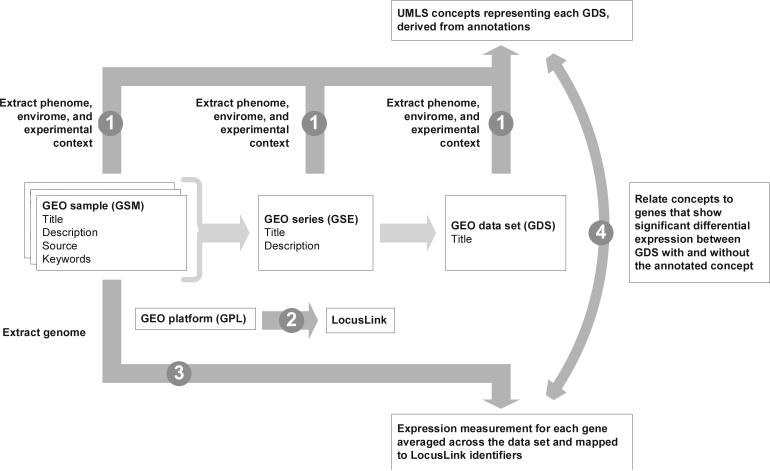
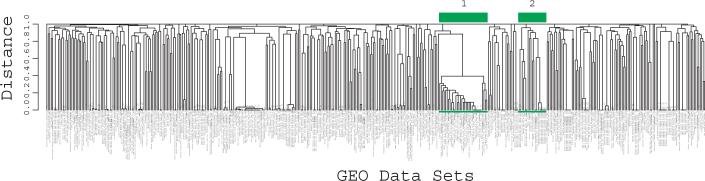
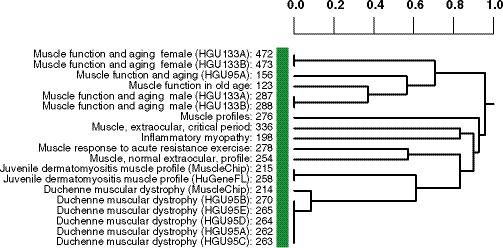
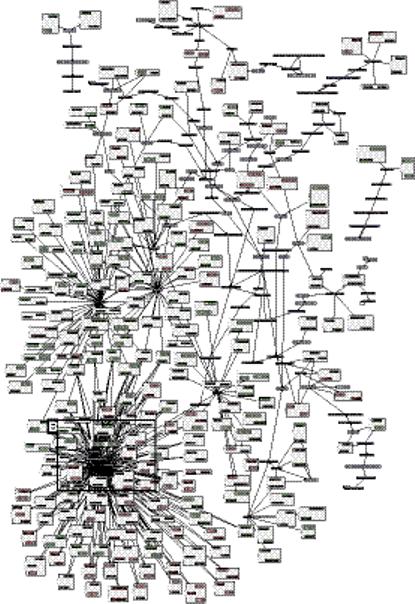
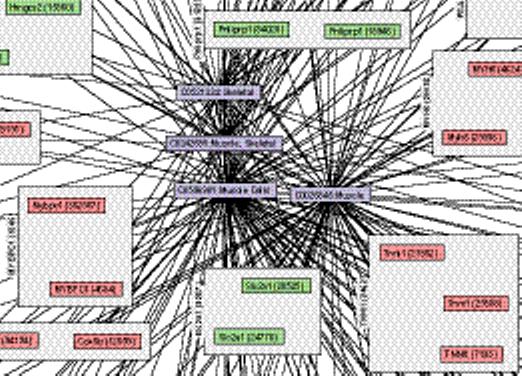
Although gene and protein measurements are increasing in quantity and comprehensiveness, they do not characterize a sample's entire phenotype in an environmental or experimental context. Here we comprehensively consider associations between components of phenotype, genotype and environment to identify genes that may govern phenotype and responses to the environment. Context from the annotations of gene expression data sets in the Gene Expression Omnibus is represented using the Unified Medical Language System, a compendium of biomedical vocabularies with nearly 1-million concepts. After showing how data sets can be clustered by annotative concepts, we find a network of relations between phenotypic, disease, environmental and experimental contexts as well as genes with differential expression associated with these concepts. We identify novel genes related to concepts such as aging. Comprehensively identifying genes related to phenotype and environment is a step toward the Human Phenome Project.
Figures
References
-
- Carson JP, et al. Pharmacogenomic identification of targets for adjuvant therapy with the topoisomerase poison camptothecin. Cancer Res. 2004;64:2096–104. - PubMed
-
- Zhukov TA, Johanson RA, Cantor AB, Clark RA, Tockman MS. Discovery of distinct protein profiles specific for lung tumors and pre-malignant lung lesions by SELDI mass spectrometry. Lung Cancer. 2003;40:267–79. - PubMed
-
- Yanagisawa K, et al. Proteomic patterns of tumour subsets in non-small-cell lung cancer. Lancet. 2003;362:433–9. - PubMed
-
- Freimer N, Sabatti C. The human phenome project. Nat Genet. 2003;34:15–21. - PubMed
Publication types
MeSH terms
Substances
Grants and funding
LinkOut - more resources
Full Text Sources
Other Literature Sources
