


Scoliosis treatment using spinal manipulation and the Pettibon Weighting System: a summary of 3 atypical presentations
- PMID: 16409627
- PMCID: PMC1363725
- DOI: 10.1186/1746-1340-14-1
Scoliosis treatment using spinal manipulation and the Pettibon Weighting System: a summary of 3 atypical presentations
Abstract
Background: Given the relative lack of treatment options for mild to moderate scoliosis, when the Cobb angle measurements fall below the 25-30 degrees range, conservative manual therapies for scoliosis treatment have been increasingly investigated in recent years. In this case series, we present 3 specific cases of scoliosis.
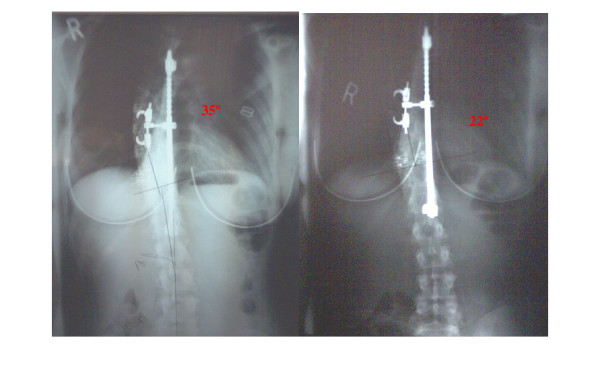
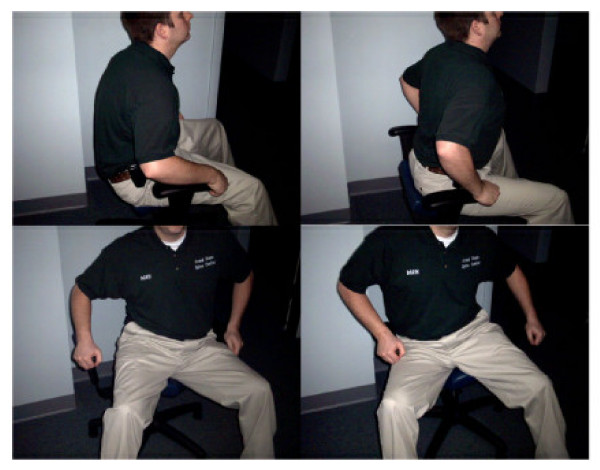
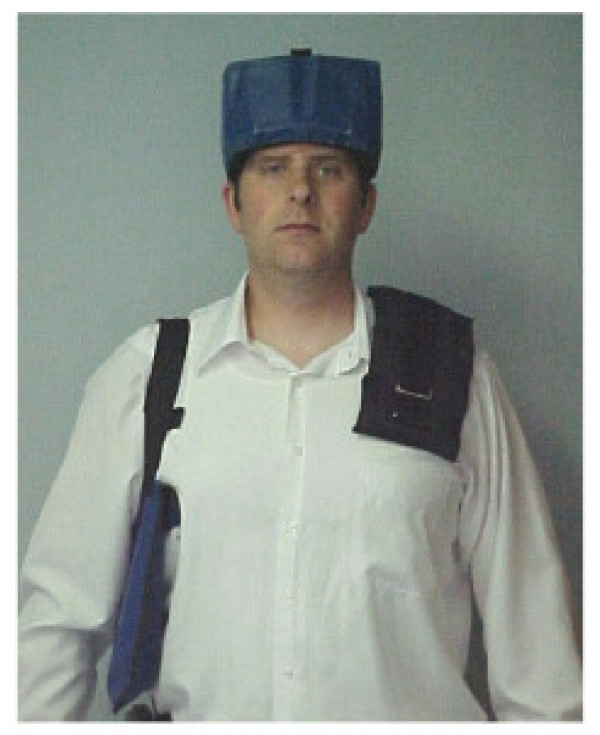
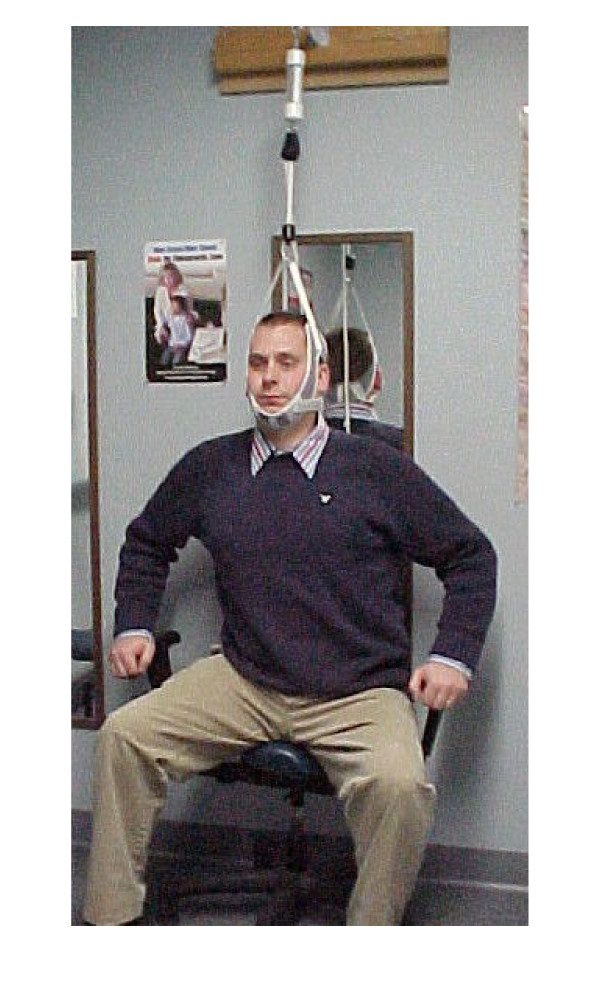
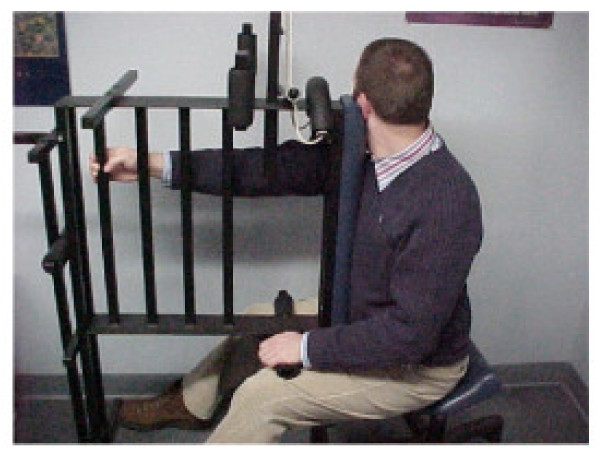
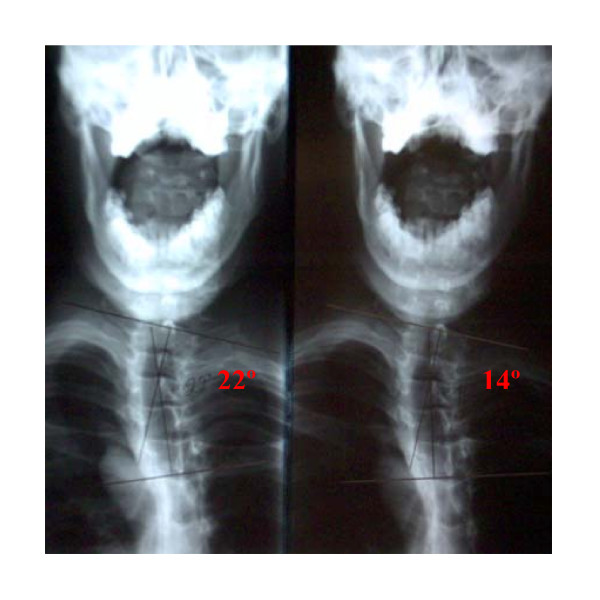
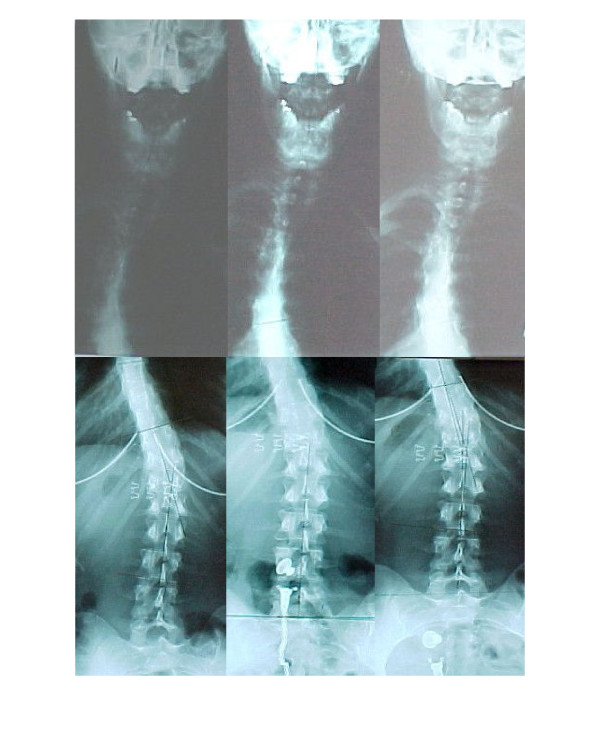
Case presentation: Patient presentation, examination, intervention and outcomes are detailed for each case. The types of scoliosis presented here are left thoracic, idiopathic scoliosis after Harrington rod instrumentation, and a left thoracic scoliosis secondary to Scheuermann's Kyphosis. Each case carries its own clinical significance, in relation to clinical presentation. The first patient presented for chiropractic treatment with a 35 degrees thoracic dextroscoliosis 18 years following Harrington Rod instrumentation and fusion. The second patient presented with a 22 degrees thoracic levoscoliosis and concomitant Scheuermann's Disease. Finally, the third case summarizes the treatment of a patient with a primary 37 degrees idiopathic thoracic levoscoliosis. Each patient was treated with a novel active rehabilitation program for varying lengths of time, including spinal manipulation and a patented external head and body weighting system. Following a course of treatment, consisting of clinic and home care treatments, post-treatment radiographs and examinations were conducted. Improvement in symptoms and daily function was obtained in all 3 cases. Concerning Cobb angle measurements, there was an apparent reduction in Cobb angle of 13 degrees , 8 degrees , and 16 degrees over a maximum of 12 weeks of treatment.
Conclusion: Although mild to moderate reductions in Cobb angle measurements were achieved in these cases, these improvements may not be related to the symptomatic and functional improvements. The lack of a control also includes the possibility of a placebo effect. However, this study adds to the growing body of literature investigating methods by which mild to moderate cases of scoliosis can be treated conservatively. Further investigation is necessary to determine whether curve reduction and/or manipulation and/or placebo was responsible for the symptomatic and functional improvements noted in these cases.
Figures
References
-
- Soucacos PN, Zacharis K, Soultanis K, Gelalis J, Xenakis T, Beris AE. Risk factors for idiopathic scoliosis: review of a 6-year prospective study. Orthopedics. 2000;23:833–838. - PubMed
-
- Souza TA. Differential diagnosis and management for the chiropractor: protocols and algorithms. Aspen Publishers; 2001.
LinkOut - more resources
Full Text Sources
