


Epidemiological characteristics of Salmonella Typhimurium isolated from animals and feed in Poland
- PMID: 16409666
- PMCID: PMC2870369
- DOI: 10.1017/S0950268805004838
Epidemiological characteristics of Salmonella Typhimurium isolated from animals and feed in Poland
Abstract
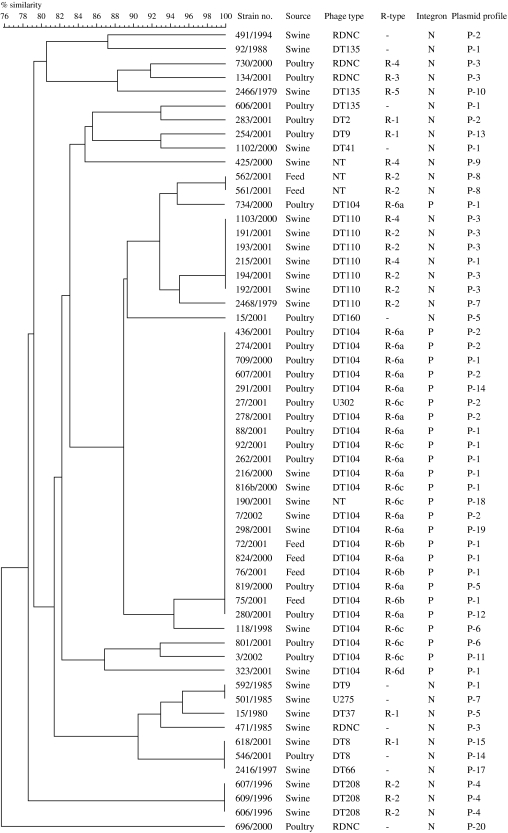
Fifty-seven Salmonella Typhimurium strains isolated from poultry, swine and animal feed in Poland during the years 1979-1998 and 2000-2002 were analysed with conventional and molecular techniques. Antimicrobial resistance as well as multiresistance was found, respectively, in 80.1% and 56.1% of the isolates and most frequently among isolates from 2000-2002. Of several phage types noted, DT104 was prevalent among poultry, swine and feed isolates. DT104, U302 and non-typable strains had a multiple resistant profile (ACSSuT) due to the presence of class I integrons. Pulse-field gel electrophoresis of XbaI and BlnI digest showed high genomic similarity between the strains and confirmed clonal spread of S. Typhimurium infections. Plasmid profiling allowed further differentiation of the strains. We have, therefore, confirmed the appearance of S. Typhimurium DT104 showing genome integrated integron-mediated antimicrobial resistance in Poland. These findings are significant for public and animal health risks and document the dissemination of DT104 epidemic strains into new geographical regions.
Figures
References
-
- Poppe C, Ziebell K, Martin L, Allen K. Diversity in antimicrobial resistance and other characteristics among Salmonella Typhimurium DT104 isolates. Microb Drug Resist. 2002;8:107–122. - PubMed
-
- Sandvang D, Jensen LB, Baggesen DL, Baloda SB. Persistence of a Salmonella enterica serotype Typhimurium clone in Danish pig production units and farmhouse environment studied by pulsed field gel electro-phoresis (PFGE) FEMS Microbiol Lett. 2000;187:21–25. - PubMed
MeSH terms
LinkOut - more resources
Full Text Sources
