


Latency: the hidden HIV-1 challenge
- PMID: 16412247
- PMCID: PMC1379657
- DOI: 10.1186/1742-4690-3-7
Latency: the hidden HIV-1 challenge
Abstract
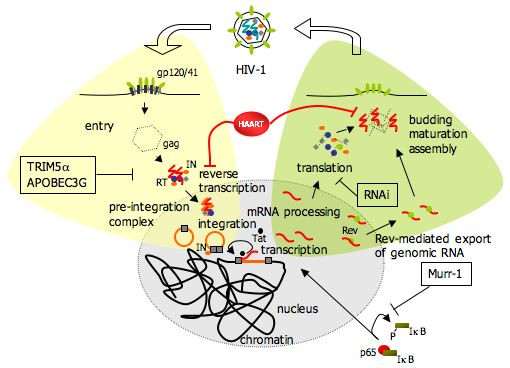
Eradication of HIV-1 from an infected individual cannot be achieved by current regimens. Viral reservoirs established early during the infection remain unaffected by anti-retroviral therapy for a long time and are able to replenish systemic infection upon interruption of the treatment. Therapeutic targeting of viral latency will require a better understanding of the basic mechanisms underlying the establishment and long-term maintenance of HIV-1 in resting memory CD4 T cells, the most prominent reservoir of transcriptionally silent provirus. Since the molecular mechanisms that permit long term transcriptional control of proviral gene expression in these cells are still obscure, this review aims at summarizing the various aspects of the problem that need to be considered. In particular, this review will focus the attention on the control of transcription imposed by chromatin through various epigenetic mechanisms. Exploring the molecular details of viral latency will provide new insights for eventual future therapeutics that aim at viral eradication.
Figures
References
-
- Perelson AS, Neumann AU, Markowitz M, Leonard JM, Ho DD. HIV-1 dynamics in vivo: virion clearance rate, infected cell life-span, and viral generation time. Science. 1996;271:1582–1586. - PubMed
Publication types
MeSH terms
Substances
LinkOut - more resources
Full Text Sources
Other Literature Sources
Medical
Research Materials
