


Neurodegeneration with brain iron accumulation
- PMID: 16416393
- PMCID: PMC2117327
Neurodegeneration with brain iron accumulation
Abstract
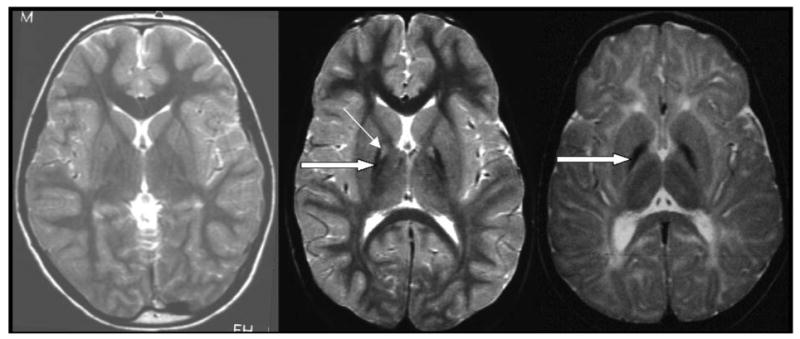
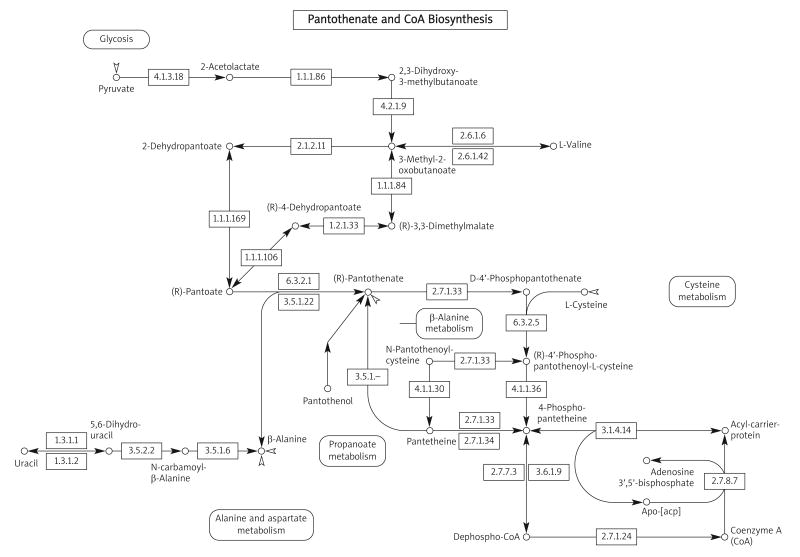
Neurodegeneration with brain iron accumulation (NBIA) describes a group of progressive extrapyramidal disorders with radiographic evidence of focal iron accumulation in the brain, usually in the basal ganglia. Patients previously diagnosed with Hallervorden-Spatz syndrome fall into this category. Mutations in the PANK2 gene account for the majority of NBIA cases and cause an autosomal recessive inborn error of coenzyme A metabolism called pantothenate kinase-associated neurodegeneration (PKAN). PKAN is characterized by dystonia and pigmentary retinopathy in children or speech and neuropsychiatric disorders in adults. In addition, a specific pattern on brain MRI, called the eye-of-the-tiger sign, is virtually pathognomonic for the disease. Pantothenate kinase is essential to coenzyme A biosynthesis, and the PANK2 protein is targeted to the mitochondria. Hypotheses of PKAN pathogenesis are based on the predictions of tissue-specific coenzyme A deficiency and the accumulation of cysteine-containing substrates. Identification of the major NBIA gene has led to more accurate clinical delineation of the diseases that comprise this group, a molecular diagnostic test for PKAN, and hypotheses for treatment.
Figures
References
-
- Arawaka S, Saito Y, Murayama S, Mori H. Lewy body in neurodegeneration with brain iron accumulation type 1 is immunoreactive for alpha-synuclein. Neurology. 1998;51:887–889. - PubMed
-
- Baumeister FA, Auer DP, Hortnagel K, Freisinger P, Meitinger T. The eye-of-the-tiger sign is not a reliable disease marker for Hallervorden-Spatz syndrome. Neuropediatrics. 2005;36:221–222. - PubMed
-
- Benke T, Butterworth B. Palilalia and repetitive speech: two case studies. Brain Lang. 2001;78:62–81. - PubMed
Publication types
MeSH terms
Substances
Grants and funding
LinkOut - more resources
Full Text Sources
Medical
