


The impact of empiric antimicrobial therapy with a β-lactam and fluoroquinolone on mortality for patients hospitalized with severe pneumonia
- PMID: 16420641
- PMCID: PMC1550860
- DOI: 10.1186/cc3934
The impact of empiric antimicrobial therapy with a β-lactam and fluoroquinolone on mortality for patients hospitalized with severe pneumonia
Abstract
Introduction: National clinical practice guidelines have recommended specific empiric antimicrobial regimes for patients with severe community-acquired pneumonia. However, evidence confirming improved mortality with many of these regimes is lacking. Our aim was to determine the association between the empiric use of a β-lactam with fluoroquinolone, compared with other recommended antimicrobial therapies, and mortality in patients hospitalized with severe community-acquired pneumonia.
Methods: A retrospective observational study was conducted at two tertiary teaching hospitals. Eligible subjects were admitted with a diagnosis of community-acquired pneumonia and had a chest X-ray and a discharge ICD-9 diagnosis consistent with this. Subjects were excluded if they received 'comfort measures only' during the admission, had been transferred from another acute care hospital, did not meet criteria for severe pneumonia, or were treated with non-guideline-concordant antibiotics. A multivariable logistic regression model was used to assess the association between 30-day mortality and the use of a β-lactam antibiotic with a fluoroquinolone compared with other guideline-concordant therapies, after adjustment for potential confounders including a propensity score.
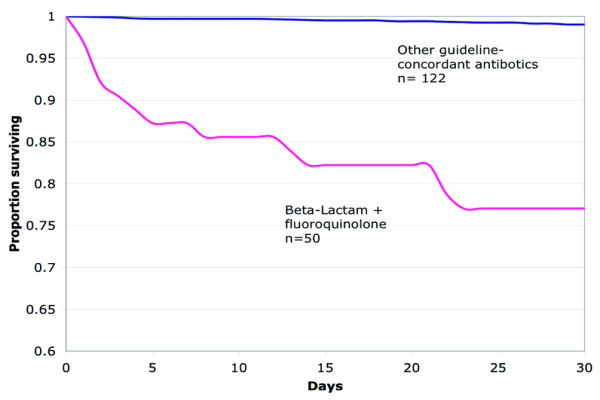
Results: Data were abstracted on 172 subjects at the two hospitals. The mean age was 63.5 years (SD 15.0). The population was 88% male; 91% were admitted through the emergency department and 62% were admitted to the intensive care unit within the first 24 hours after admission. Mortality was 19.8% at 30 days. After adjustment for potential confounders the use of a β-lactam with a fluoroquinolone (odds ratio 2.71, 95% confidence interval 1.2 to 6.1) was associated with increased mortality.
Conclusion: The use of initial empiric antimicrobial therapy with a β-lactam and a fluoroquinolone was associated with increased short-term mortality for patients with severe pneumonia in comparison with other guideline-concordant antimicrobial regimes. Further research is needed to determine the range of appropriate empiric antimicrobial therapies for patients with severe community-acquired pneumonia.
Figures
References
-
- Freid VM, Prager K, MacKay AP, Xia H. Health, United States, 2003, With Chartbook on Trends in the Health of Americans. Hyattsville, MD: National Center for Health Statistics; 2003.
-
- Gilbert K, Fine MJ. Assessing prognosis and predicting patient outcomes in community-acquired pneumonia. Semin Respir Infect. 1994;9:140–152. - PubMed
-
- The British Thoracic Society Guidelines for the management of community-acquired pneumonia in adults admitted to the hospital. Br J Hosp Med. 1993;49:346–350. - PubMed
-
- Gialdroni Grassi G, Bianchi L. Guidelines for the management of community-acquired pneumonia in adults. Italian Society of Pneumology. Italian Society of Respiratory Medicine. Italian Society of Chemotherapy. Monaldi Arch Chest Dis. 1995;50:21–27. - PubMed
-
- Niederman M, Bass JB, Campbell GD, Fein AM, Grossman RF, Mandell LA, Marrie TJ, Sarosi GA, Torres A, Vu VL. Guidelines for the initial management of adult with community-acquired pneumonia: diagnosis, assessment of severity, and initial antimicrobial therapy. Am Rev Respir Dis. 1993;148:1418–1426. - PubMed
Publication types
MeSH terms
Substances
Grants and funding
LinkOut - more resources
Full Text Sources
Medical
