


Genistein inhibits invasive potential of human hepatocellular carcinoma by altering cell cycle, apoptosis, and angiogenesis
- PMID: 16425425
- PMCID: PMC4355795
- DOI: 10.3748/wjg.v11.i41.6512
Genistein inhibits invasive potential of human hepatocellular carcinoma by altering cell cycle, apoptosis, and angiogenesis
Abstract
Aim: To study the in vitro and in vivo inhibitory effects of genistein on invasive potential of Bel 7402 hepatocellular carcinoma (HCC) cells and to explore the underlying mechanism.
Methods: Bel 7402 HCC cells were exposed to genistein. The invasive activity of tumor cells was assayed in transwell cell culture chamber. p125FAK expression and cell cycle were evaluated by a functional assay. Cell apoptosis analysis was performed with TUNEL method. In addition, bilateral subrenal capsule xenograft transplantation of HCC was performed in 10 nude mice. Genistein was injected and the invasion of HCC into the renal parenchyma was observed. Microvessels with immunohistochemical staining were detected.
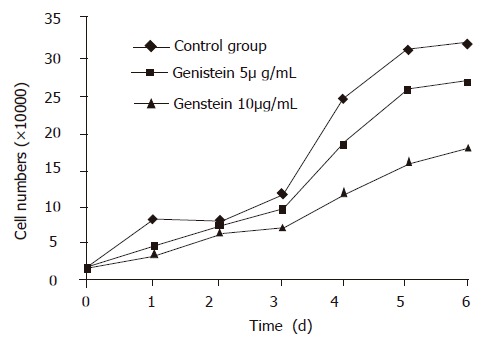
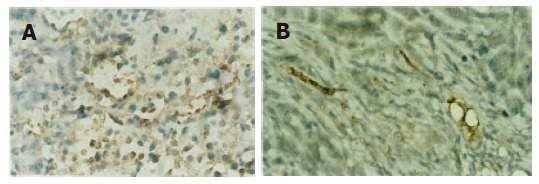
Results: Genistein significantly inhibited the growth of Bel 7402 cells, the inhibitory rate of tumor cells was 26-42%. The invasive potential of Bel 7402 cells in vitro was significantly inhibited, the inhibitory rate was 11-28%. Genistein caused G2/M cell cycle arrest, S phase decreased significantly. The occurrence of apoptosis in genistein group increased significantly. The expression of p125FAK in 5 microg/mL genistein group (15.26+/-0.16%) and 10 microg/mL genistein group (12.89+/-0.36%) was significantly lower than that in the control group (19.75+/-1.12%, P<0.05). Tumor growth in genistein-treated nude mice was significantly retarded in comparison to control mice, the inhibitory rate of tumor growth was about 20%. Genistein also significantly inhibited the invasion of Bel 7402 cells into the renal parenchyma of nude mice with xenograft transplant. The positive unit value of microvessels in genistein-treated group (10.422+/-0.807) was significantly lower than that in control group (22.330+/-5.696, P<0.01).
Conclusion: Genistein can effectively inhibit the invasive potential of Bel 7402 HCC cells by altering cell cycle, apoptosis and angiogenesis, inhibition of focal adhesion kinase may play a significant role in this process.
Figures
References
-
- Park OJ, Surh YJ. Chemopreventive potential of epigallocatechin gallate and genistein: evidence from epidemiological and laboratory studies. Toxicol Lett. 2004;150:43–56. - PubMed
-
- Magee PJ, Rowland IR. Phyto-oestrogens, their mechanism of action: current evidence for a role in breast and prostate cancer. Br J Nutr. 2004;91:513–531. - PubMed
-
- Sarkar FH, Li Y. Soy isoflavones and cancer prevention. Cancer Invest. 2003;21:744–757. - PubMed
-
- Sarkar FH, Li Y. Mechanisms of cancer chemoprevention by soy isoflavone genistein. Cancer Metastasis Rev. 2002;21:265–280. - PubMed
-
- Adlercreutz CH, Goldin BR, Gorbach SL, Höckerstedt KA, Watanabe S, Hämäläinen EK, Markkanen MH, Mäkelä TH, Wähälä KT, Adlercreutz T. Soybean phytoestrogen intake and cancer risk. J Nutr. 1995;125:757S–770S. - PubMed
Publication types
MeSH terms
Substances
LinkOut - more resources
Full Text Sources
Medical
