


A Model of Feeding Readiness for Preterm Infants
Affiliations
- PMID: 16429606
- PMCID: PMC1317102
Item in Clipboard
A Model of Feeding Readiness for Preterm Infants
Neonatal Intensive Care.
2004.
Abstract
This paper presents a theoretical model of bottle feeding readiness in preterm infants, which hypothesizes relationships between bottle feeding readiness, experience, and outcomes. The synactive theory of development provided the conceptual foundation for the model. The model, which is currently being tested, is designed to establish bottle feeding readiness criteria that will help nurses decide when to offer a bottle to a preterm infant The model may also provide a useful framework for determining preterm infant readiness for other aspects of care.
Figures
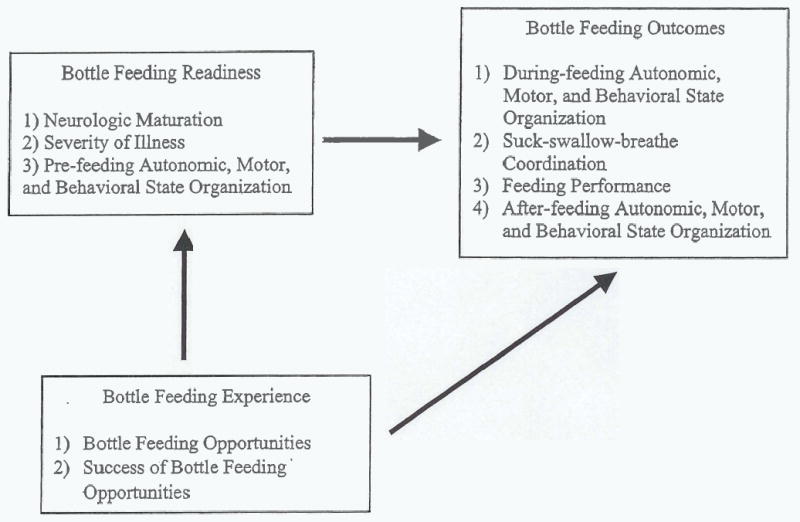
Model of feeding readiness for preterm infants
References
-
- Aguayo J. Maternal lactation for preterm infants. Early Human Development. 2001;65:S19–S29. - PubMed
-
- Alberts JR. Learning as adaptation of the infant. Acta Paediatrica Supplement. 1994;397:77–85. - PubMed
-
- Als H, Brazelton TB. A new model of assessing the behavioral organization in preterm and fullterm infants. Journal of the American Academy of Child Psychiatry. 1981;20:239–263. - PubMed
-
- Als H, Duffy FH, McAnulty GB. Effectiveness of individualized neurodevelopmental care in the newborn intensive care unit (NICU) Acta Paediatrica Supplement. 1996;416:21–30. - PubMed
-
- Als H, Gilkerson L. Developmentally supportive care in the neonatal intensive care unit. Zero to Three. 1995;15 (6):3–10.
Grants and funding
LinkOut - more resources
Full Text Sources