


Associations between gamma-glutamyl transferase, metabolic abnormalities and inflammation in healthy subjects from a population-based cohort: a possible implication for oxidative stress
- PMID: 16437656
- PMCID: PMC4725082
- DOI: 10.3748/wjg.v11.i45.7109
Associations between gamma-glutamyl transferase, metabolic abnormalities and inflammation in healthy subjects from a population-based cohort: a possible implication for oxidative stress
Abstract
Aim: To examine the relationships between gamma-glutamyl-transferase (GGT), alanine-aminotransferase (ALT), aspartate-aminotransferase (AST) and various metabolic parameters, C-reactive protein (CRP) and an oxidative stress marker (nitrotyrosine, NT) in subjects without any metabolic abnormalities from a population-based sample.
Methods: Two hundred and five subjects with normal body mass index (BMI), glucose tolerance, and without any metabolic abnormality were studied out of 1 339 subjects, without known liver diseases, alcohol abuse or use of hepatotoxic drugs, who are representative of the 45-64 aged population of Asti (north-western Italy).
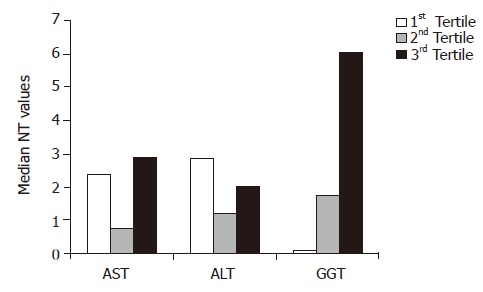
Results: In all patients metabolic parameters and hs-CRP levels linearly increase from the lowest to the highest ALT and GGT tertiles, while in subjects without metabolic abnormalities, there is a significant association between fasting glucose, uric acid, waist circumference, hs-CRP, triglyceride values, and GGT levels. In these subjects, male sex, higher hs-CRP and glucose levels are associated with GGT levels in a multiple regression model, after adjustments for multiple confounders. In the same model, median NT levels are significantly associated with the increasing GGT tertile (beta = 1.06; 95%CI 0.67-1.45), but not with the AST and ALT tertiles. In a multiple regression model, after adjusting for age, sex, BMI, waist, smoking, and alcohol consumption, both NT (beta = 0.05; 95%CI 0.02-0.08) and hs-CRP levels (beta = 0.09; 95%CI 0.03-0.15) are significantly associated with fasting glycemia.
Conclusion: GGT, an easy, universally standardized and available measurement, could represent an early marker of sub-clinical inflammation and oxidative stress in otherwise healthy individuals. Prospective studies are needed to establish if GGT could predict future diabetes in these subjects.
Figures
References
-
- Nilssen O, Førde OH. Seven-year longitudinal population study of change in gamma-glutamyltransferase: the Tromsø Study. Am J Epidemiol. 1994;139:787–792. - PubMed
-
- Perry IJ, Wannamethee SG, Shaper AG. Prospective study of serum gamma-glutamyltransferase and risk of NIDDM. Diabetes Care. 1998;21:732–737. - PubMed
-
- Vozarova B, Stefan N, Lindsay RS, Saremi A, Pratley RE, Bogardus C, Tataranni PA. High alanine aminotransferase is associated with decreased hepatic insulin sensitivity and predicts the development of type 2 diabetes. Diabetes. 2002;51:1889–1895. - PubMed
-
- Lee DH, Jacobs DR, Gross M, Kiefe CI, Roseman J, Lewis CE, Steffes M. Gamma-glutamyltransferase is a predictor of incident diabetes and hypertension: the Coronary Artery Risk Development in Young Adults (CARDIA) Study. Clin Chem. 2003;49:1358–1366. - PubMed
-
- Lee DH, Ha MH, Kim JH, Christiani DC, Gross MD, Steffes M, Blomhoff R, Jacobs DR. Gamma-glutamyltransferase and diabetes--a 4 year follow-up study. Diabetologia. 2003;46:359–364. - PubMed
MeSH terms
Substances
LinkOut - more resources
Full Text Sources
Other Literature Sources
Research Materials
Miscellaneous
