


Effect of rhPDGF-BB on bone turnover during periodontal repair
- PMID: 16441739
- PMCID: PMC2579262
- DOI: 10.1111/j.1600-051X.2005.00870.x
Effect of rhPDGF-BB on bone turnover during periodontal repair
Abstract
Purpose: Growth factors such as platelet-derived growth factor (PDGF) exert potent effects on wound healing including the regeneration of periodontia. Pyridinoline cross-linked carboxyterminal telopeptide of type I collagen (ICTP) is a well-known biomarker of bone turnover, and as such is a potential indicator of osseous metabolic activity. The objective of this study was to evaluate the release of the ICTP into the periodontal wound fluid (WF) following periodontal reconstructive surgery using local delivery of highly purified recombinant human PDGF (rhPDGF)-BB.
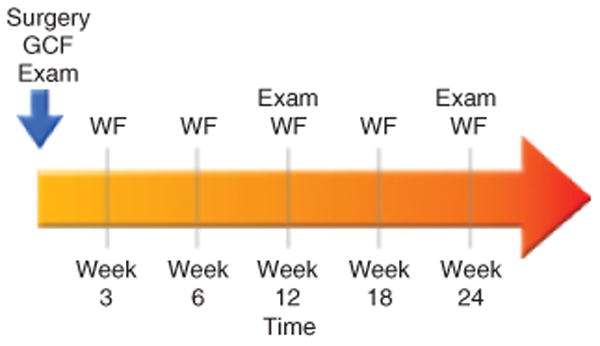
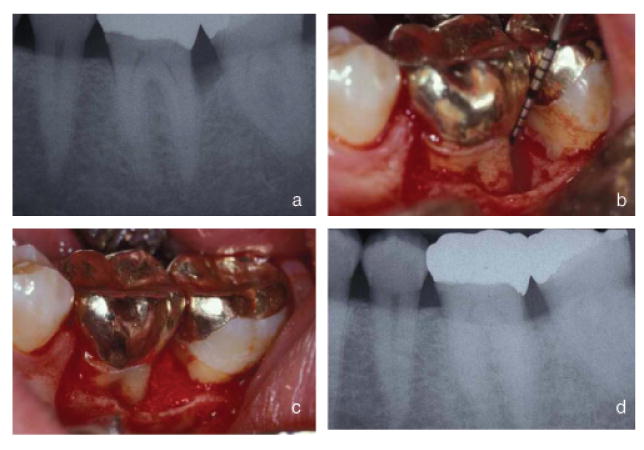
Methods: Forty-seven human subjects at five treatment centres possessing chronic severe periodontal disease were monitored longitudinally for 24 weeks following PDGF regenerative surgical treatment. Severe periodontal osseous defects were divided into one of three groups and treated at the time of surgery with either: beta-tricalcium phosphate (TCP) osteoconductive scaffold alone (active control), beta-TCP+0.3 mg/ml of rhPDGF-BB, or beta-TCP+1.0 mg/ml of rhPDGF-BB. WF was harvested and analysed for local ICTP levels by radioimmunoassay. Statistical analysis was performed using analysis of variance and an area under the curve analysis (AUC).
Results: The 0.3 and 1.0 mg/ml PDGF-BB treatment groups demonstrated increases in the amount of ICTP released locally for up to 6 weeks. There were statistically significant differences at the week 6 time point between beta-TCP carrier alone group versus 0.3 mg/ml PDGF-BB group (p<0.05) and between beta-TCP alone versus the 1.0 mg/ml PDGF-BB-treated lesions (p<0.03). The AUC analysis revealed no statistical differences amongst groups.
Conclusion: This study corroborates the release of ICTP as a measure of active bone turnover following local delivery of PDGF-BB to periodontal osseous defects. The amount of ICTP released from the WF revealed an early increase for all treatment groups. Data from this study suggests that when PDGF-BB is delivered to promote periodontal tissue engineering of tooth-supporting osseous defects, there is a direct effect on ICTP released from the wound.
Figures
References
-
- Al-Shammari KF, Giannobile WV, Aldredge WA, Iacono VJ, Eber RM, Wang HL, Oringer RJ. Effect of non-surgical periodontal therapy on C-telopeptide pyridinoline cross-links (ICTP) and interleukin-1 levels. Journal of Periodontology. 2001;72:1045–1051. - PubMed
-
- Calvo MS, Eyre DR, Gundberg CM. Molecular basis and clinical application of biological markers of bone turnover. Endocrine Review. 1996;17:333–368. - PubMed
-
- Charles P, Mosekilde L, Risteli L, Risteli J, Eriksen EF. Assessment of bone remodeling using biochemical indicators of type I collagen synthesis and degradation: relation to calcium kinetics. Bone and Mineral. 1994;24:81–94. - PubMed
-
- Cho MI, Lin WL, Genco RJ. Platelet-derived growth factor-modulated guided tissue regenerative therapy. Journal of Periodontology. 1995;66:522–530. - PubMed
Publication types
MeSH terms
Substances
Grants and funding
LinkOut - more resources
Full Text Sources
Other Literature Sources
