


Blueberry polyphenols increase lifespan and thermotolerance in Caenorhabditis elegans
- PMID: 16441844
- PMCID: PMC1413581
- DOI: 10.1111/j.1474-9726.2006.00192.x
Blueberry polyphenols increase lifespan and thermotolerance in Caenorhabditis elegans
Abstract
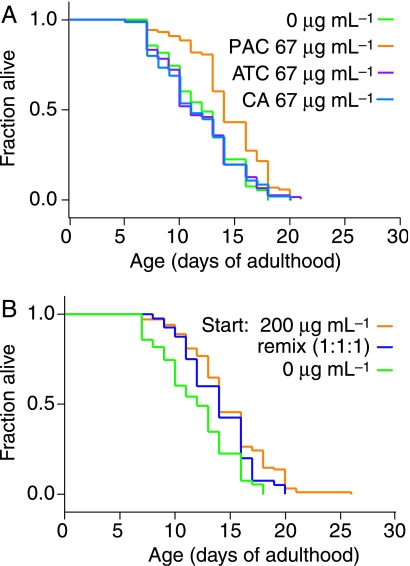
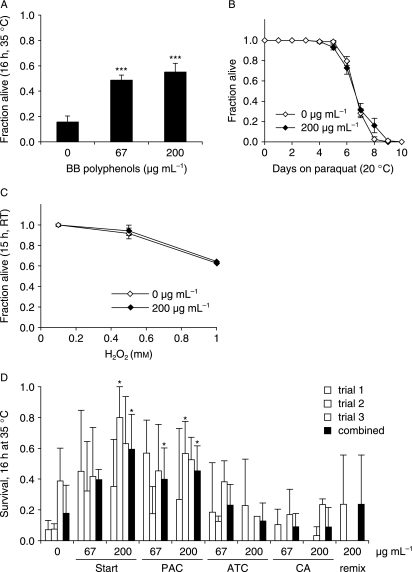
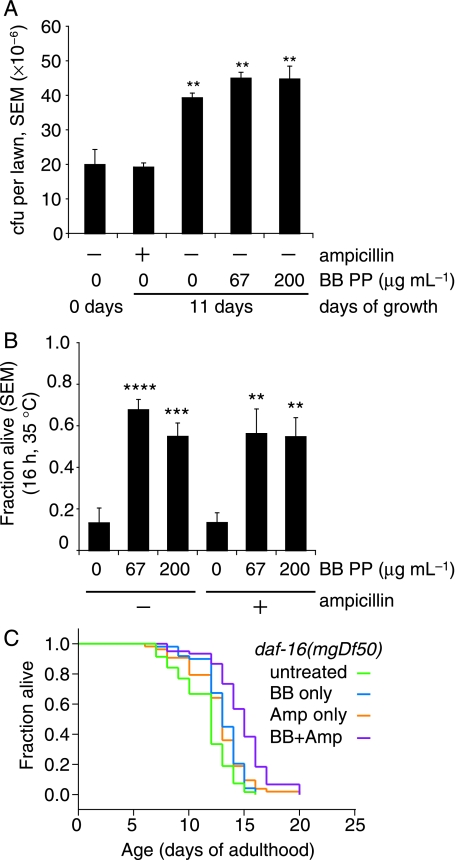
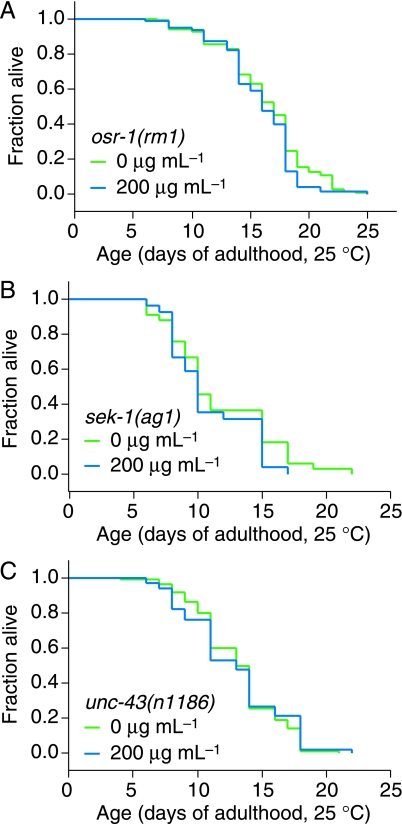
The beneficial effects of polyphenol compounds in fruits and vegetables are mainly extrapolated from in vitro studies or short-term dietary supplementation studies. Due to cost and duration, relatively little is known about whether dietary polyphenols are beneficial in whole animals, particularly with respect to aging. To address this question, we examined the effects of blueberry polyphenols on lifespan and aging of the nematode, Caenorhabditis elegans, a useful organism for such a study. We report that a complex mixture of blueberry polyphenols increased lifespan and slowed aging-related declines in C. elegans. We also found that these benefits did not just reflect antioxidant activity in these compounds. For instance, blueberry treatment increased survival during acute heat stress, but was not protective against acute oxidative stress. The blueberry extract consists of three major fractions that all contain antioxidant activity. However, only one fraction, enriched in proanthocyanidin compounds, increased C. elegans lifespan and thermotolerance. To further determine how polyphenols prolonged C. elegans lifespan, we analyzed the genetic requirements for these effects. Prolonged lifespan from this treatment required the presence of a CaMKII pathway that mediates osmotic stress resistance, though not other pathways that affect stress resistance and longevity. In conclusion, polyphenolic compounds in blueberries had robust and reproducible benefits during aging that were separable from antioxidant effects.
Figures
References
-
- Adachi H, Ishii N. Effects of tocotrienols on life span and protein carbonylation in Caenorhabditis elegans. J. Gerontol. A Biol. Sci. Med. Sci. 2000;55A:B280–B285. - PubMed
-
- Ayyadevara S, Engle MR, Singh SP, Dandapat A, Lichti CF, Benes H, Shmookler Reis RJ, Liebau E, Zimniak P. Lifespan and stress resistance of Caenorhabditis elegans are increased by expression of glutathione transferases capable of metabolizing the lipid peroxidation product 4-hydroxynonenal. Aging Cell. 2005;4:257–271. - PubMed
-
- Bolanowski M, Russell R, Jacobson L. Quantitative measures of aging in the nematode Caenorhabditis elegans. I. Population and longitudinal studies of two behavioral parameters. Mech. Ageing Dev. 1981;15:279–295. - PubMed
Publication types
MeSH terms
Substances
Grants and funding
LinkOut - more resources
Full Text Sources
