Understanding diabetes population dynamics through simulation modeling and experimentation
- PMID: 16449587
- PMCID: PMC1470507
- DOI: 10.2105/AJPH.2005.063529
Understanding diabetes population dynamics through simulation modeling and experimentation
Abstract
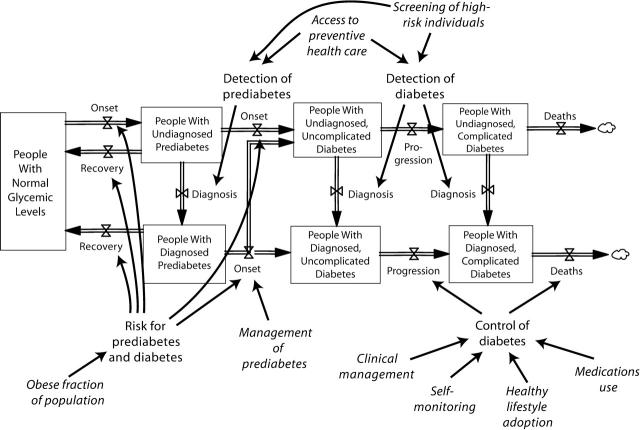
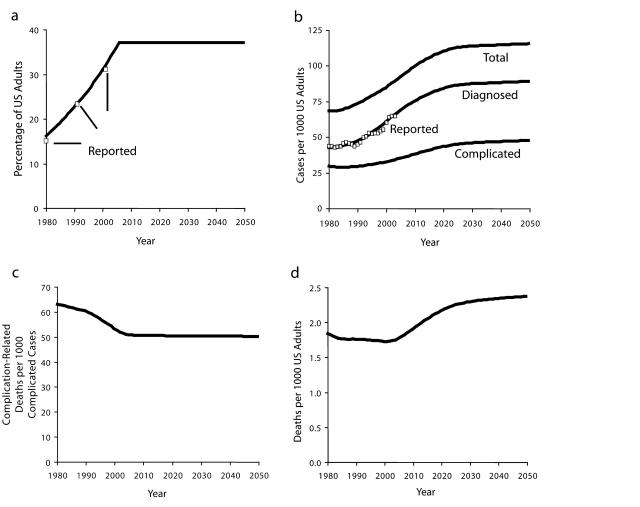
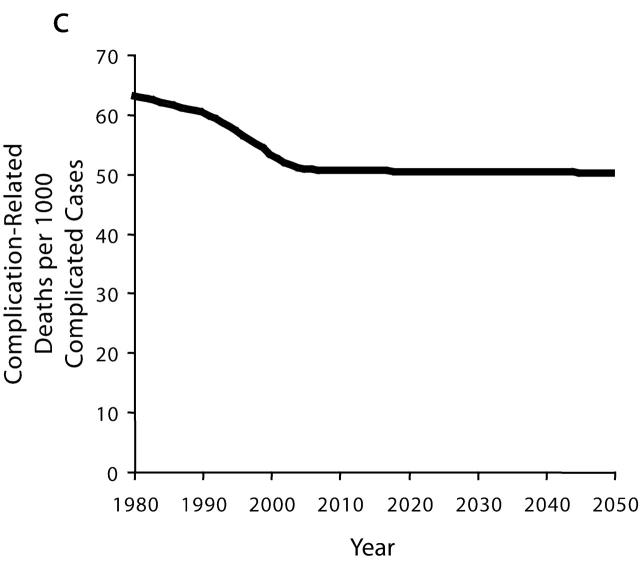
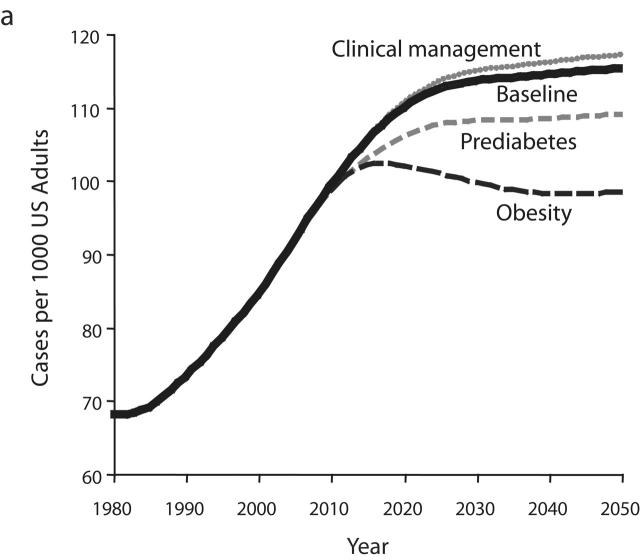
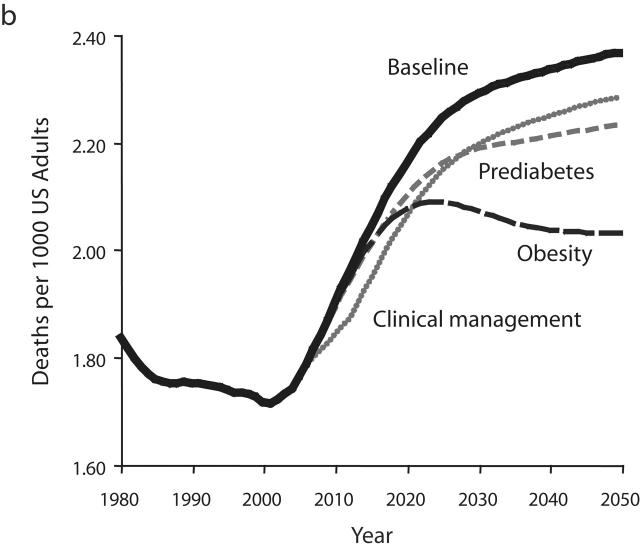
Health planners in the Division of Diabetes Translation and others from the National Center for Chronic Disease Prevention and Health Promotion of the Centers for Disease Control and Prevention used system dynamics simulation modeling to gain a better understanding of diabetes population dynamics and to explore implications for public health strategy. A model was developed to explain the growth of diabetes since 1980 and portray possible futures through 2050. The model simulations suggest characteristic dynamics of the diabetes population, including unintended increases in diabetes prevalence due to diabetes control, the inability of diabetes control efforts alone to reduce diabetes-related deaths in the long term, and significant delays between primary prevention efforts and downstream improvements in diabetes outcomes.
Figures
References
-
- National Diabetes Information Clearinghouse Web site. National Institute of Diabetes and Digestive and Kidney Diseases. National Diabetes Statistics. Available at: http://diabetes.niddk.nih.gov/dm/pubs/statistics/index.htm. Accessed November 30, 2005.
-
- US Public Health Service. Healthy People 2010. Washington, DC: US Dept. of Health and Human Services; 2000. Available at: http://www.healthypeople.gov/document. Accessed January 26, 2005.
-
- Sterman JD. Business Dynamics: Systems Thinking and Modeling for a Complex World. Boston, Mass: Irwin/McGraw-Hill; 2000.
-
- Harris MI. Classification, diagnostic criteria, and screening for diabetes. In: National Diabetes Data Group, ed. Diabetes in America. 2nd ed. Bethesda, Md: National Institutes of Health; 1995: 15–35.
-
- Kahn R, Genuth S, Expert Committee on the Diagnosis and Classification of Diabetes Mellitus. Follow-up report on the diagnosis of diabetes mellitus. Diabetes Care. 2003;26:3160–3167. - PubMed
Publication types
MeSH terms
LinkOut - more resources
Full Text Sources
Medical