


Overdiagnosis and overtreatment of breast cancer: overdiagnosis and overtreatment in service screening
- PMID: 16457702
- PMCID: PMC1410748
- DOI: 10.1186/bcr1339
Overdiagnosis and overtreatment of breast cancer: overdiagnosis and overtreatment in service screening
Abstract
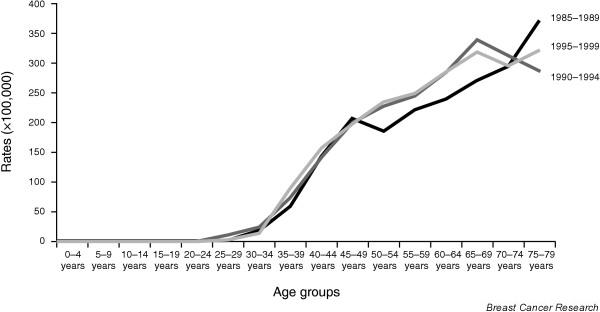
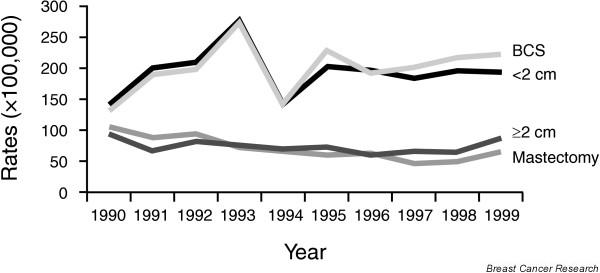
Screening mammography has been shown to be effective for reducing breast cancer mortality. According to screening theory, the first expected consequence of mammography screening is the detection of the disease at earlier stages and this diagnostic anticipation changes the population incidence curve, with an observed increase in incidence rates at earlier ages. It is unreasonable to expect that the age-specific incidence will ever return to pre-screening levels or to anticipate a significant reduction of incidence at older ages immediately after the first screening round. The interpretation of incidence trends, especially in the short term, is difficult. Methodology for quantification of overdiagnosis and statistical modelling based on service screening data is not well developed and few population-based studies are available. The overtreatment issue is discussed in terms of appropriateness of effective treatment considering the question of chemotherapy in very early stages and the use of breast conserving surgery.
Figures
References
-
- Ballard-Barbash R, Klabunde C, Paci E, Broeders M, Coleman EA, Fracheboud J, Bouchard F, Rennert G, Shapiro S. Breast cancer screening in 21 countries: delivery of services, notification of results and outcomes ascertainment. Eur J Cancer Prev. 1999;8:417–426. - PubMed
MeSH terms
LinkOut - more resources
Full Text Sources
Medical
