


Opportunistic and systematic screening for chlamydia: a study of consultations by young adults in general practice
- PMID: 16464322
- PMCID: PMC1828253
Opportunistic and systematic screening for chlamydia: a study of consultations by young adults in general practice
Abstract
Background: Opportunistic screening for genital chlamydia infection is being introduced in England, but evidence for the effectiveness of this approach is lacking. There are insufficient data about young peoples' use of primary care services to determine the potential coverage of opportunistic screening in comparison with a systematic population-based approach.
Aim: To estimate use of primary care services by young men and women; to compare potential coverage of opportunistic chlamydia screening with a systematic postal approach.
Design of study: Population based cross-sectional study.
Setting: Twenty-seven general practices around Bristol and Birmingham.
Method: A random sample of patients aged 16-24 years were posted a chlamydia screening pack. We collected details of face-to-face consultations from general practice records. Survival and person-time methods were used to estimate the cumulative probability of attending general practice in 1 year and the coverage achieved by opportunistic and systematic postal chlamydia screening.
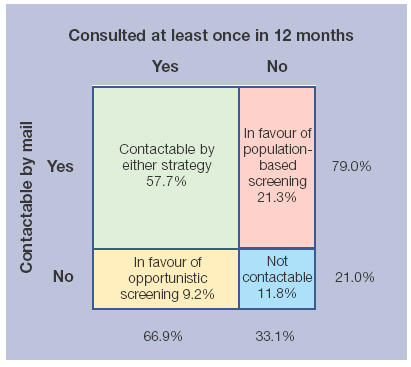
Results: Of 12 973 eligible patients, an estimated 60.4% (95% confidence interval [CI] = 58.3 to 62.5%) of men and 75.3% (73.7 to 76.9%) of women aged 16-24 years attended their practice at least once in a 1-year period. During this period, an estimated 21.3% of patients would not attend their general practice but would be reached by postal screening, 9.2% would not receive a postal invitation but would attend their practice, and 11.8% would be missed by both methods.
Conclusions: Opportunistic and population-based approaches to chlamydia screening would both fail to contact a substantial minority of the target group, if used alone. A pragmatic approach combining both strategies might achieve higher coverage.
Figures
References
Publication types
MeSH terms
LinkOut - more resources
Full Text Sources
Medical
Research Materials
