


Stressing out the ER: a role of the unfolded protein response in prion-related disorders
- PMID: 16472111
- PMCID: PMC2838391
- DOI: 10.2174/156652406775574578
Stressing out the ER: a role of the unfolded protein response in prion-related disorders
Abstract
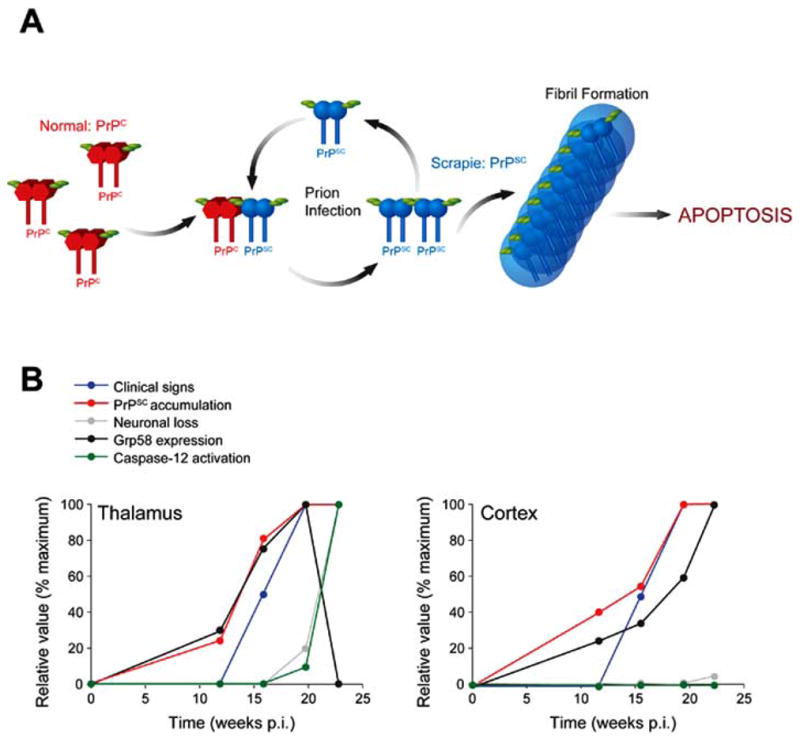
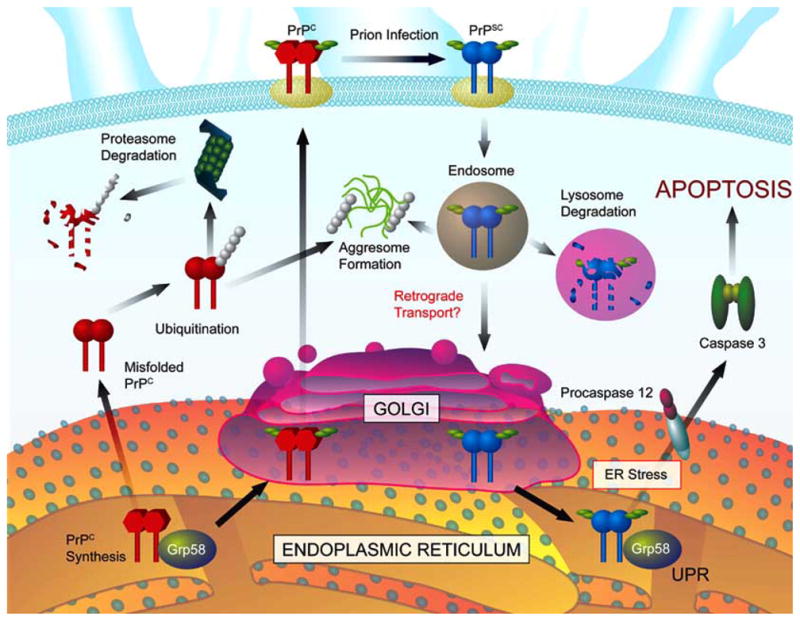
Transmissible Spongiform Encephalopathies are fatal and infectious neurodegenerative diseases characterized by extensive neuronal apoptosis and the accumulation of an abnormally folded form of the cellular prion protein (PrP), denoted PrP(SC). Compelling evidence suggests the involvement of several signaling pathways in prion pathogenesis, including proteasome dysfunction, alterations in the protein maturation pathways and the unfolded protein response. Recent reports indicate that endoplasmic reticulum stress due to the PrP misfolding may be a critical factor mediating neuronal dysfunction in prion diseases. These findings have applications for developing novel strategies for treatment and early diagnosis of transmissible spongiform encephalopathies and other neurodegenerative diseases.
Figures
References
Publication types
MeSH terms
Substances
Grants and funding
LinkOut - more resources
Full Text Sources
Research Materials