


Corneal calcification following intensified treatment with sodium hyaluronate artificial tears
- PMID: 16488945
- PMCID: PMC1856937
- DOI: 10.1136/bjo.2005.082792
Corneal calcification following intensified treatment with sodium hyaluronate artificial tears
Abstract
Aim: To report a potential adverse effect of intensified treatment with sodium hyaluronate artificial tears.
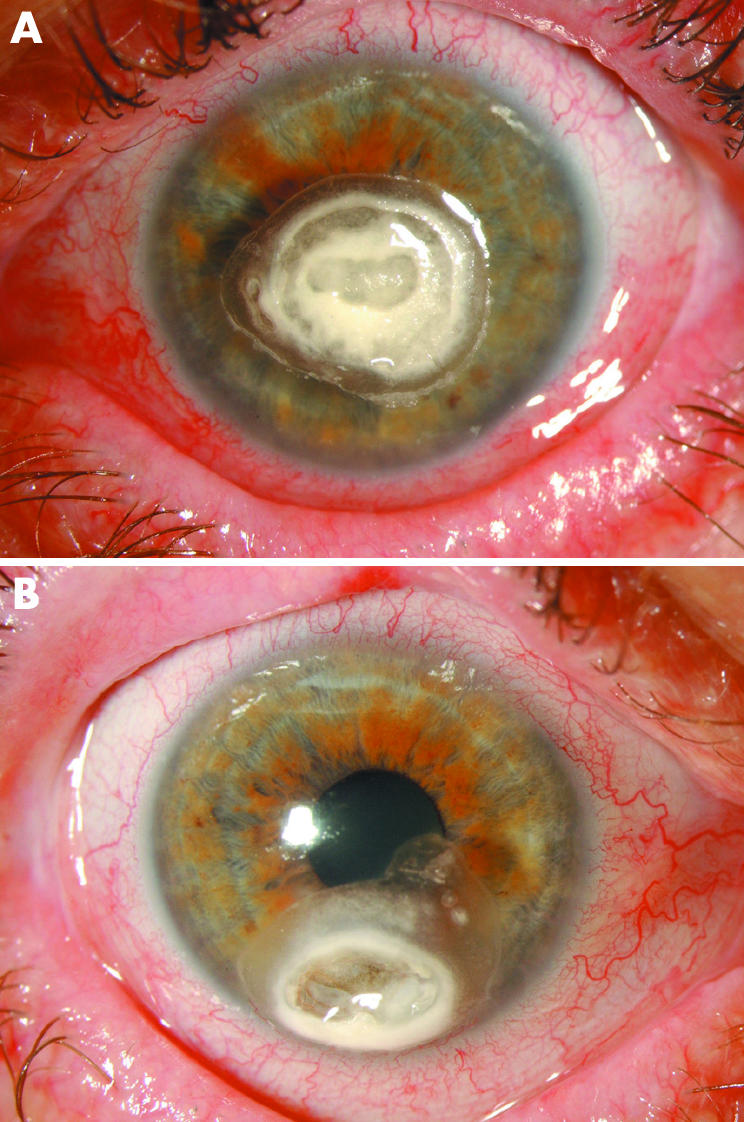
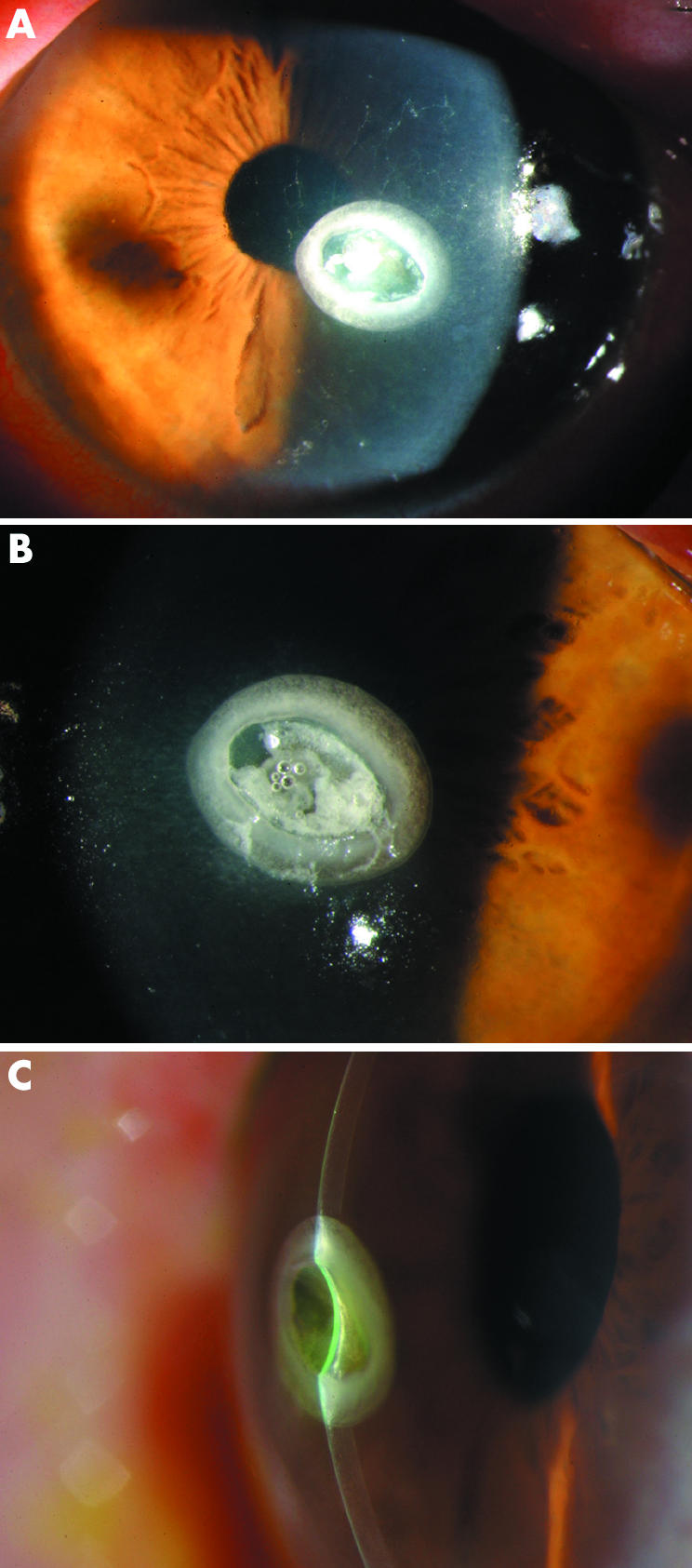
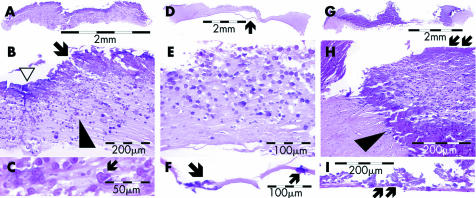
Methods: Five cases of deep calcium deposition in the cornea associated with ocular surface disease and frequent use of hyaluronic acid artificial tears are described. All patients used one formulation of phosphate buffered hyaluronate eye drops when rapid calcification developed. All eyes required corneal graft surgery for visual rehabilitation. Specimens at keratoplasty were available for light microscopy and investigation by dispersive x ray analysis. The phosphate concentration in the medication used for topical treatment was measured and compared to alternative hyaluronate preparations.
Results: Light microscopy showed dense mineralisation of the entire stroma. The crystalline deposits consisted of hydroxyapatite, Ca5(PO4)3OH. A 50-fold higher concentration of phosphate was measured in the sodium hyaluronate eye drops used for treatment (50.9 mmol/l) when compared with normal serum. The other hyaluronate formulations showed phosphate concentrations from <0.1 mmol/l to 10.9 mmol/l.
Conclusions: The hyaluronate artificial tear formulation "Hylo-Comod" favours the formation of insoluble crystalline calcium phosphate deposits in presence of epithelial keratopathy. This is because of its high phosphate concentration and typically frequent instillation. Manufacturers and prescribers should be aware that topical preparations may contain considerable amounts of phosphate which may lead to sight threatening corneal complications.
Conflict of interest statement
Competing interests: none declared
References
-
- Cogan D G, Albright F, Bartter F C. Hypercalcaemia and band keratopathy. Report of 19 cases. Arch Ophthalmol 194840624–638.
-
- Doughman D J, Olson G A, Nolan S.et al Experimental band keratopathy. Arch Ophthalmol 196981264–271. - PubMed
-
- Cursino J W, Fine B S. A histologic study of calcific and noncalcific band keratopathies. Am J Ophthalmol 197682395–404. - PubMed
-
- Schlötzer‐Schrehardt U, Zagorski Z, Holbach L M.et al Corneal stromal calcification after topical steroid‐phosphate therapy. Arch Ophthalmol 19991171414–1418. - PubMed
Publication types
MeSH terms
Substances
LinkOut - more resources
Full Text Sources
Other Literature Sources
Medical
