


Mitochondrial matrix phosphoproteome: effect of extra mitochondrial calcium
- PMID: 16489745
- PMCID: PMC1415274
- DOI: 10.1021/bi052475e
Mitochondrial matrix phosphoproteome: effect of extra mitochondrial calcium
Abstract
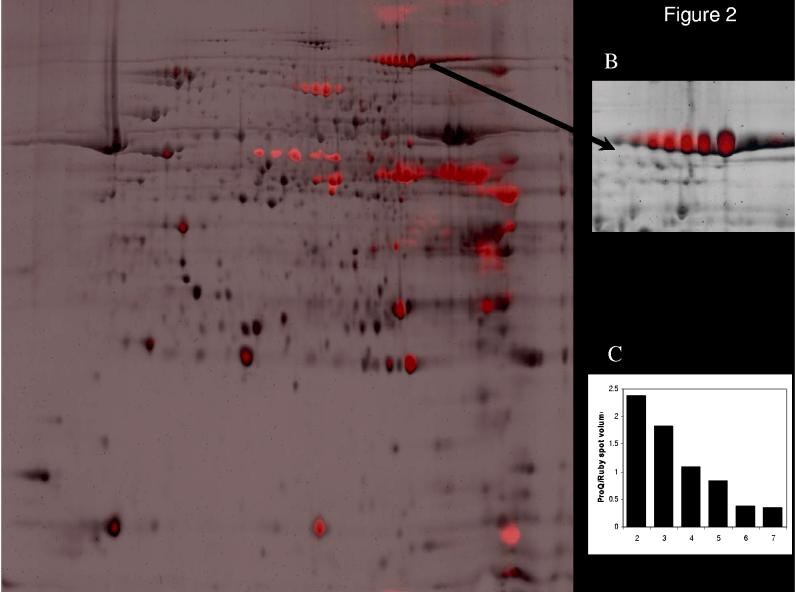
Post-translational modification of mitochondrial proteins by phosphorylation or dephosphorylation plays an essential role in numerous cell signaling pathways involved in regulating energy metabolism and in mitochondrion-induced apoptosis. Here we present a phosphoproteomic screen of the mitochondrial matrix proteins and begin to establish the protein phosphorylations acutely associated with calcium ions (Ca(2+)) signaling in porcine heart mitochondria. Forty-five phosphorylated proteins were detected by gel electrophoresis-mass spectrometry of Pro-Q Diamond staining, while many more Pro-Q Diamond-stained proteins evaded mass spectrometry detection. Time-dependent (32)P incorporation in intact mitochondria confirmed the extensive matrix protein phosphoryation and revealed the dynamic nature of this process. Classes of proteins that were detected included all of the mitochondrial respiratory chain complexes, as well as enzymes involved in intermediary metabolism, such as pyruvate dehydrogenase (PDH), citrate synthase, and acyl-CoA dehydrogenases. These data demonstrate that the phosphoproteome of the mitochondrial matrix is extensive and dynamic. Ca(2+) has previously been shown to activate various dehydrogenases, promote the generation of reactive oxygen species (ROS), and initiate apoptosis via cytochrome c release. To evaluate the Ca(2+) signaling network, the effects of a Ca(2+) challenge sufficient to release cytochrome c were evaluated on the mitochondrial phosphoproteome. Novel Ca(2+)-induced dephosphorylation was observed in manganese superoxide dismutase (MnSOD) as well as the previously characterized PDH. A Ca(2+) dose-dependent dephosphorylation of MnSOD was associated with an approximately 2-fold maximum increase in activity; neither the dephosphorylation nor activity changes were induced by ROS production in the absence of Ca(2+). These data demonstrate the use of a phosphoproteome screen in determining mitochondrial signaling pathways and reveal new pathways for Ca(2+) modification of mitochondrial function at the level of MnSOD.
Figures



References
-
- Gray MW. The endosymbiont hypothesis revisited. Int. Rev. Cytol. 1992;141:233–357. - PubMed
-
- Cavalier-Smith T. The simultaneous symbiotic origin of mitochondria, chloroplasts, and microbodies. Ann. N. Y. Acad. Sci. 1987;503:55–71. - PubMed
-
- Westermann B, Neupert W. ‘Omics’ of the mitochondrion. Nat. Biotechnol. 2003;21:239–240. - PubMed
-
- Richly E, Chinnery PF, Leister D. Evolutionary diversification of mitochondrial proteomes: implications for human disease. Trends Genet. 2003;19:356–362. - PubMed
-
- Taylor SW, Fahy E, Zhang B, Glenn GM, Warnock DE, Wiley S, Murphy AN, Gaucher SP, Capaldi RA, Gibson BW, Ghosh SS. Characterization of the human heart mitochondrial proteome. Nat. Biotechnol. 2003;21:281–286. - PubMed
Publication types
MeSH terms
Substances
Grants and funding
LinkOut - more resources
Full Text Sources
Miscellaneous
