


Return on investment for a computerized physician order entry system
- PMID: 16501178
- PMCID: PMC1513660
- DOI: 10.1197/jamia.M1984
Return on investment for a computerized physician order entry system
Abstract
Objective: Although computerized physician order entry (CPOE) may decrease errors and improve quality, hospital adoption has been slow. The high costs and limited data on financial benefits of CPOE systems are a major barrier to adoption. The authors assessed the costs and financial benefits of the CPOE system at Brigham and Women's Hospital over ten years.
Design: Cost and benefit estimates of a hospital CPOE system at Brigham and Women's Hospital (BWH), a 720-adult bed, tertiary care, academic hospital in Boston.
Measurements: Institutional experts provided data about the costs of the CPOE system. Benefits were determined from published studies of the BWH CPOE system, interviews with hospital experts, and relevant internal documents. Net overall savings to the institution and operating budget savings were determined. All data are presented as value figures represented in 2002 dollars.
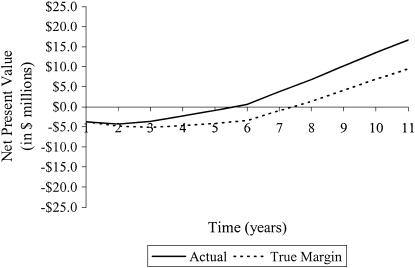
Results: Between 1993 and 2002, the BWH spent $11.8 million to develop, implement, and operate CPOE. Over ten years, the system saved BWH $28.5 million for cumulative net savings of $16.7 million and net operating budget savings of $9.5 million given the institutional 80% prospective reimbursement rate. The CPOE system elements that resulted in the greatest cumulative savings were renal dosing guidance, nursing time utilization, specific drug guidance, and adverse drug event prevention. The CPOE system at BWH has resulted in substantial savings, including operating budget savings, to the institution over ten years.
Conclusion: Other hospitals may be able to save money and improve patient safety by investing in CPOE systems.
Figures
Comment in
-
Comments on return on investment (ROI) as it applies to clinical systems.J Am Med Inform Assoc. 2006 May-Jun;13(3):365-7. doi: 10.1197/jamia.M2072. J Am Med Inform Assoc. 2006. PMID: 16501173 Free PMC article. No abstract available.
References
-
- Institute of Medicine. To err is human. Building a safer health system. Washington, DC: National Academy Press, 1999.
-
- Barker KN, Mikeal RL, Pearson RE, Illig NA, Morse ML. Medication errors in nursing homes and small hospitals. Am J Hosp Pharm. 1982;39:987–91. - PubMed
-
- Bates DW, Cullen DJ, Laird N, Petersen LA, Small S, Servi D, et al. Incidence of adverse drug events and potential adverse drug events: implications for prevention. ADE Prevention Study Group. JAMA. 1995;274:29–34. - PubMed
-
- Dean BS, Allan EL, Barber ND, Barker KN. Comparison of medication errors in an American and a British hospital. Am J Health Syst Pharm. 1995;52:2543–9. - PubMed
-
- Classen DC, Pestotnik SL, Evans RS, Lloyd JF, Burke JP. Adverse drug events in hospitalized patients. Excess length of stay, extra costs, and attributable mortality. JAMA. 1997;277:301–6. - PubMed
Publication types
MeSH terms
LinkOut - more resources
Full Text Sources
