


Absence of phylogenetic signal in the niche structure of meadow plant communities
- PMID: 16519232
- PMCID: PMC1560004
- DOI: 10.1098/rspb.2005.3288
Absence of phylogenetic signal in the niche structure of meadow plant communities
Abstract
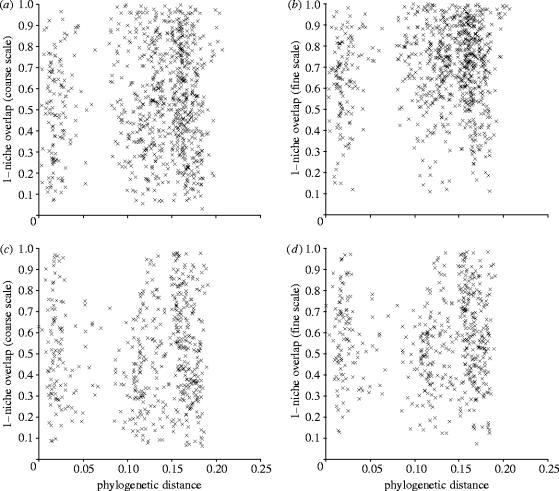
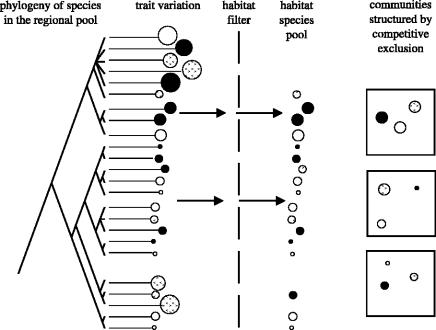
A significant proportion of the global diversity of flowering plants has evolved in recent geological time, probably through adaptive radiation into new niches. However, rapid evolution is at odds with recent research which has suggested that plant ecological traits, including the beta- (or habitat) niche, evolve only slowly. We have quantified traits that determine within-habitat alpha diversity (alpha niches) in two communities in which species segregate on hydrological gradients. Molecular phylogenetic analysis of these data shows practically no evidence of a correlation between the ecological and evolutionary distances separating species, indicating that hydrological alpha niches are evolutionarily labile. We propose that contrasting patterns of evolutionary conservatism for alpha- and beta-niches is a general phenomenon necessitated by the hierarchical filtering of species during community assembly. This determines that species must have similar beta niches in order to occupy the same habitat, but different alpha niches in order to coexist.
Figures
References
-
- Ackerly D.D. Community assembly, niche conservatism, and adaptive evolution in changing environments. Int. J. Plant Sci. 2003;164:S165–S184. - DOI
-
- Adler P.B. Neutral models fail to reproduce observed species-area and species-time relationships in Kansas grassland. Ecology. 2004;85:1265–1272.
-
- Bremer B, et al. An update of the Angiosperm Phylogeny Group classification for the orders and families of flowering plants: APG II. Bot. J. Linn. Soc. 2003;141:399–436. - DOI
Publication types
MeSH terms
Associated data
- Actions
- Actions
- Actions
- Actions
- Actions
- Actions
- Actions
- Actions
- Actions
- Actions
- Actions
- Actions
- Actions
- Actions
- Actions
- Actions
- Actions
- Actions
- Actions
- Actions
- Actions
- Actions
- Actions
- Actions
- Actions
- Actions
- Actions
- Actions
- Actions
- Actions
- Actions
- Actions
- Actions
- Actions
- Actions
- Actions
- Actions
- Actions
- Actions
- Actions
LinkOut - more resources
Full Text Sources
