Frictional response of bovine articular cartilage under creep loading following proteoglycan digestion with chondroitinase ABC
- PMID: 16532626
- PMCID: PMC2819726
- DOI: 10.1115/1.2133764
Frictional response of bovine articular cartilage under creep loading following proteoglycan digestion with chondroitinase ABC
Abstract
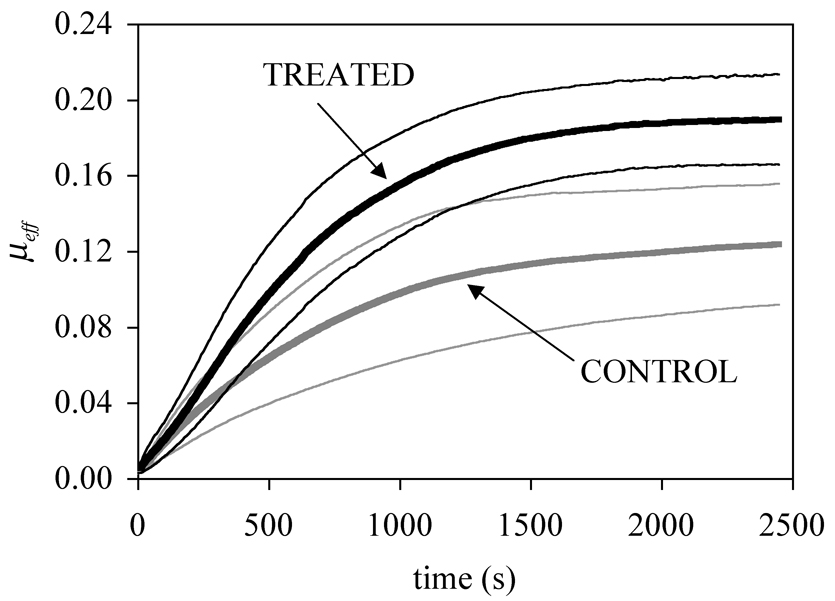
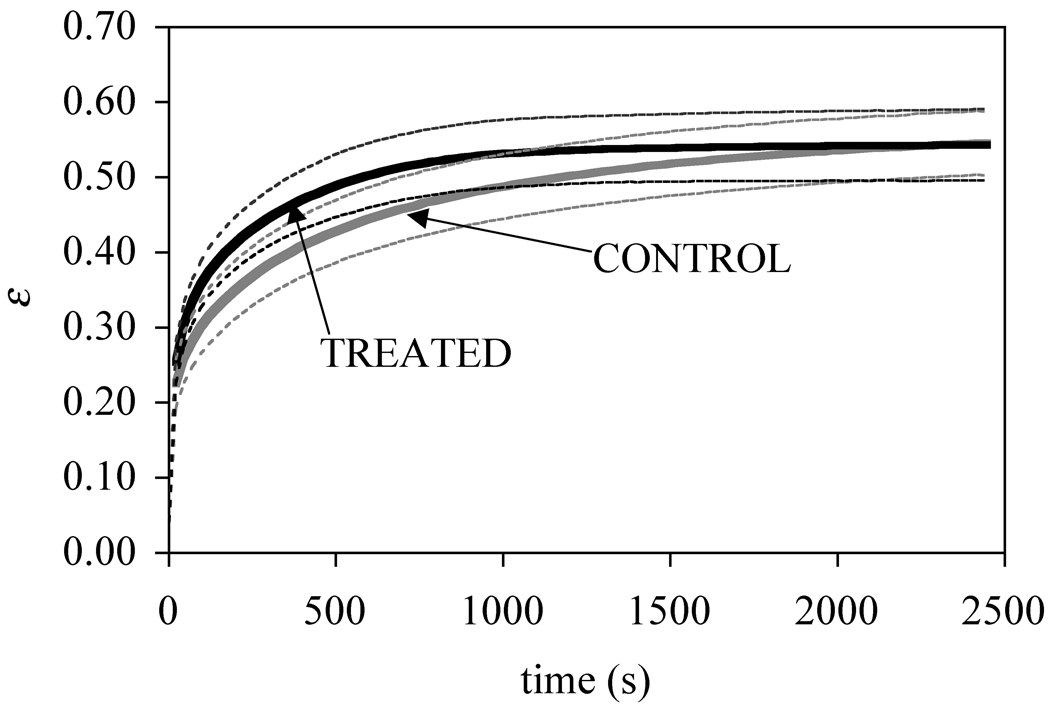
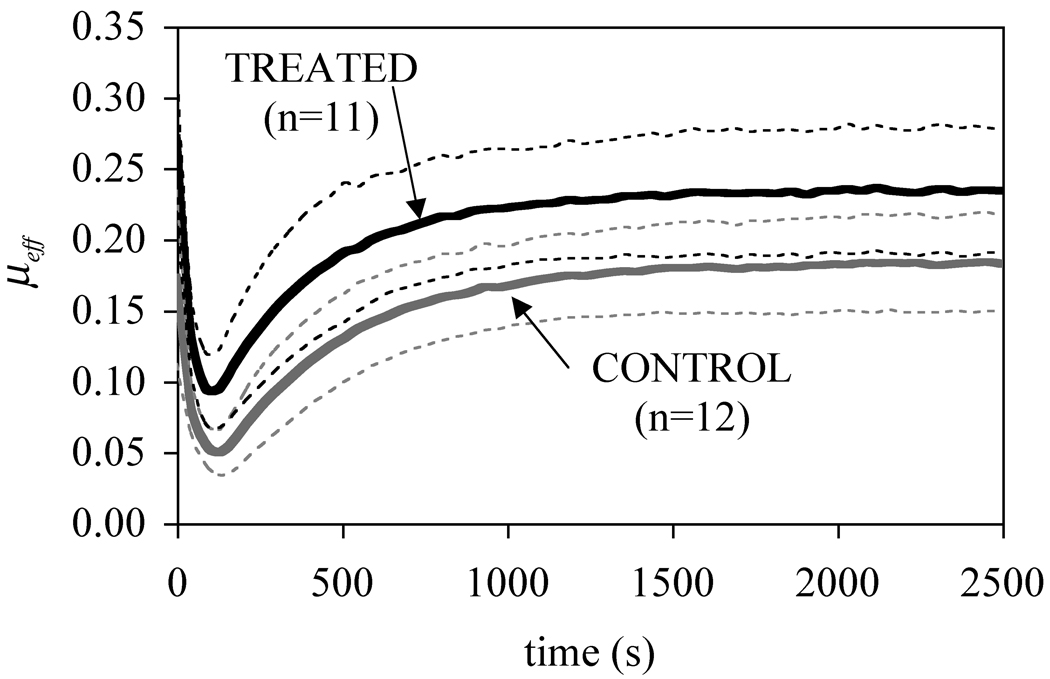
The specific aim of this study was to investigate the effect of chondroitinase ABC treatment on the frictional response of bovine articular cartilage against glass, under creep loading. The hypothesis is that chondroitinase ABC treatment increases the friction coefficient of bovine articular cartilage under creep. Articular cartilage samples (n = 12) harvested from two bovine knee joints (1-3 months old) were divided into a control group (intact specimens) and a treated group (chondroitinase ABC digestion), and tested in unconfined compression with simultaneous continuous sliding (+/- 4 mm at 1 mm/s) under a constant applied stress of 0.5 MPa, for 2500 s. The time-dependent response of the friction coefficient was measured. With increasing duration of loading, treated samples exhibited a significantly higher friction coefficient than control samples as assessed by the equilibrium value (treated: micro(eq) = 0.19 +/- 0.02; control: micro(eq) = 0.12 +/- 0.03; p = 0.002), though the coefficient achieved immediately upon loading did not increase significantly (treated: micro(min) = 0.0053 +/- 0.0025; control: micro(min) = 0.037 +/- 0.0013; p = 0.19). Our results demonstrate that removal of the cartilage glycosaminoglycans using chondroitinase ABC significantly increases the overall time-dependent friction coefficient of articular cartilage. These findings strengthen the motivation for developing chondroprotective strategies by increasing cartilage chondroitin sulfate content in osteoarthritic joints.
Figures
References
-
- McCutchen CW. Sponge-Hydrostatic and Weeping Bearings. Nature. 1959:1284. - PubMed
-
- McCutchen CW. The Frictional Properties of Animal Joints. Wear. 1962;5:1–17.
-
- Forster H, Fisher J. The Influence of Loading Time and Lubricant on the Friction of Articular Cartilage. Proc Inst Mech Eng [H] 1996;210:109–119. - PubMed
-
- Forster H, Fisher J. The Influence of Continuous Sliding and Subsequent Surface Wear on the Friction of Articular Cartilage. Proc Inst Mech Eng [H] 1999;213:329–345. - PubMed
Publication types
MeSH terms
Substances
Grants and funding
LinkOut - more resources
Full Text Sources