


Measuring changes in self-concept: a qualitative evaluation of outcome questionnaires in people having acupuncture for their chronic health problems
- PMID: 16539737
- PMCID: PMC1434784
- DOI: 10.1186/1472-6882-6-7
Measuring changes in self-concept: a qualitative evaluation of outcome questionnaires in people having acupuncture for their chronic health problems
Abstract
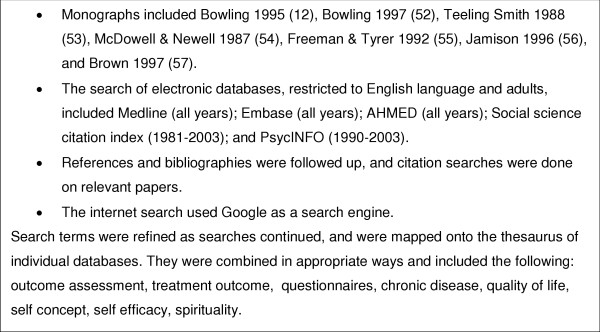
Background: Changes in self-concept are an important potential outcome for many interventions for people with long-term conditions. This study sought to identify and evaluate outcome questionnaires suitable for quantifying changes in self-concept in people with long-term conditions, in the context of treatment with acupuncture and Chinese medicine.
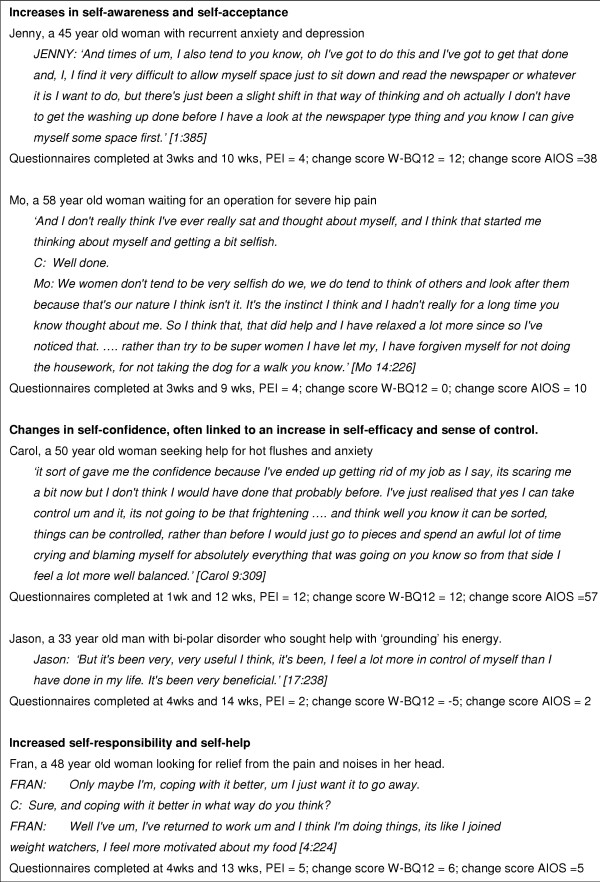
Methods: A literature search was followed by an evaluation of three questionnaires: The Wellbeing Questionnaire W-BQ12, the Patient Enablement Instrument (PEI), and the Arizona Integrative Outcome Scale (AIOS). A convenience sample of 23 people completed the questionnaires on two occasions and were interviewed about their experience and their questionnaire responses. All acupuncturists were interviewed.
Results: Changes in self-concept were common and emerged over time. The three questionnaires had different strengths and weaknesses in relation to measuring changes in self-concept. The generic AIOS had face validity and was sensitive to changes in self-concept over time, but it lacked specificity. The PEI was sensitive and specific in measuring these changes but had lower acceptability. The sensitivity of the W-BQ12 was affected by initial high scores (ceiling effect) and a shorter timescale but was acceptable and is suitable for repeated administration. The PEI and W-BQ12 questionnaires worked well in combination.
Conclusion: Changes in self-concept are important outcomes of complex interventions for people with long-term illness and their measurement requires carefully evaluated tools and long-term follow-up. The literature review and the analysis of the strengths and weaknesses of the questionnaires is a resource for other researchers. The W-BQ12 and the PEI both proved useful for this population and a larger quantitative study is planned.
Figures
References
-
- Cassidy C. Chinese Medicine users in the United States. Part II: preferred aspects of care. J Altern Complement Med. 1998;4:189–202. - PubMed
-
- Bury M. The sociology of chronic illness: a review of research and prospects. Sociology of Health and Illness. 1991;13:451–468. doi: 10.1111/1467-9566.ep11343677. - DOI
Publication types
MeSH terms
Grants and funding
LinkOut - more resources
Full Text Sources
Medical
