


A mosquito 2-Cys peroxiredoxin protects against nitrosative and oxidative stresses associated with malaria parasite infection
- PMID: 16540402
- PMCID: PMC2592686
- DOI: 10.1016/j.freeradbiomed.2005.10.059
A mosquito 2-Cys peroxiredoxin protects against nitrosative and oxidative stresses associated with malaria parasite infection
Abstract
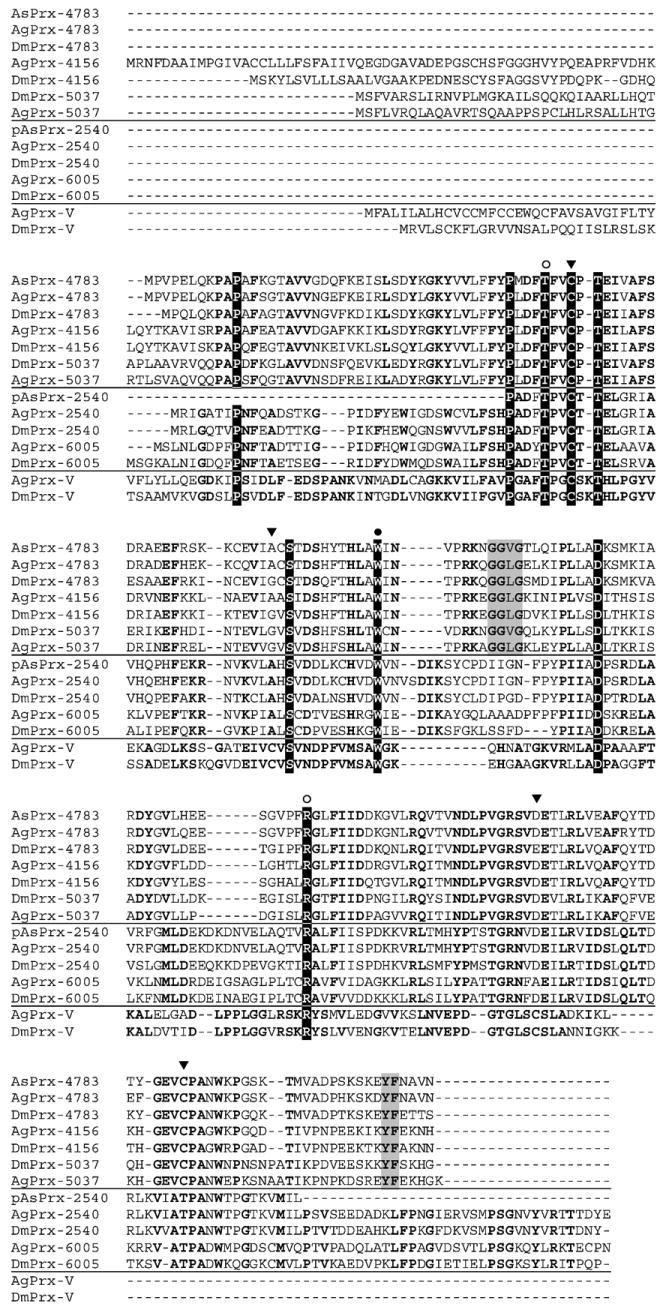
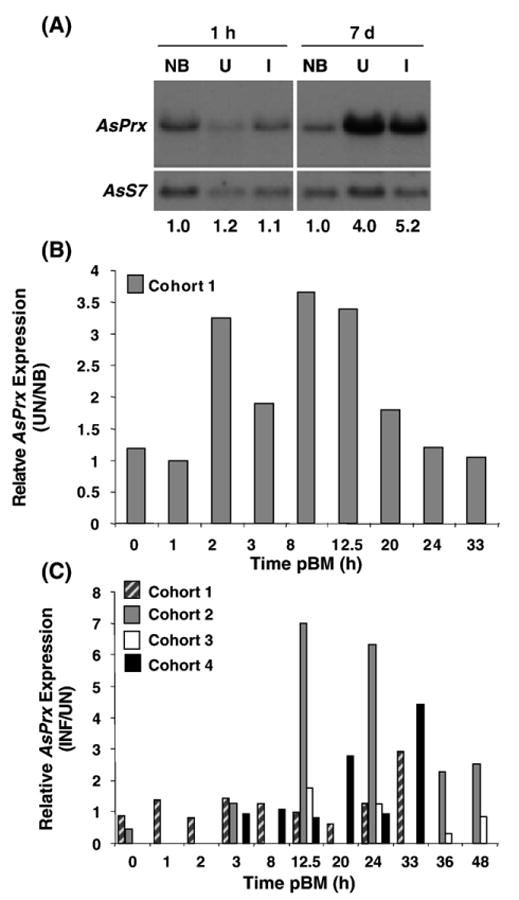
Malaria parasite infection in anopheline mosquitoes induces nitrosative and oxidative stresses that limit parasite development, but also damage mosquito tissues in proximity to the response. Based on these observations, we proposed that cellular defenses in the mosquito may be induced to minimize self-damage. Specifically, we hypothesized that peroxiredoxins (Prxs), enzymes known to detoxify reactive oxygen species (ROS) and reactive nitrogen oxide species (RNOS), protect mosquito cells. We identified an Anopheles stephensi 2-Cys Prx ortholog of Drosophila melanogaster Prx-4783, which protects fly cells against oxidative stresses. To assess function, AsPrx-4783 was overexpressed in D. melanogaster S2 and in A. stephensi (MSQ43) cells and silenced in MSQ43 cells with RNA interference before treatment with various ROS and RNOS. Our data revealed that AsPrx-4783 and DmPrx-4783 differ in host cell protection and that AsPrx-4783 protects A. stephensi cells against stresses that are relevant to malaria parasite infection in vivo, namely nitric oxide (NO), hydrogen peroxide, nitroxyl, and peroxynitrite. Further, AsPrx-4783 expression is induced in the mosquito midgut by parasite infection at times associated with peak nitrosative and oxidative stresses. Hence, whereas the NO-mediated defense response is toxic to both host and parasite, AsPrx-4783 may shift the balance in favor of the mosquito.
Figures


References
-
- Fang FC, editor. Nitric oxide and infection. Kluwer Academic/Plenum; New York: 1999.
-
- Bryk R, Griffin P, Nathan C. Peroxynitrite reductase activity of bacterial peroxiredoxins. Nature. 2000;407:211–215. - PubMed
-
- Chen L, Xie QW, Nathan C. Alkyl hydroperoxide reductase subunit C (AhpC) protects bacterial and human cells against reactive nitrogen intermediates. Mol Cell. 1998;1:795–805. - PubMed
-
- Wong CM, Zhou Y, Ng RW, Kung HF, Jin DY. Cooperation of yeast peroxiredoxins Tsa1p and Tsa2p in the cellular defense against oxidative and nitrosative stress. J Biol Chem. 2002;277:5385–5394. - PubMed
-
- Dubuisson M, Vander Stricht D, Clippe A, Etienne F, Nauser T, Kissner R, Koppenol WH, Rees JF, Knoops B. Human peroxiredoxin 5 is a peroxynitrite reductase. FEBS Lett. 2004;571:161–165. - PubMed
Publication types
MeSH terms
Substances
Grants and funding
LinkOut - more resources
Full Text Sources
Molecular Biology Databases
