


MW construct in fusion for neuromuscular scoliosis
- PMID: 16544157
- PMCID: PMC2200700
- DOI: 10.1007/s00586-006-0077-0
MW construct in fusion for neuromuscular scoliosis
Abstract
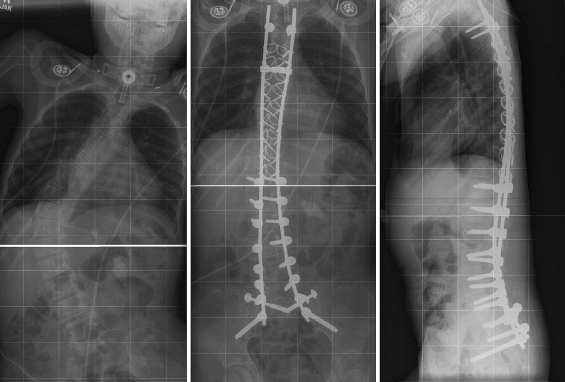
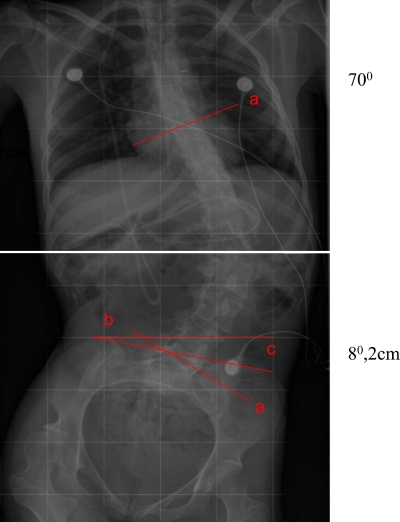
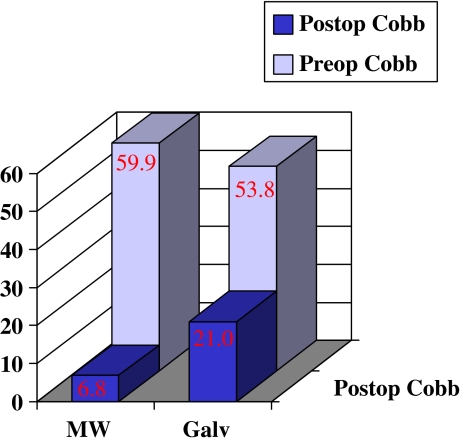
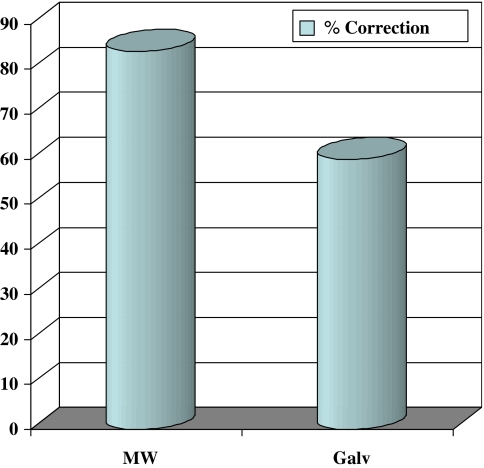
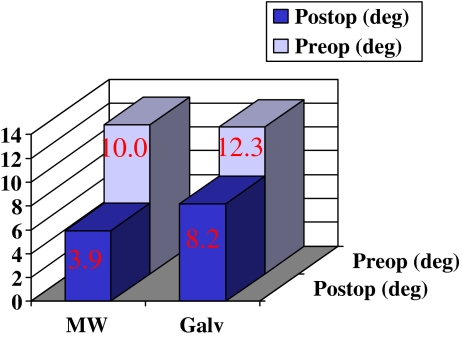
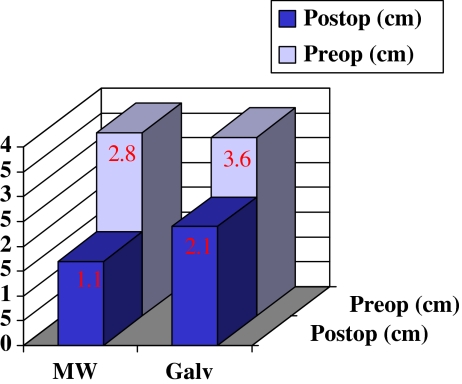
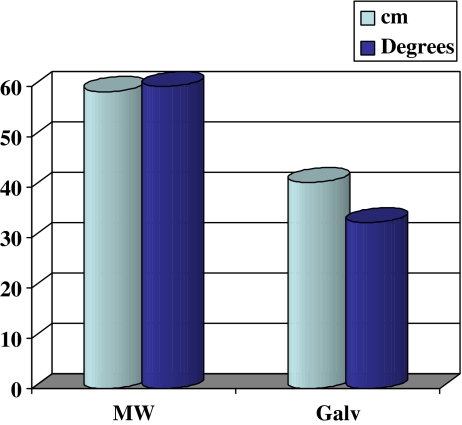
A retrospective case control review was conducted to determine if the MW construct offers a superior means of correction of Cobb angles and pelvic obliquity in neuromuscular scoliosis. Posterior spinal fusion (PSF) in patients with neuromuscular scoliosis presents a surgical challenge. Particularly difficult is the correction of pelvic obliquity. Numerous instrumentation techniques have sought to address these difficulties. Most recently Arlet et al have introduced the MW construct. (in Eur Spine 8(3):229-231, 1999). They theorize that this construct may allow for superior spinopelvic fixation. Six patients with neuromuscular scoliosis who underwent PSF with the MW construct were compared with six subjects undergoing PSF utilizing the Galveston technique. Subjects were matched on the basis of preoperative Cobb angles and similar amounts of preoperative pelvic obliquity. Individuals who underwent PSF utilizing the MW construct obtained nearly 30% better correction of pelvic obliquity than did those who received a Galveston construct. A trend toward superior correction of Cobb angles with the MW construct was also observed. The MW construct may be a superior construct for curve correction in PSF for neuromuscular scoliosis, particularly those cases with excessive pelvic obliquity.
Figures
Comment in
-
Comments on the article: MW construct in fusion for neuromuscular scoliosis (Eben A. Carroll, Jeffrey Scott Shilt, Laura Jacks).Eur Spine J. 2007 Mar;16(3):379-80. doi: 10.1007/s00586-006-0140-x. Eur Spine J. 2007. PMID: 16705432 Free PMC article. No abstract available.
References
-
- Dubousset J. Pelvic obliquity correction. In: Margulies JY, Floman Y, Farcy JP, Neuwirth MG, editors. Lumbosacral and spinopelvic fixation. Philadelphia: Lippincott-Raven; 1996.
-
- Asher MA. Lumbopelvic fixation with the Isola system. In: Margulies JY, Floman Y, Farcy JP, Neuwirth MG, editors. Lumbosacral and spinopelvic fixation. Philadelphia: Lippincott-Raven; 1996.
Publication types
MeSH terms
LinkOut - more resources
Full Text Sources
Medical
