


Immunogenicity of unprocessed and photooxidized bovine and human osteochondral grafts in collagen-sensitive mice
- PMID: 16545115
- PMCID: PMC1459156
- DOI: 10.1186/1471-2474-7-32
Immunogenicity of unprocessed and photooxidized bovine and human osteochondral grafts in collagen-sensitive mice
Abstract
Background: Autologous and allogeneic osteochondral grafts have been used to repair damaged or diseased cartilage. There are drawbacks to both of these methods, however. Another possible source for osteochondral grafting is photooxidized xenograft scaffolds. The purpose of this study was to evaluate the adaptive immune response to unprocessed and photooxidized xenogeneic osteochondral grafts in a collagen-sensitive mouse model.
Methods: Unprocessed and photooxidized bovine and human osteochondral grafts were used. The grafts were implanted subcutaneously in collagen-sensitive DBA/1LacJ mice for four or twelve weeks. ELISPOT assays were conducted with spleen cells to evaluate the number of collagen-specific T cells that produce IL-2, IL-4, IL-5 or IFN-gamma. Serum was collected and ELISA assays were performed to determine the titers of collagen-specific and total IgG, IgG1, IgG2a, or IgM antibodies. Histology was conducted on the retrieved osteochondral grafts.
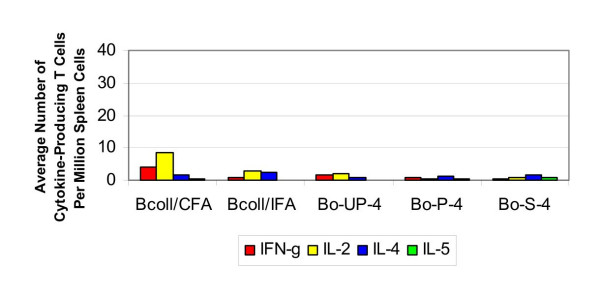
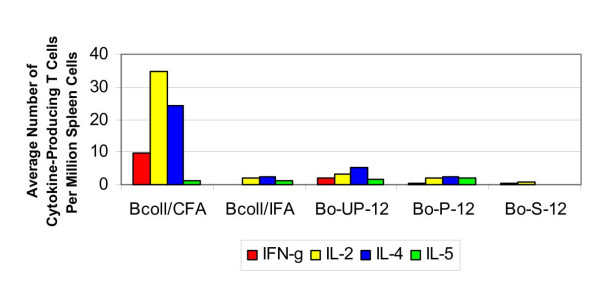
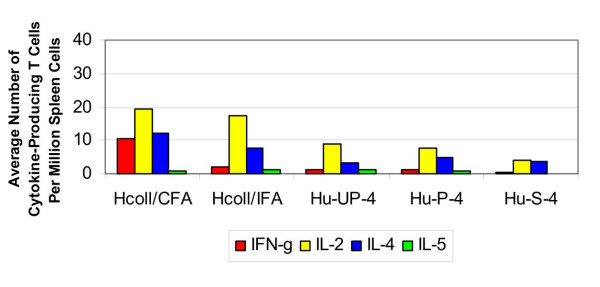
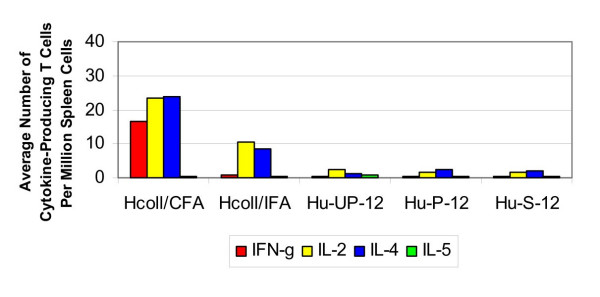
Results: Results indicated that, with respect to adaptive T cell immunity, the photooxidized bovine grafts, unprocessed human grafts and photooxidized human grafts did not induce a significant response to collagen. The unprocessed bovine grafts, however, were slightly more immunogenic, inducing a weak immune response. With respect to antibody production, the bovine grafts were less immunogenic than the human grafts. Bovine collagen-specific IgG antibodies were not induced by these grafts, but production of IgM after twelve weeks was observed with both the unprocessed and photooxidized bovine grafts. In contrast, photooxidized human osteochondral grafts induced IgG1 and IgG2a antibodies, while the unprocessed human grafts did not. Pre-existing human collagen-specific IgM antibodies were present in all mice, including sham-operated negative controls that did not receive an implant. Histological analysis revealed some degree of fibrous encapsulation and inflammatory infiltrations in both bovine and human implants, whether unprocessed or photooxidized.
Conclusion: Both bovine and human cartilage grafts showed weak, but clear immunogenicity in the DBA/1LacJ mice, indicating that immunogenic collagen was still contained in the grafts, even after cleaning and photooxidation. The process of photooxidation is still important in osteochondral grafting, since it stabilizes the surface of the cartilage by cross-linking the collagen fibers, and allows for immediate load bearing and joint resurfacing.
Figures
References
-
- Hangody L, Fules P. Autologous osteochondral mosaicplasty for the treatment of full-thickness defects of weight-bearing joints: ten years of experimental and clinical experience. J Bone Joint Surg Am. 2003;85:25–32. - PubMed
-
- Hangody L, Rathonyi GK, Duska Z, Vasarhelyi G, Fules P, Modis L. Autologous osteochondral mosaicplasty: surgical technique. J Bone Joint Surg Am. 2004;86:65–72. - PubMed
-
- LaPrade RF, Botker JC. Donor-site morbidity after osteochondral autograft transfer procedures. Arthroscopy. 2004;20:e69–73. - PubMed
Publication types
MeSH terms
Substances
LinkOut - more resources
Full Text Sources
Other Literature Sources
Medical
