


beta-lactam antibiotics induce the SOS response and horizontal transfer of virulence factors in Staphylococcus aureus
- PMID: 16547063
- PMCID: PMC1428414
- DOI: 10.1128/JB.188.7.2726-2729.2006
beta-lactam antibiotics induce the SOS response and horizontal transfer of virulence factors in Staphylococcus aureus
Abstract
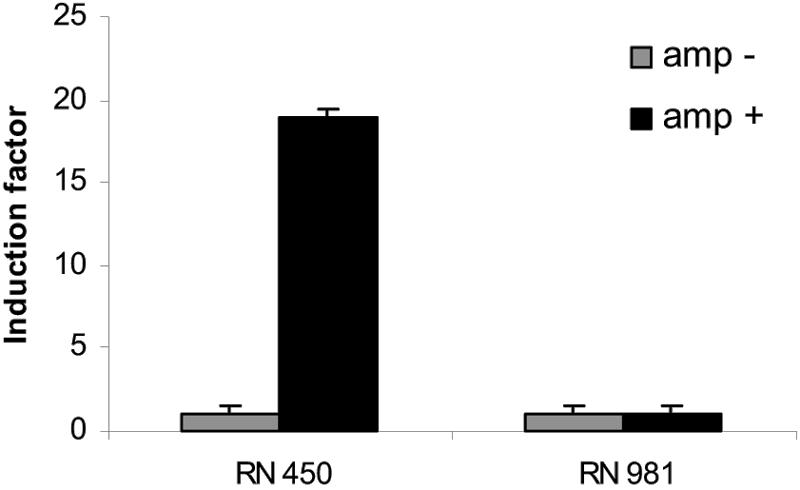
Antibiotics that interfere with DNA replication and cell viability activate the SOS response. In Staphylococcus aureus, the antibiotic-induced SOS response promotes replication and high-frequency horizontal transfer of pathogenicity island-encoded virulence factors. Here we report that beta-lactams induce a bona fide SOS response in S. aureus, characterized by the activation of the RecA and LexA proteins, the two master regulators of the SOS response. Moreover, we show that beta-lactams are capable of triggering staphylococcal prophage induction in S. aureus lysogens. Consequently, and as previously described for SOS induction by commonly used fluoroquinolone antibiotics, beta-lactam-mediated phage induction also resulted in replication and high-frequency transfer of the staphylococcal pathogenicity islands, showing that such antibiotics may have the unintended consequence of promoting the spread of bacterial virulence factors.
Figures
References
-
- Beaber, J. W., B. Hochhut, and M. K. Waldor. 2004. SOS response promotes horizontal dissemination of antibiotic resistance genes. Nature 427:72-74. - PubMed
-
- Fernandez De Henestrosa, A. R., T. Ogi, S. Aoyagi, D. Chafin, J. J. Hayes, H. Ohmori, and R. Woodgate. 2000. Identification of additional genes belonging to the LexA regulon in Escherichia coli. Mol. Microbiol. 35:1560-1572. - PubMed
-
- Kuroda, M., H. Kuroda, T. Oshima, F. Takeuchi, H. Mori, and K. Hiramatsu. 2003. Two-component system VraSR positively modulates the regulation of cell-wall biosynthesis pathway in Staphylococcus aureus. Mol. Microbiol. 49:807-821. - PubMed
Publication types
MeSH terms
Substances
LinkOut - more resources
Full Text Sources
Medical
