


Endonucleolytic cleavage of eukaryotic mRNAs with stalls in translation elongation
- PMID: 16554824
- PMCID: PMC1839849
- DOI: 10.1038/nature04530
Endonucleolytic cleavage of eukaryotic mRNAs with stalls in translation elongation
Abstract
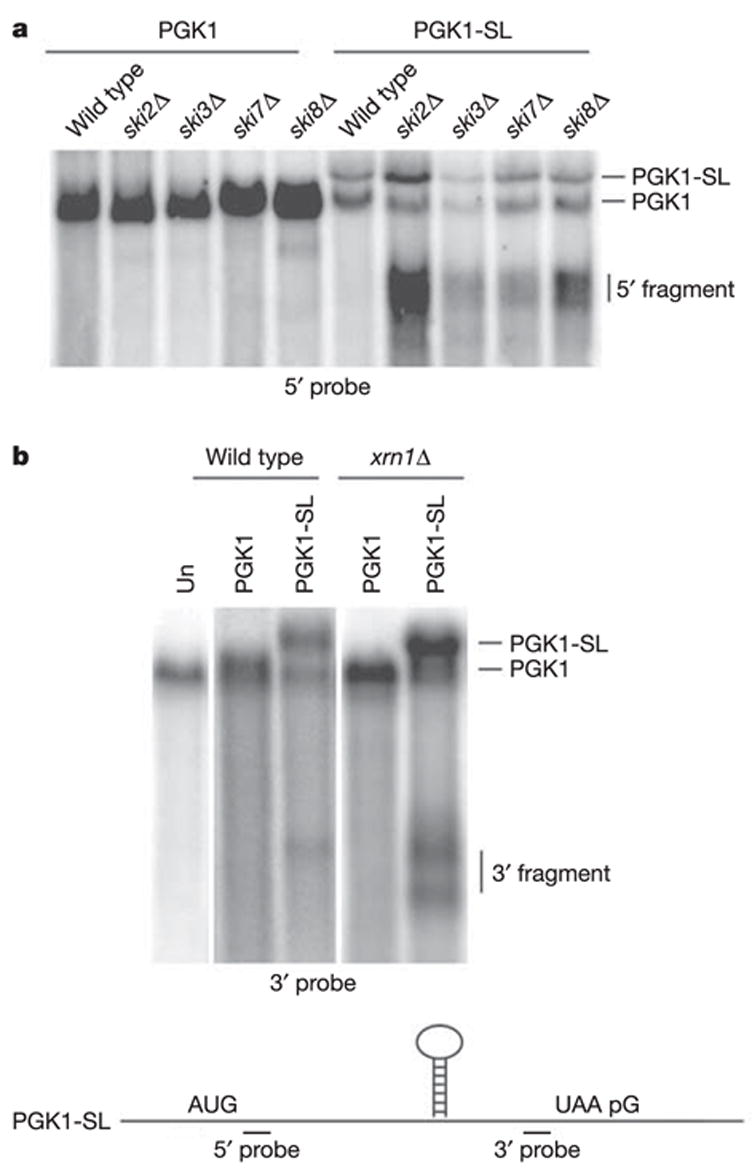
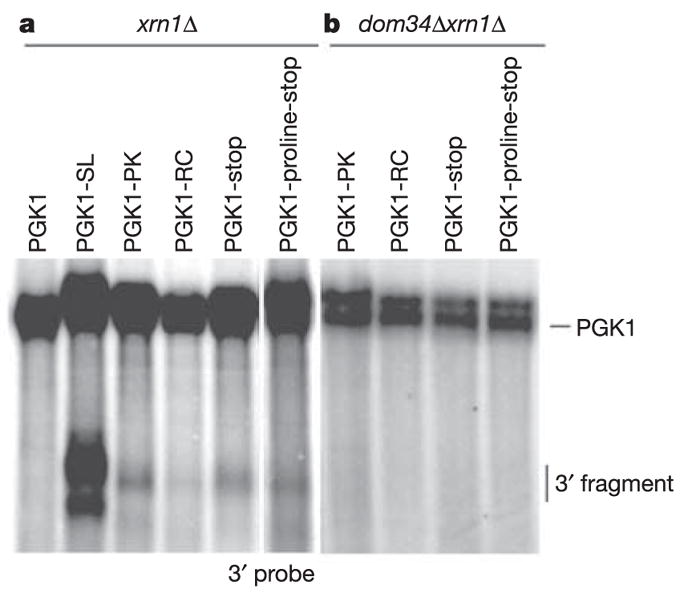
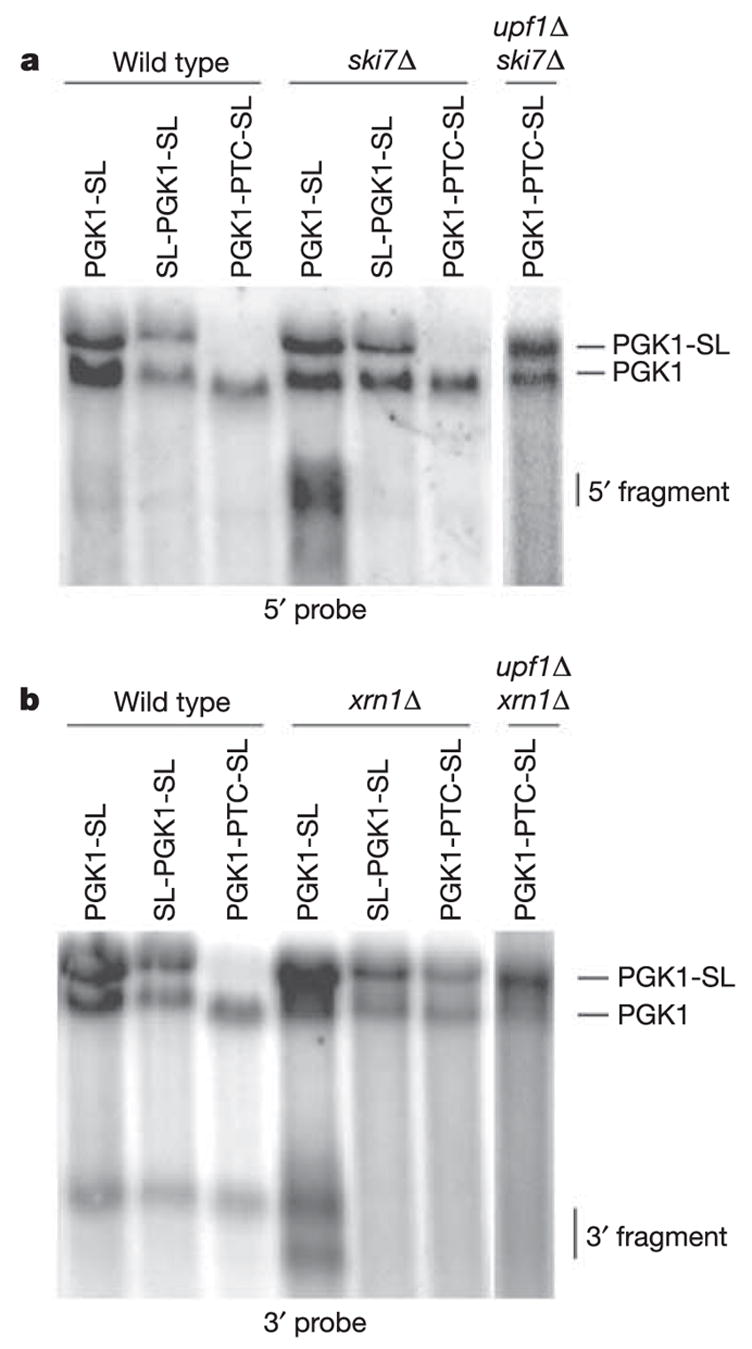
A fundamental aspect of the biogenesis and function of eukaryotic messenger RNA is the quality control systems that recognize and degrade non-functional mRNAs. Eukaryotic mRNAs where translation termination occurs too soon (nonsense-mediated decay) or fails to occur (non-stop decay) are rapidly degraded. We show that yeast mRNAs with stalls in translation elongation are recognized and targeted for endonucleolytic cleavage, referred to as 'no-go decay'. The cleavage triggered by no-go decay is dependent on translation and involves Dom34p and Hbs1p. Dom34p and Hbs1p are similar to the translation termination factors eRF1 and eRF3 (refs 3, 4), indicating that these proteins might function in recognizing the stalled ribosome and triggering endonucleolytic cleavage. No-go decay provides a mechanism for clearing the cell of stalled translation elongation complexes, which could occur as a result of damaged mRNAs or ribosomes, or as a mechanism of post-transcriptional control.
Figures

Comment in
-
Molecular biology: RNA lost in translation.Nature. 2006 Mar 23;440(7083):425-6. doi: 10.1038/440425a. Nature. 2006. PMID: 16554791 No abstract available.
References
-
- Maquat LE. Nonsense-mediated mRNA decay: splicing, translation and mRNP dynamics. Nature Rev Mol Cell Biol. 2004;5:89–99. - PubMed
-
- van Hoof A, Frischmeyer PA, Dietz HC, Parker R. Exosome-mediated recognition and degradation of mRNAs lacking a termination codon. Science. 2002;295:2262–2264. - PubMed
-
- Hosoda N, et al. Translation termination factor eRF3 mediates mRNA decay through the regulation of deadenylation. J Biol Chem. 2003;278:38287–38291. - PubMed
Publication types
MeSH terms
Substances
Grants and funding
LinkOut - more resources
Full Text Sources
Other Literature Sources
Molecular Biology Databases
