


Vascular endothelial growth factor blockade promotes the transition from compensatory cardiac hypertrophy to failure in response to pressure overload
- PMID: 16567591
- PMCID: PMC3132898
- DOI: 10.1161/01.HYP.0000215207.54689.31
Vascular endothelial growth factor blockade promotes the transition from compensatory cardiac hypertrophy to failure in response to pressure overload
Erratum in
-
Correction: Vascular Endothelial Growth Factor Blockade Promotes the Transition From Compensatory Cardiac Hypertrophy to Failure in Response to Pressure Overload.Hypertension. 2025 Sep;82(9):e190. doi: 10.1161/HYP.0000000000000251. Epub 2025 Aug 20. Hypertension. 2025. PMID: 40834060 No abstract available.
Abstract
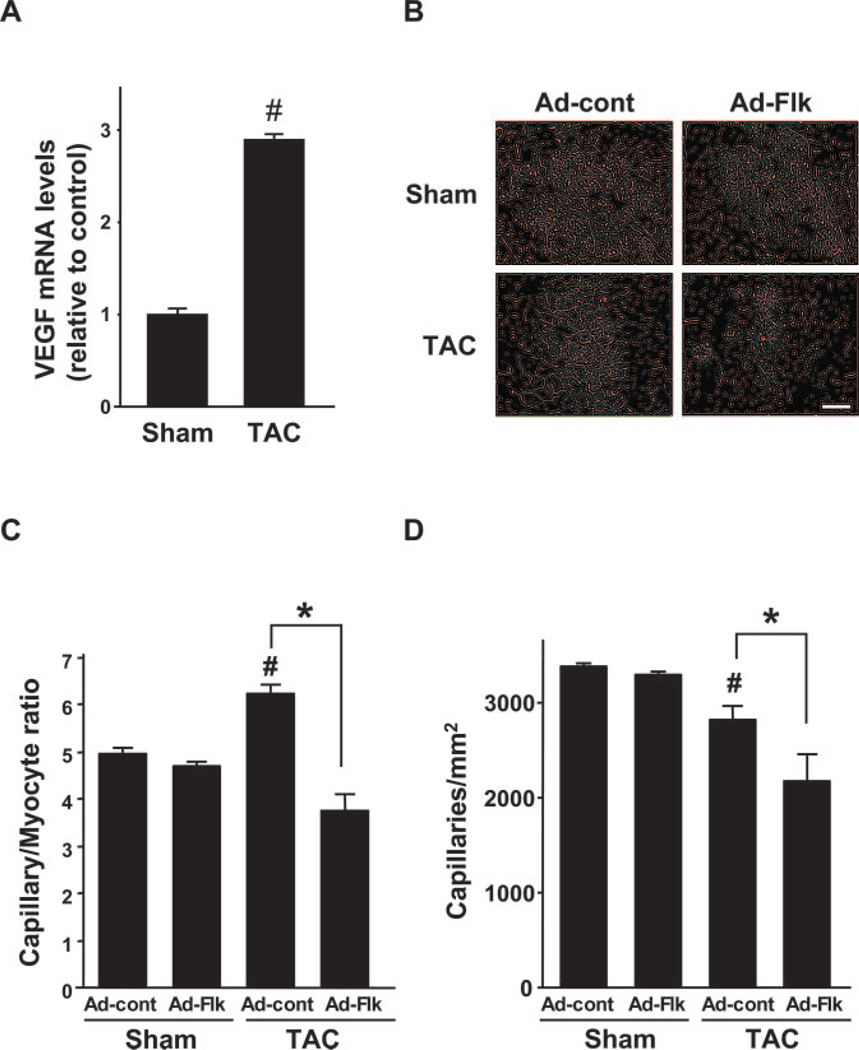
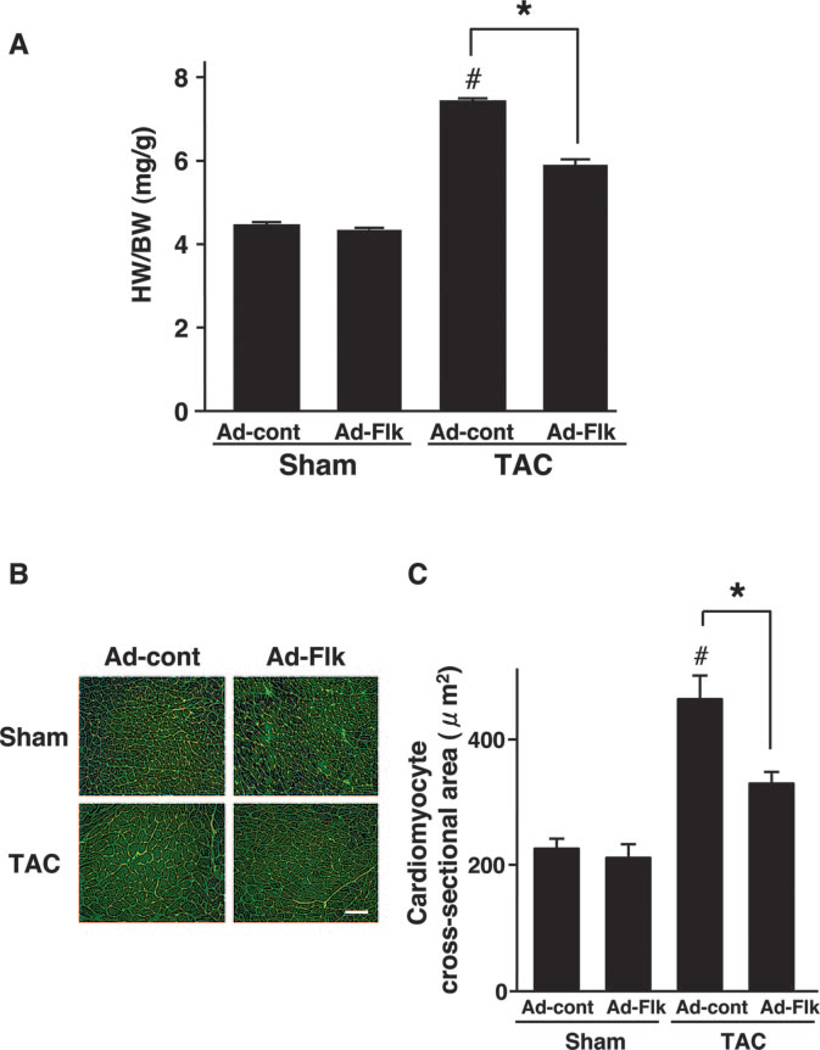
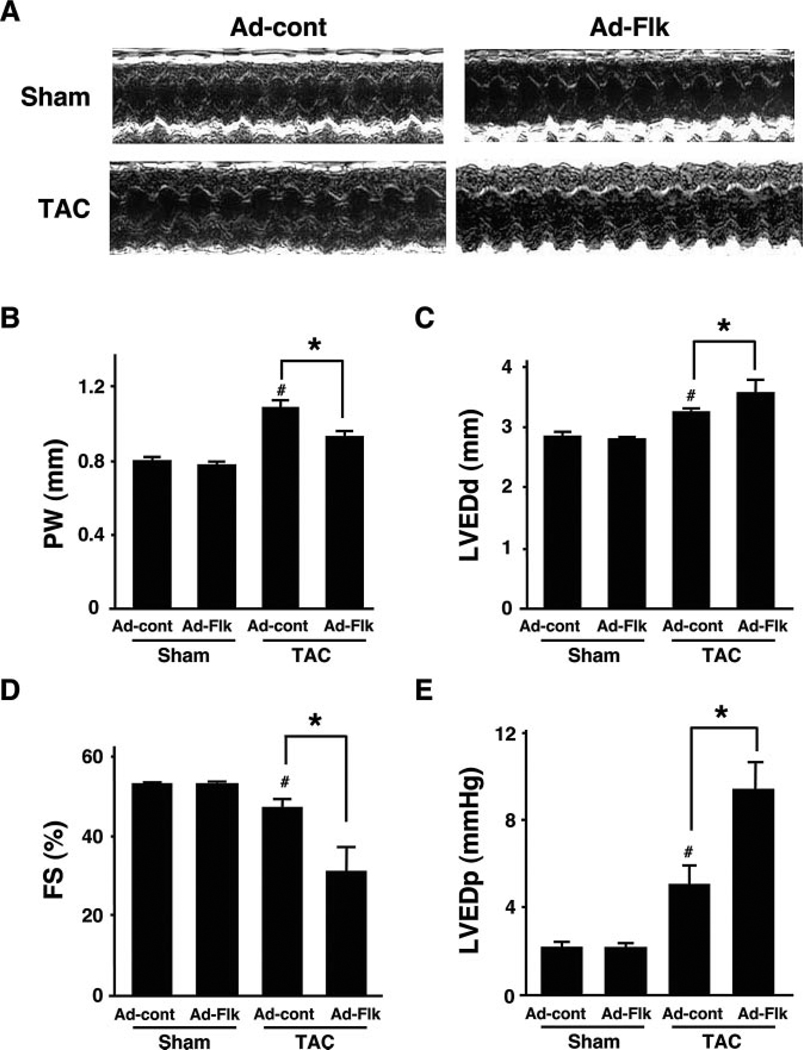
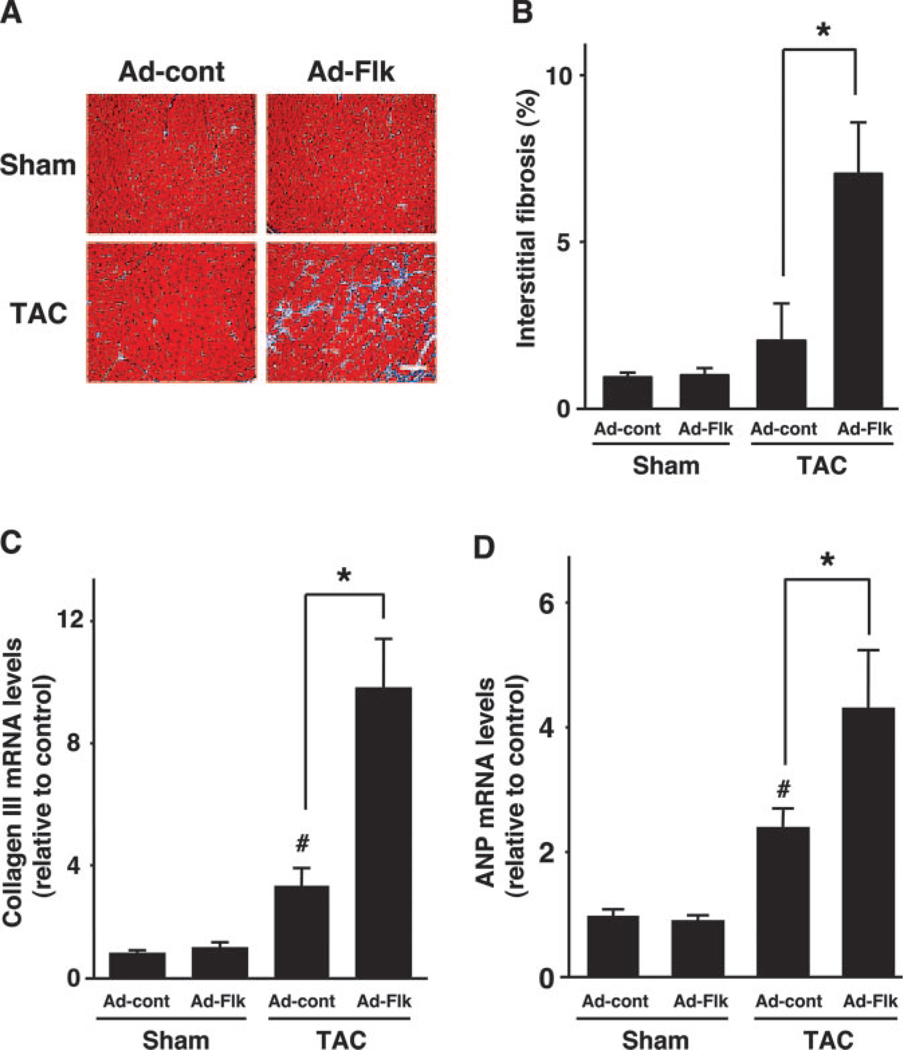
Cardiac hypertrophy is associated with upregulation of vascular endothelial growth factor (VEGF) in the myocardium. Here, we evaluated the effects of a decoy VEGF receptor on heart morphology and function to a murine model of pressure overload hypertrophy. Mice were administered adenoviral vector encoding a decoy VEGF receptor (Ad-Flk), and their hearts were subjected to pressure overload by transverse aortic constriction (TAC). Treatment with Ad-Flk led to a net reduction in capillary density in hearts subjected to TAC. Ad-Flk also led to a reduction in TAC-induced cardiac hypertrophy and promoted left ventricle dilatation and a loss in contractile function. Treatment with Ad-Flk markedly increased myocardial fibrosis and collagen gene upregulation. In contrast, Ad-Flk had no effect on any of these parameters in sham-treated mice. Administration of a VEGF trap reagent diminished pressure overload cardiac hypertrophy and promoted the progression to heart failure but had no effect on sham-treated animals. These findings suggest that VEGF is required to maintain myocardial capillary density and that reductions in the vascular bed are associated with the transition from compensatory hypertrophy to failure.
Figures
Comment in
-
Microvascular plasticity and experimental heart failure.Hypertension. 2006 May;47(5):827-9. doi: 10.1161/01.HYP.0000215283.53943.39. Epub 2006 Mar 27. Hypertension. 2006. PMID: 16567590 No abstract available.
References
-
- Gerdes AM, Kellerman SE, Moore JA, Muffly KE, Clark LC, Reaves PY, Malec KB, McKeown PP, Schocken DD. Structural remodeling of cardiac myocytes in patients with ischemic cardiomyopathy. Circulation. 1992;86:426–430. - PubMed
-
- Olivetti G, Quaini F, Lagrasta C, Cigola E, Ricci R, Maestri R, Anversa P. Cellular basis of ventricular remodeling after myocardial infarction in rats. Cardioscience. 1995;6:101–106. - PubMed
-
- Senbonmatsu T, Ichihara S, Price E, Jr, Gaffney FA, Inagami T. Evidence for angiotensin II type 2 receptor-mediated cardiac myocyte enlargement during in vivo pressure overload. J Clin Invest. 2000;106:R1–R5. - PubMed
-
- Ito H, Hiroe M, Hirata Y, Fujisaki H, Adachi S, Akimoto H, Ohta Y, Marumo F. Endothelin ETA receptor antagonist blocks cardiac hypertrophy provoked by hemodynamic overload. Circulation. 1994;89:2198–2203. - PubMed
Publication types
MeSH terms
Substances
Grants and funding
LinkOut - more resources
Full Text Sources
Other Literature Sources
Medical
