


Effect of farnesol on Staphylococcus aureus biofilm formation and antimicrobial susceptibility
- PMID: 16569866
- PMCID: PMC1426993
- DOI: 10.1128/AAC.50.4.1463-1469.2006
Effect of farnesol on Staphylococcus aureus biofilm formation and antimicrobial susceptibility
Abstract
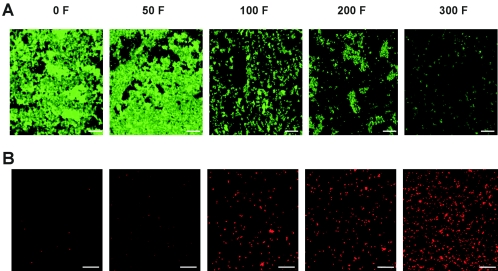
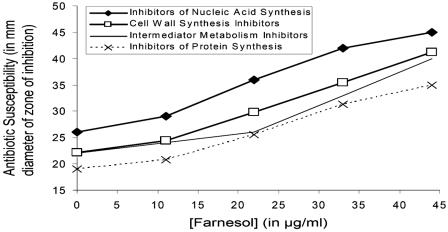
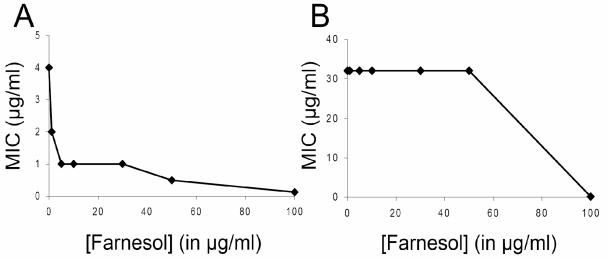
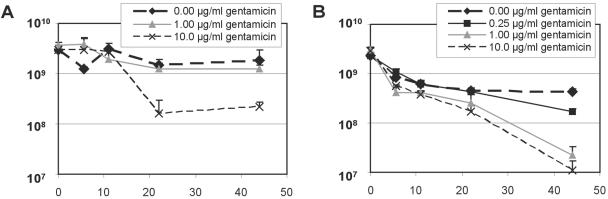
Staphylococcus aureus is among the leading pathogens causing bloodstream infections able to form biofilms on host tissue and indwelling medical devices and to persist and cause disease. Infections caused by S. aureus are becoming more difficult to treat because of increasing resistance to antibiotics. In a biofilm environment particularly, microbes exhibit enhanced resistance to antimicrobial agents. Recently, farnesol was described as a quorum-sensing molecule with possible antimicrobial properties. In this study, the effect of farnesol on methicillin-resistant and -susceptible strains of S. aureus was investigated. With viability assays, biofilm formation assessment, and ethidium bromide uptake testing, farnesol was shown to inhibit biofilm formation and compromise cell membrane integrity. The ability of farnesol to sensitize S. aureus to antimicrobials was assessed by agar disk diffusion and broth microdilution methods. For both strains of staphylococci, farnesol was only able to reverse resistance at a high concentration (150 microM). However, it was very successful at enhancing the antimicrobial efficacy of all of the antibiotics to which the strains were somewhat susceptible. Therefore, synergy testing of farnesol and gentamicin was performed with static biofilms exposed to various concentrations of both agents. Plate counts of harvested biofilm cells at 0, 4, and 24 h posttreatment indicated that the combined effect of gentamicin at 2.5 times the MIC and farnesol at 100 microM (22 microg/ml) was able to reduce bacterial populations by more than 2 log units, demonstrating synergy between the two antimicrobial agents. This observed sensitization of resistant strains to antimicrobials and the observed synergistic effect with gentamicin indicate a potential application for farnesol as an adjuvant therapeutic agent for the prevention of biofilm-related infections and promotion of drug resistance reversal.
Figures
References
-
- Adam, B., G. S. Baillie, and L. J. Douglas. 2002. Mixed species biofilms of Candida albicans and Staphylococcus epidermidis. J. Med. Microbiol. 51:344-349. - PubMed
-
- Akiyama, H., T. Oono, W. K. Huh, O. Yamasaki, S. Ogawa, M. Katsuyama, H. Ichikawa, and K. Iwatsuki. 2002. Actions of farnesol and xylitol against Staphylococcus aureus. Chemotherapy 48:122-128. - PubMed
-
- Ando, E., K. Monden, R. Mitsuhata, R. Kariyama, and H. Kumon. 2004. Biofilm formation among methicillin-resistant Staphylococcus aureus isolates from patients with urinary tract infection. Acta Med. Okayama 58:207-214. - PubMed
-
- Anwar, H., J. L. Strap, and J. W. Costerton. 1992. Eradication of biofilm cells of Staphylococcus aureus with tobramycin and cephalexin. Can. J. Microbiol. 38:618-625. - PubMed
Publication types
MeSH terms
Substances
Grants and funding
LinkOut - more resources
Full Text Sources
Other Literature Sources
