


Childbirth and pelvic floor dysfunction: an epidemiologic approach to the assessment of prevention opportunities at delivery
- PMID: 16579934
- PMCID: PMC1486798
- DOI: 10.1016/j.ajog.2006.01.042
Childbirth and pelvic floor dysfunction: an epidemiologic approach to the assessment of prevention opportunities at delivery
Abstract
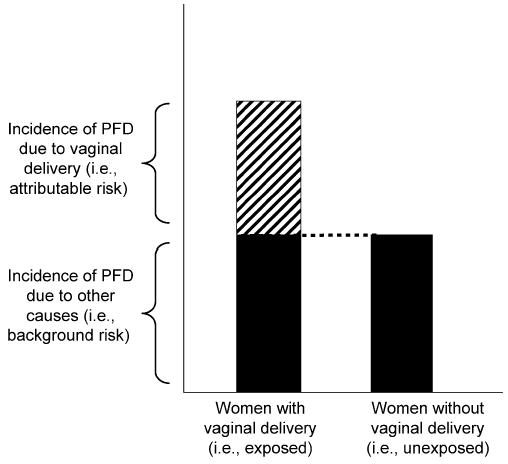
Female pelvic floor dysfunction is integral to the woman's role in the reproductive process, largely because of the unique anatomic features that facilitate vaginal birth and also because of the trauma that can occur during that event. Interventions such as primary elective cesarean delivery have been discussed for the primary prevention of pelvic floor dysfunction; however, existing data about potentially causal factors limit our ability to evaluate such strategies critically. Here we consider the conceptual principles of epidemiologic function and the availability of data that are necessary to make informed recommendations about prevention opportunities for pelvic floor dysfunction at delivery. Available epidemiologic data on pelvic floor dysfunction suggest that there may be substantial opportunities for the primary prevention of pelvic organ prolapse at delivery. Although definitive recommendations await further epidemiologic studies of the potential risk and benefits of obstetric practice change, it is hoped that this discussion will provide a novel, quantitative framework for the assessment of pelvic floor dysfunction prevention opportunities.
Figures
Comment in
-
Long-term complications with major impact on the quality of life in an aging population.Am J Obstet Gynecol. 2007 Mar;196(3):e22; author reply e22-3. doi: 10.1016/j.ajog.2006.09.006. Am J Obstet Gynecol. 2007. PMID: 17346514 No abstract available.
References
-
- Martin JA, Hamilton BE, Sutton PD, Ventura SJ, Menacker F, Munson ML. Births: final data for 2002. Natl Vital Stat Rep. 2003;52:1–113. - PubMed
-
- Bump RC, Norton PA. Epidemiology and natural history of pelvic floor dysfunction. Obstet Gynecol Clin North Am. 1998;25:723–46. - PubMed
-
- Brubaker L, Bump R, Jacquetin B, Schuessler B, Weidner A, Zimmern P, et al. Pelvic organ prolapse. In: Abrams P, Cardozo L, Khoury S, Wein A, editors. Incontinence. Plymouth, UK: Plymbridge Distributors Ltd; 2002. p. 243–65.
-
- Hunskaar S, Burgio K, Diokno A, Herzog AR, Hjalmas K, Lapitan MC. Epidemiology and natural history of urinary incontinence in women. Urology. 2003;62:16–23. - PubMed
-
- Johanson JF, Lafferty J. Epidemiology of fecal incontinence: the silent affliction. Am J Gastroenterol. 1996;91:33–6. - PubMed
Publication types
MeSH terms
Grants and funding
LinkOut - more resources
Full Text Sources
Medical
