Interleukin-10 polymorphism in position -1082 and acute respiratory distress syndrome
- PMID: 16585075
- PMCID: PMC3090261
- DOI: 10.1183/09031936.06.00046405
Interleukin-10 polymorphism in position -1082 and acute respiratory distress syndrome
Abstract
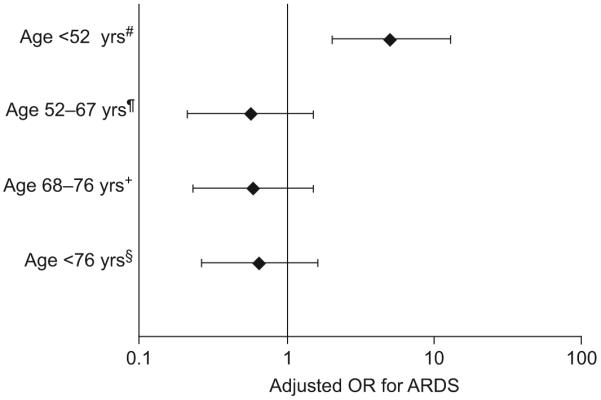
The GG genotype of the interleukin (IL)-10 promoter polymorphism in position -1082 (-1082GG) has been associated with increased IL-10 production. The current authors hypothesised that the -1082GG genotype is associated with the development of, and outcomes in, acute respiratory distress syndrome (ARDS). A nested case-control study was conducted in 211 Caucasian cases of ARDS and 429 controls who were admitted to an intensive care unit with sepsis, trauma, aspiration or massive transfusions. Cases were followed for organ failure and 60-day mortality. The -1082GG genotype was associated with the development of ARDS, but only in the presence of a significant interaction between the -1082GG genotype and age. Among patients with ARDS, the -1082GG genotype was associated with decreased severity of illness on admission, lower daily organ dysfunction scores and lower 60-day mortality. In conclusion, the high interleukin-10-producing -1082GG genotype may be associated with variable odds for acute respiratory distress syndrome development depending on age. Among those with acute respiratory distress syndrome, the -1082GG genotype is associated with lower mortality and organ failure. Further studies are needed to confirm these findings.
Figures




Comment in
-
Interleukin-10, age and acute lung injury genetics: the action is in the interaction.Eur Respir J. 2006 Apr;27(4):669-70. doi: 10.1183/09031936.06.00017306. Eur Respir J. 2006. PMID: 16585073 No abstract available.
References
-
- Hudson LD, Milberg JA, Anardi D, Maunder RJ. Clinical risks for development of the acute respiratory distress syndrome. Am J Respir Crit Care Med. 1995;151:293–301. - PubMed
-
- Gong MN, Thompson BT, Pothier L, Boyce P, Christiani DC. Predictors for the development of and mortality in ARDS: potential role of red cell transfusion. Crit Care Med. 2005;33:1191–1198. - PubMed
-
- Marshall RP, Webb S, Bellingan GJ, et al. Angiotensin converting enzyme insertion/deletion polymorphism is associated with susceptibility and outcome in acute respiratory distress syndrome. Am J Respir Crit Care Med. 2002;166:646–650. - PubMed
-
- Quasney MW, Waterer GW, Dahmer MK, et al. Association between surfactant protein B + 1580 polymorphism and the risk of respiratory failure in adults with community-acquired pneumonia. Crit Care Med. 2004;32:1115–1119. - PubMed
-
- Garred P, Strom JJ, Quist L, Taaning E, Madsen HO. Association of mannose-binding lectin polymorphisms with sepsis and fatal outcome, in patients with systemic inflammatory response syndrome. J Infect Dis. 2003;188:1394–1403. - PubMed
Publication types
MeSH terms
Substances
Grants and funding
LinkOut - more resources
Full Text Sources