


Cardiac 7-transmembrane-spanning domain receptor portfolios: diversify, diversify, diversify
- PMID: 16585959
- PMCID: PMC1421366
- DOI: 10.1172/JCI28234
Cardiac 7-transmembrane-spanning domain receptor portfolios: diversify, diversify, diversify
Abstract
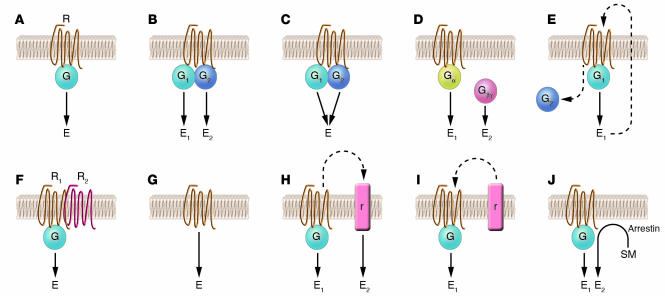
Enhanced signaling in myocytes by the G protein Gq has been implicated in cardiac hypertrophy and the transition to heart failure. alpha1-Adrenergic receptors (alpha1-ARs) are members of the 7-transmembrane-spanning domain (7-TM) receptor family and signal via interaction with Gq in the heart. The specific effects of a loss of alpha1-AR signaling in the heart are explored by O'Connell et al. in this issue of the JCI (see the related article beginning on page 1005). Paradoxically, gene ablation of the alpha 1A and alpha 1B subtypes in mice results in a maladaptive form of reactive cardiac hypertrophy from pressure overload, with a predisposition to heart failure. Thus signaling to the alpha1-AR (compared with signaling from other receptors such as angiotensin receptors, which also couple to Gq) appears to be specifically required for a normal hypertrophic response. This represents another example of how receptors that share common G proteins have diversified, developing unique signaling programs. These findings may have particular clinical relevance because of the widespread use of alpha1-AR antagonists in the treatment of hypertension and symptomatic prostate enlargement.
Figures
Comment on
-
Alpha1-adrenergic receptors prevent a maladaptive cardiac response to pressure overload.J Clin Invest. 2006 Apr;116(4):1005-15. doi: 10.1172/JCI22811. J Clin Invest. 2006. PMID: 16585965 Free PMC article.
References
-
- Dorn G.W. Physiologic growth and pathologic genes in cardiac development and cardiomyopathy. Trends Cardiovasc. Med. 2005;15:185–189. - PubMed
-
- Sakata Y., Hoit B.D., Liggett S.B., Walsh R.A., Dorn G.W., II. Circulation. 97:1488–1495. - PubMed
-
- Akhter S.A., et al. Targeting the receptor-Gq interface to inhibit in vivo pressure overload myocardial hypertrophy. Science. 1998;280:574–577. - PubMed
Publication types
MeSH terms
Substances
LinkOut - more resources
Full Text Sources
Research Materials
