


Characterization of intestinal microbiota and response to dietary virginiamycin supplementation in the broiler chicken
- PMID: 16597987
- PMCID: PMC1448984
- DOI: 10.1128/AEM.72.4.2815-2823.2006
Characterization of intestinal microbiota and response to dietary virginiamycin supplementation in the broiler chicken
Abstract
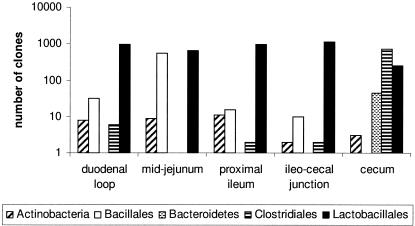
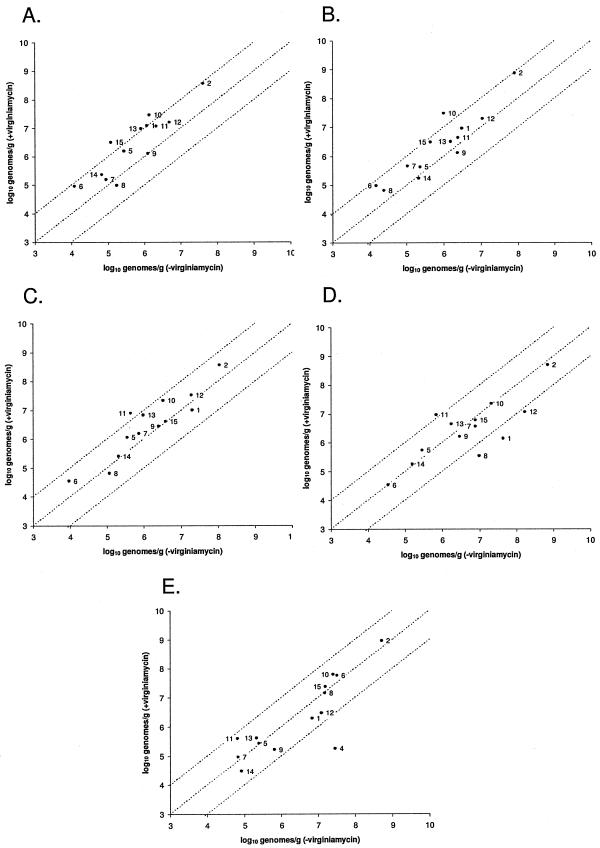
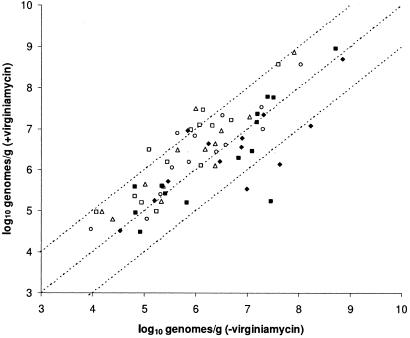
The inclusion of antibiotic growth promoters, such as virginiamycin, at subtherapeutic levels in poultry feeds has a positive effect on health and growth characteristics, possibly due to beneficial effects on the host gastrointestinal microbiota. To improve our understanding of the chicken gastrointestinal microbiota and the effect of virginiamycin on its composition, we characterized the bacteria found in five different gastrointestinal tract locations (duodenal loop, mid-jejunum, proximal ileum, ileocecal junction, and cecum) in 47-day-old chickens that were fed diets excluding or including virginiamycin throughout the production cycle. Ten libraries (five gastrointestinal tract locations from two groups of birds) of approximately 555-bp chaperonin 60 PCR products were prepared, and 10,932 cloned sequences were analyzed. A total of 370 distinct cpn60 sequences were identified, which ranged in frequency of recovery from 1 to 2,872. The small intestinal libraries were dominated by sequences from the Lactobacillales (90% of sequences), while the cecum libraries were more diverse and included members of the Clostridiales (68%), Lactobacillales (25%), and Bacteroidetes (6%). To assess the effects of virginiamycin on the gastrointestinal microbiota, 15 bacterial targets were enumerated using quantitative, real-time PCR. Virginiamycin was associated with increased abundance of many of the targets in the proximal gastrointestinal tract (duodenal loop to proximal ileum), with fewer targets affected in the distal regions (ileocecal junction and cecum). These findings provide improved profiling of the composition of the chicken intestinal microbiota and indicate that microbial responses to virginiamycin are most significant in the proximal small intestine.
Figures
References
-
- Altschul, S. F., W. Gish, W. Miller, E. W. Myers, and D. J. Lipman. 1990. Basic local alignment search tool. J. Mol. Biol. 215:403-410. - PubMed
-
- Amit-Romach, E., D. Sklan, and Z. Uni. 2004. Microflora ecology of the chicken intestine using 16S ribosomal DNA primers. Poult. Sci. 83:1093-1098. - PubMed
-
- Anderson, D. B., V. J. McCracken, R. I. Aminov, J. M. Simpson, R. I. Mackie, M. W. A. Verstegen, and H. R. Gaskins. 1999. Gut microbiology and growth-promoting antibiotics in swine. Nutr. Abstr. Rev. 70:101-188.
-
- Backhed, F., R. E. Ley, J. L. Sonnenburg, D. A. Peterson, and J. I. Gordon. 2005. Host-bacterial mutualism in the human intestine. Science 307:1915-1920. - PubMed
-
- Barrow, P. A. 1998. Use of virginiamycin as a growth promoter. Vet. Rec. 143:483-484. - PubMed
Publication types
MeSH terms
Substances
LinkOut - more resources
Full Text Sources
Other Literature Sources
Medical
Molecular Biology Databases
Research Materials
