


Human centromeric alphoid domains are periodically homogenized so that they vary substantially between homologues. Mechanism and implications for centromere functioning
- PMID: 16598075
- PMCID: PMC1447651
- DOI: 10.1093/nar/gkl137
Human centromeric alphoid domains are periodically homogenized so that they vary substantially between homologues. Mechanism and implications for centromere functioning
Abstract
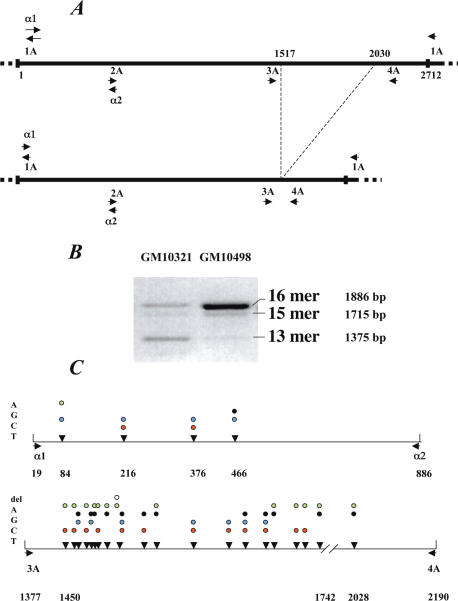
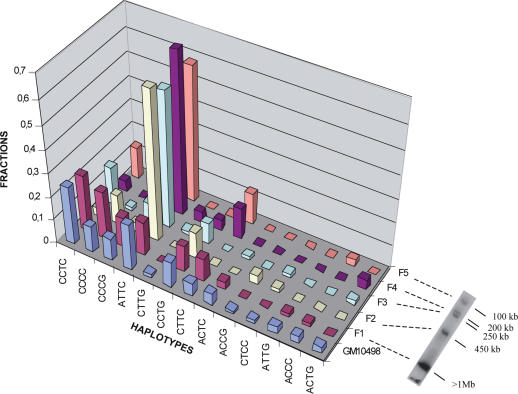
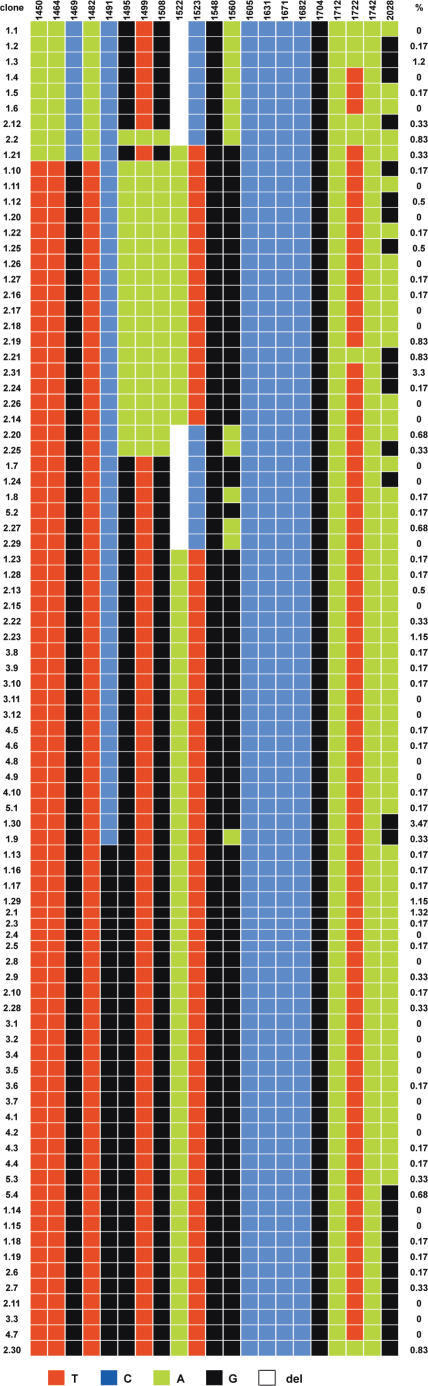
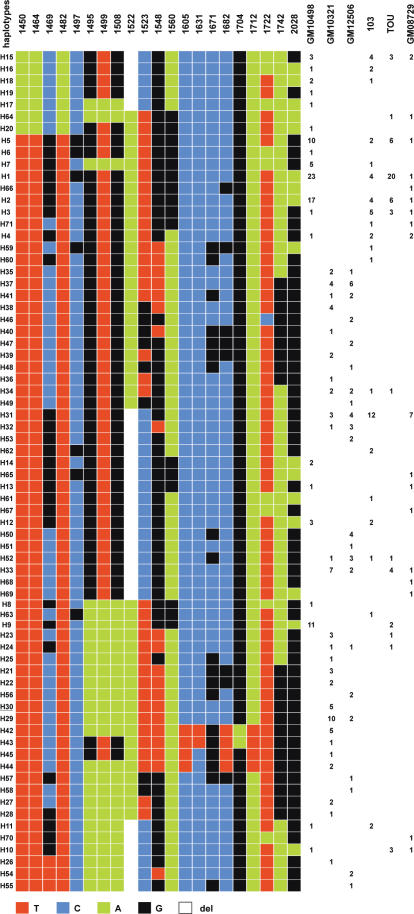
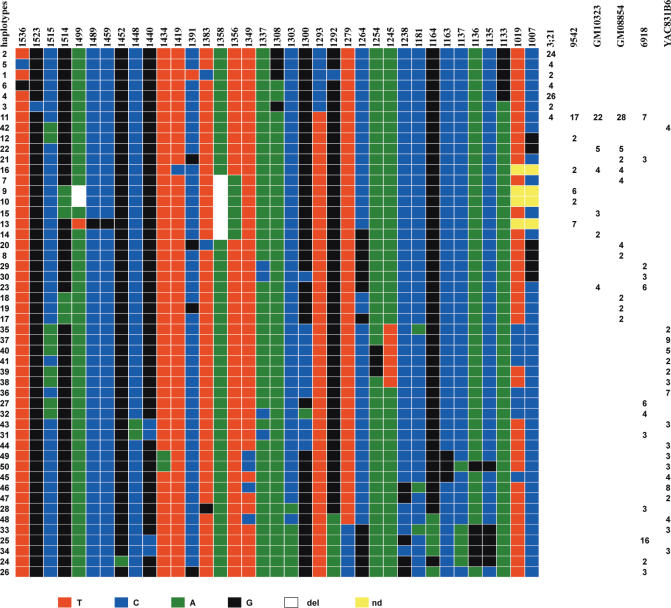
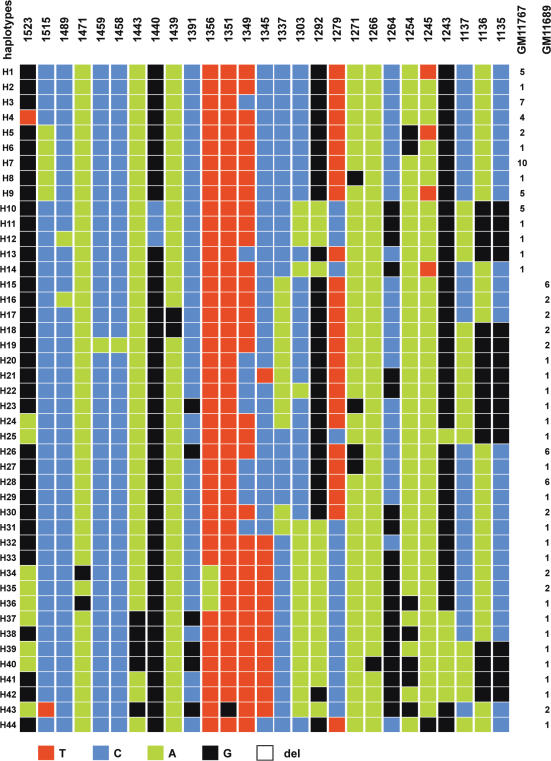
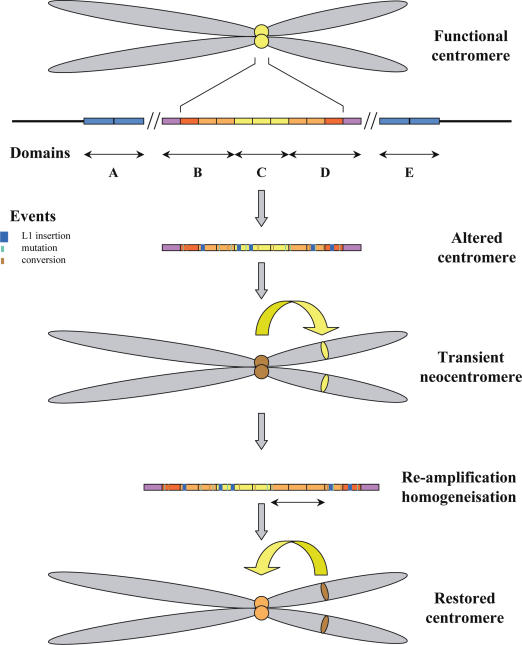
Sequence analysis of alphoid repeats from human chromosomes 17, 21 and 13 reveals recurrent diagnostic variant nucleotides. Their combinations define haplotypes, with higher order repeats (HORs) containing identical or closely-related haplotypes tandemly arranged into separate domains. The haplotypes found on homologues can be totally different, while HORs remain 99.8% homogeneous both intrachromosomally and between homologues. These results support the hypothesis, never before demonstrated, that unequal crossovers between sister chromatids accumulate to produce homogenization and amplification into tandem alphoid repeats. I propose that the molecular basis of this involves the diagnostic variant nucleotides, which enable pairing between HORs with identical or closely-related haplotypes. Domains are thus periodically renewed to maintain high intrachromosomal and interhomologue homogeneity. The capacity of a domain to form an active centromere is maintained as long as neither retrotransposons nor significant numbers of mutations affect it. In the presented model, a chromosome with an altered centromere can be transiently rescued by forming a neocentromere, until a restored, fully-competent domain is amplified de novo or rehomogenized through the accumulation of unequal crossovers.
Figures
References
-
- Haaf T., Willard H.F. Organization polymorphism and molecular cytogenetics of chromosome-specific alpha-satellite DNA from the centromere of chromosome 2. Genomics. 1992;13:122–128. - PubMed
-
- Tyler-Smith C., Brown W.R. Structure of the major block of alphoid satellite DNA on the human Y chromosome. J. Mol. Biol. 1987;195:457–470. - PubMed
-
- Marçais B., Bellis M., Gerard A., Pages M., Boublik Y., Roizès G. Structural organization and polymorphism of the alpha satellite DNA sequences of chromosomes 13 and 21 as revealed by pulsed field gel electrophoresis. Hum. Genet. 1991;86:311–316. - PubMed
-
- Lo A.W.I., Liao G.C.C., Rocchi M., Choo K.H.A. Extreme reduction of chromosome-specific alpha-satellite array is unusually common in human chromosome 21. Genome Res. 1999;9:895–908. - PubMed
-
- Puechberty J., Laurent A.M., Gimenez S., Billault A., Brun-Laurent M.E., Calenda A., Marçais B., Prades C., Ioannou P., Yurov Y., et al. Genetic and physical analyses of the centromeric and pericentromeric regions of human chromosome 5: recombination across 5cen. Genomics. 1999;56:274–287. - PubMed
Publication types
MeSH terms
Substances
LinkOut - more resources
Full Text Sources
Other Literature Sources
Research Materials
