


Understanding sleep-wake behavior and sleep disorders in children: the value of a model
- PMID: 16612214
- PMCID: PMC2980811
- DOI: 10.1097/01.yco.0000218599.32969.03
Understanding sleep-wake behavior and sleep disorders in children: the value of a model
Abstract
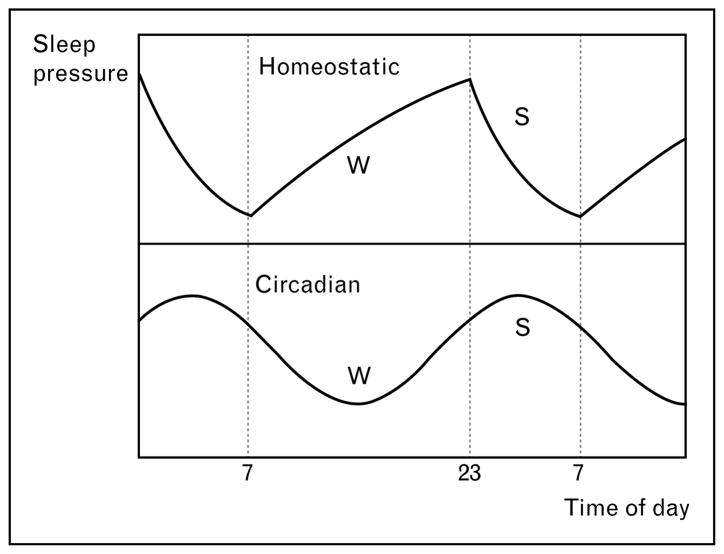
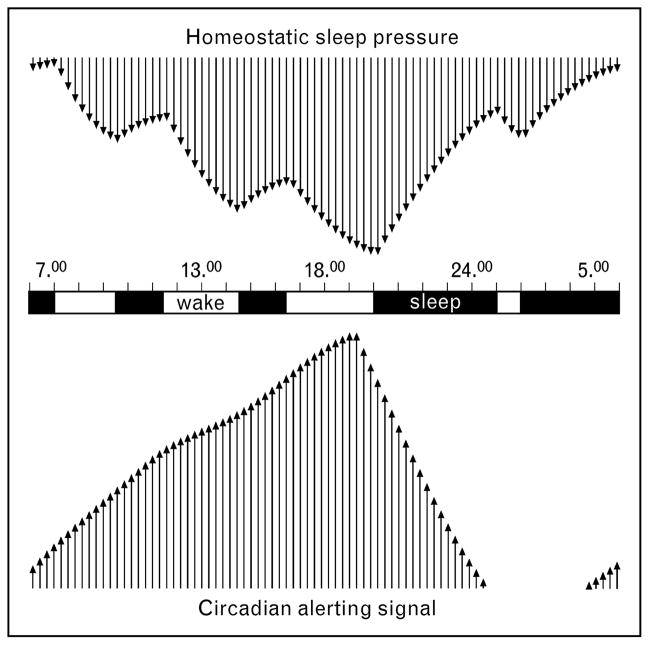
Purpose of review: Sleep-wake problems such as night wakings, excessive crying, or difficulties in falling asleep are frequent behavioral issues during childhood. Maturational changes in sleep and circadian regulation likely contribute to the development and maintenance of such problems. This review highlights the recent research examining bioregulatory sleep mechanisms during development and provides a model for predicting sleep-wake behavior in young humans.
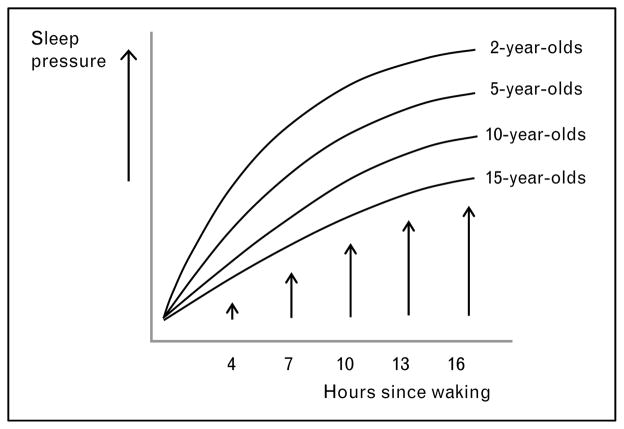
Recent findings: Findings demonstrate that circadian and sleep homeostatic processes exhibit maturational changes during the first two decades of life. The developing interaction of both processes may be a key determinant of sleep-wake and crying behavior in infancy. Evidence shows that the dynamics of sleep homeostatic processes slow down in the course of childhood (i.e., sleep pressure accumulates more slowly with increasing age) enabling children to be awake for consolidated periods during the day. Another current topic is the adolescent sleep phase delay, which appears to be driven primarily by maturational changes in sleep homeostatic and circadian processes.
Summary: The two-process model of sleep regulation is a valuable framework for understanding and predicting sleep-wake behavior in young humans. Such knowledge is important for improving anticipatory guidance, parental education, and patient care, as well as for developing appropriate social policies.
Figures
References
-
- Olson LM, Inkelas M, Halfon N, et al. Overview of the content of health supervision for young children: reports from parents and pediatricians. Pediatrics. 2004;113:1907–1916. This article highlights the importance of parent–physician discussions about many topics (e.g., sleeping, crying, feeding) that are critical to healthy child development. - PubMed
-
- Mindell JA, Owens JA. A clinical guide to pediatric sleep: diagnosis and management of sleep problems in children and adolescents. Lippincott Williams & Wilkins Publishers; 2003.
-
- Millman RP. Excessive sleepiness in adolescents and young adults: causes, consequences, and treatment strategies. Pediatrics. 2005;115:1774–1786. This author presents on behalf of the Working Group on Sleepiness in Adolescents/Young Adults (AAP Committee on Adolescence) a comprehensive review of the scientific data on normal sleep changes during adolescence, factors related to chronic insufficient sleep, and the effects of poor/insufficient sleep on daytime functioning. The primary sleep disorders associated with excessive daytime sleepiness in this population are also reviewed. - PubMed
-
- Hansen M, Janssen I, Schiff A, et al. The impact of school daily schedule on adolescent sleep. Pediatrics. 2005;115:1555–1561. This novel study examined the impact of starting school on adolescent sleep (timing, duration, weekend oversleep) and assessed the effects of early morning bright light on sleep and neuropsychological performance. - PubMed
-
- Carskadon MA, Acebo C. Regulation of sleepiness in adolescents: update, insights, and speculation. Sleep. 2002;25:606–614. - PubMed
Publication types
MeSH terms
Grants and funding
LinkOut - more resources
Full Text Sources
Other Literature Sources
Medical
